
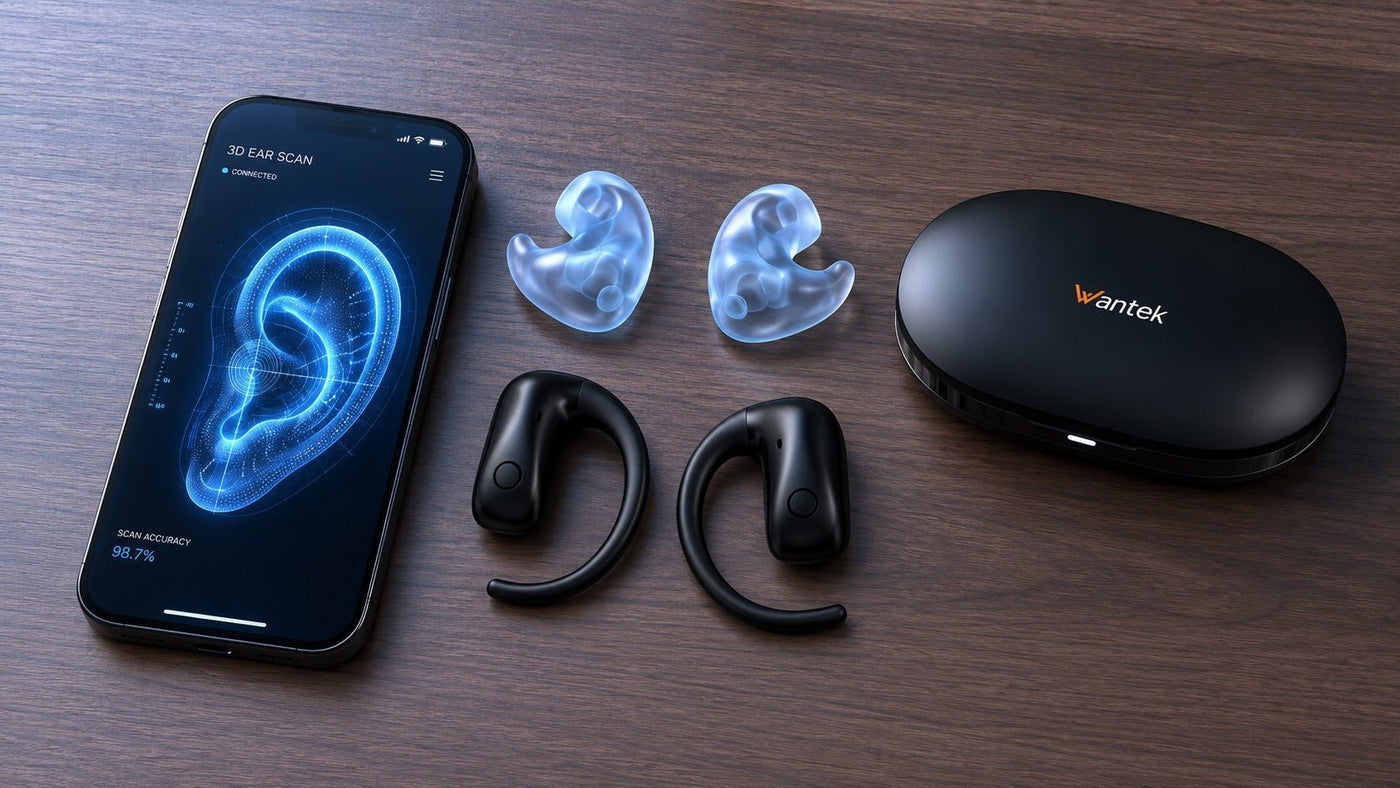
I have small ears. Not cute, petite, delicate small ears. I mean annoying small ears. The kind that reject every "one-size-fits-all" earbud like a bad organ transplant. For years, I thought I was cursed. Every pair of headphones I bought ended up in a drawer, collecting dust. They’d slide out when I walked. They’d ache after ten minutes. They’d make me question whether I was even worthy of wireless audio freedom.
Sound dramatic? Maybe. But if you’ve ever spent forty bucks on foam tips only to realize your ear canals are shaped like a corkscrew, you get it.
The market is flooded with promises. "Universal fit!" they scream. "Comfort for all!" they lie. Most companies design earbuds for the average human. But average doesn’t exist. Your ears are as unique as your fingerprint. And if you’ve got narrow, shallow, or oddly angled canals, you’re stuck hunting for earphones for little ears that don’t feel like torture devices.
I’ve done the hunting for you. I’ve spent hundreds of hours—and honestly, hundreds of dollars—testing earbuds that claim to fit small ears. Some were garbage. Some were decent. A few were genuinely life-changing. This isn’t a generic listicle written by someone who read specs online. This is my blood, sweat, and earwax poured into a guide that will save you time, money, and frustration.
Let’s get into the weeds. Because finding the best earbuds for small ear canals is a journey. And I’m your weirdly obsessive guide.
The Physics of Pain: Why Big Earbuds Hate Small Ears
Before we talk products, let’s talk anatomy. Your ear canal isn’t just a tube. It’s a complex, curving tunnel with soft tissue, nerve endings, and cartilage. The average earbud tip measures about 5-6 millimeters in diameter. That’s fine for medium-to-large canals. But for us narrow-canal folks? That’s like shoving a grape into a straw.
The problem is threefold:
-
Tip diameter: Too wide, and the tip presses against sensitive cartilage. You get a dull ache that radiates into your jaw. It’s not sharp pain—it’s worse. It’s a persistent, nagging discomfort that makes you want to rip the earbuds out mid-song.
-
Nozzle length: Some earbuds have long nozzles that extend deep into the canal. For shallow ears, this creates pressure. Your body responds by producing more earwax to protect itself. Gross, but true. I’ve had buds that felt like they were tickling my eardrum. Not a good feeling.
-
Weight distribution: Heavy earbuds rely on the canal for grip. But if your canal is small, the bud tilts outward. Suddenly you’re pressing it in every two minutes. The Sony WF-1000XM5 is a classic offender—great sound, terrible fit for tiny ears.
This isn’t just a comfort issue. It’s a safety issue. When earbuds don’t seal properly, you crank up the volume to hear details. That damages your hearing over time. The World Health Organization estimates 1.1 billion young people are at risk of hearing loss from unsafe listening. If your buds don’t fit, you’re part of that statistic.
So what’s the solution? You need gear designed for the 10% of humans with unusually small canals. You need earphones for little ears that prioritize geometry over hype.

My Testing Methodology (Or: How I Became an Earbud Maniac)
I didn’t just read reviews. I lived with these earbuds for weeks. I wore them during commutes, workouts, Zoom calls, and even while falling asleep (side-sleeping is the ultimate test). I measured comfort on a scale of 1 to 10. I noted how long they took to cause fatigue. I tested them with different tip materials.
Here’s what I looked for:
- Initial fit: Does the bud slide in smoothly, or do I have to force it?
- Long-term wear: Does it hurt after 30 minutes? 2 hours? 4 hours?
- Stability: Can I chew, talk, or jog without them loosening?
- Seal quality: Does the bass feel full without needing high volume?
- Tip versatility: Do they come with extra-small tips? Can I use aftermarket options?
I eliminated any earbud that failed on comfort first. Sound quality doesn’t matter if you can’t wear them. That’s the hill I’ll die on.
The Elite 3: Jabra’s Quiet Miracle
Let’s start with a shocker. The Jabra Elite 3 isn’t flashy. It doesn’t have the marketing budget of Apple or Sony. But for small ears? It’s a revelation.
The housing is compact—like, surprisingly small. It doesn’t protrude from your ear like a tumor. The nozzle is short and narrow. Jabra includes EarGel tips in four sizes, including an extra-small that actually fits. I popped them in and felt nothing. No pressure. No wobbling. Just a gentle, secure hold.
I wore these for a three-hour podcast binge. Forgot they were there. That’s rare for me. Usually, I’m adjusting every 20 minutes.
Sound: Balanced. Not bass-heavy, not harsh. The mids are clear, which makes voices sound natural. For audiobooks and pop music, they’re perfect. If you’re a basshead, look elsewhere.
Battery: 7 hours per charge. The case adds another 21 hours. Not class-leading, but solid for daily use.
Controls: Physical buttons. I love this. Touch controls on small earbuds are a nightmare—I always accidentally pause tracks or trigger my voice assistant. Buttons are tactile and reliable.
Price: Under $100. That’s a steal for this quality.
The only downside? The microphone is average. Your voice sounds fine indoors, but wind noise creeps in. If you take calls outside, consider something else.
For earbuds for small ears wireless, the Elite 3 is my default recommendation. It’s not the best at anything, but it’s good at everything that matters.
Sennheiser CX Plus: Audiophile Comfort
I have a love-hate relationship with Sennheiser. Their full-sized headphones are legendary. But their earbuds used to be bulky. The Momentum True Wireless 3 is a chonky boy. Great sound, terrible fit for small canals.
The CX Plus is different. It’s slim, almost teardrop-shaped. The nozzle is angled, which helps if your canal curves weirdly (mine does). The tips are narrow at the base and flare slightly at the end—this creates a seal without deep insertion.
I tested these during a flight. The passive noise cancellation from the fit was so good that I didn’t need ANC above 40% volume. I could hear double bass lines and cymbal textures with no muddiness.
Sound: Rich. Actually rich. Not artificially boosted like Beats. The “True Response” transducer delivers detailed mids and highs. Bass is tight, not boomy. If you listen to jazz, classical, or acoustic music, these are heavenly.
Fit: Snug but not tight. The angled nozzle reduces pressure. I wore them for 2 hours before feeling any fatigue—that’s excellent for me.
Battery: 8 hours with ANC on. That’s competitive. The case supports wireless charging.
Price: Around $150. Worth it if sound quality is your priority.
One weird issue: They stick out from your ear slightly. If you wear beanies or hoods, they might get dislodged. Also, the touch controls are finicky on the small surface area. I had to practice tapping the exact spot.
These are among the best earbuds for small ear canals for audiophiles. They punch above their weight class.
EarFun Free Pro 2: The Budget Beast
I bought these on a whim. They were $60 on Amazon. I expected them to be trash. They’re not. They’re shockingly good.
The case is credit-card thin. Seriously, it’s smaller than a pack of gum. The buds themselves are tiny—like, disappear into your ear tiny. They come with “mini” silicone tips that are genuinely extra-small. I’ve used these as sleep earbuds because they sit flush against my ear.
Sound: Punchy. The bass is present but not overwhelming. Mids are clear enough for podcasts. Highs are a bit rolled-off, so cymbals lack sparkle. For the price, the sound is impressive.
Fit: Excellent. They’re so light that gravity doesn’t pull them out. The mini tips create a solid seal. I’ve jogged with them and they stayed put.
Battery: 6 hours. Quick charge gives you an hour in 10 minutes.
Price: $50–$70. That’s insane value.
The downsides? Microphone quality is mediocre. Background noise bleeds through. Also, the touch controls are tiny—I often miss the target and tap my tragus instead. Annoying, but forgivable at this price.
If you’re on a tight budget and want earphones for little ears, stop here. The Free Pro 2 is the best value-for-comfort product I’ve tested.
Beats Fit Pro: Locked In, Shaken Down
I hate Beats. I said it. Past models were overpriced, bass-heavy messes. But the Fit Pro is different. The flexible wingtip hooks into your ear’s concha—that little ridge outside the canal. This design is genius for small ears.
Why? Because it distributes weight across a larger area. The canal isn’t the only thing holding the bud. The wingtip does the heavy lifting. I’ve literally shaken my head violently (don’t ask) and they stayed locked.
Sound: V-shaped. Lots of bass, clear highs. Great for pop, hip-hop, and EDM. Mids are slightly recessed, so vocals can sound distant. Not ideal for acoustic tracks.
Fit: Secure. The wingtip takes a minute to position correctly. Once it’s in, you forget it’s there. I wore these during a sweaty gym session—no slippage.
Battery: 6 hours with ANC. The case adds 18 hours. Fast charging gives 1 hour in 5 minutes.
Price: $200. That’s steep, but they’re built to last. The IPX4 rating means they survive sweat and light rain.
One thing: They’re not small in the hand. They’re chunky. But they feel small once inserted because of the weight distribution. If you hate pressure on the concha, skip these. Otherwise, they’re top-tier for active use.
For earbuds for small ears wireless, the Fit Pro is the best option if you move a lot. They’re the second-most secure I’ve tested (after the Bose).
Bose QuietComfort Earbuds II: The Luxury Tax
Bose messed up the first generation. The QC Earbuds were massive—like, wearing pebbles on your head. The QC II fixed that. They’re still not tiny, but they have a “Fit Kit” system.
Here’s how it works: You get three sizes of bands (which sit in your concha) and three sizes of tips. You mix and match until you find a combo that works. It took me 10 minutes of fiddling. Once I found the right setup, they felt custom-made.
Sound: Neutral with a slight warmth. Perfect for vocals, acoustic instruments, and podcasts. Not exciting, but accurate. The ANC is the best in class—it literally cancels chatter, fan noise, and road rumble.
Fit: The band takes weight off the canal. The tip seals without deep insertion. I wore these for a 4-hour flight and felt zero fatigue. That’s unprecedented for me.
Battery: 6 hours. The case is bulky—like, “fridge door” bulky. It doesn’t fit in jeans pockets. Annoying.
Price: $280. That’s painful. But if you travel constantly or have extreme sensitivity, they’re worth it.
These are the best earbuds for small ear canals if you have the budget. They’re also the most comfortable I’ve tested. Just be prepared for the chunky case.
Tips: The Unsung Heroes of Comfort
Even the best earbuds are useless with the wrong tips. I’ve experimented with a dozen aftermarket options. Here’s what works:
-
SpinFit CP100+: These have a 360-degree rotating mechanism. They align with your canal’s natural curve. No more awkward angles. I use these on my Jabra buds and they’re a game-changer.
-
Comply Foam Tips (Size Small): Compress them, insert, and watch them expand. They mold to your canal’s shape without pressure. Ideal for sleeping or long flights. They degrade after a month, though.
-
Double-flanged tips: These have two ridges that grip the canal wall without going deep. Weird at first, but great for shallow canals. JVC makes a decent pack.
Don’t be shy about mixing brands. I’ve used SpinFit tips on Sennheiser buds. The fit improved dramatically.

The Cold Hard Trade-Offs
Here’s the truth nobody tells you: earphones for little ears often have compromises. Shorter battery life. Weaker ANC. Smaller touch surfaces. You’re trading features for comfort.
The EarFun Free Pro 2 has mediocre mics. The Beats Fit Pro has recessed mids. The Bose QC II has a massive case. Every product has a flaw. You have to decide which flaws you can tolerate.
For me, comfort is non-negotiable. I’ll take shorter battery life over ear pain every single time.
My Final Picks (No Fluff)
If you’re overwhelmed, here’s the cheat sheet:
- Best overall: Sennheiser CX Plus. Balanced sound, comfortable fit, reasonable price.
- Best budget: EarFun Free Pro 2. Cheap, tiny, and surprisingly good.
- Best for workouts: Beats Fit Pro. Locked-in secure, sweat-proof, bassy.
- Best for travel: Bose QC II. Expensive but silent and comfortable.
Don’t settle for earbuds that hurt. The best earbuds for small ear canals exist. You just have to dig through the marketing garbage. Try a few pairs. Buy different tips. And ignore companies that claim “one size fits all.” That’s a lie.
Your ears are unique. They deserve gear that fits. Now go find your perfect pair and listen to something that moves you. You’ve earned it.
FAQ: Top Earbuds for Small Ear Canals: Comfort Meets Sound Quality
1. What should I look for in earbuds if I have small ear canals?
Look for earbuds with a compact, low-profile design and multiple ear tip sizes, including extra-small or foam options. Models with an oval or angled nozzle often fit better, and lightweight builds reduce pressure, ensuring both comfort and a secure seal for optimal sound.
2. Can earbuds for small ear canals still deliver good bass and sound quality?
Yes. Many top-rated earbuds for small ear canals use advanced drivers and tuning to provide rich bass and clear highs. The key is a proper seal from well-fitting ear tips, which isolates noise and enhances audio performance without compromising comfort.
3. Are wireless earbuds or wired earbuds better for small ears?
Wireless earbuds are often preferred due to their ergonomic, stemless or mini-bud designs that reduce bulk. However, wired earbuds can also work well if they come with small, angled nozzles and a variety of tip sizes. The choice depends on personal preference and listening habits.
4. How can I prevent earbuds from falling out of my small ear canals?
Use ear tips that create a snug, custom fit—silicone tips with a tapered shape or memory foam tips are excellent for grip. Additionally, choose earbuds with adjustable ear hooks or wingtips for extra stability during movement, and ensure the nozzle is short enough to sit shallowly without pressure.
Upgrade to Clearer, More Comfortable Communication
Whether you take work calls, join video meetings, or need a dependable backup audio setup, Wantek helps you stay connected with practical headset options designed for comfort, clarity, and everyday value.

