
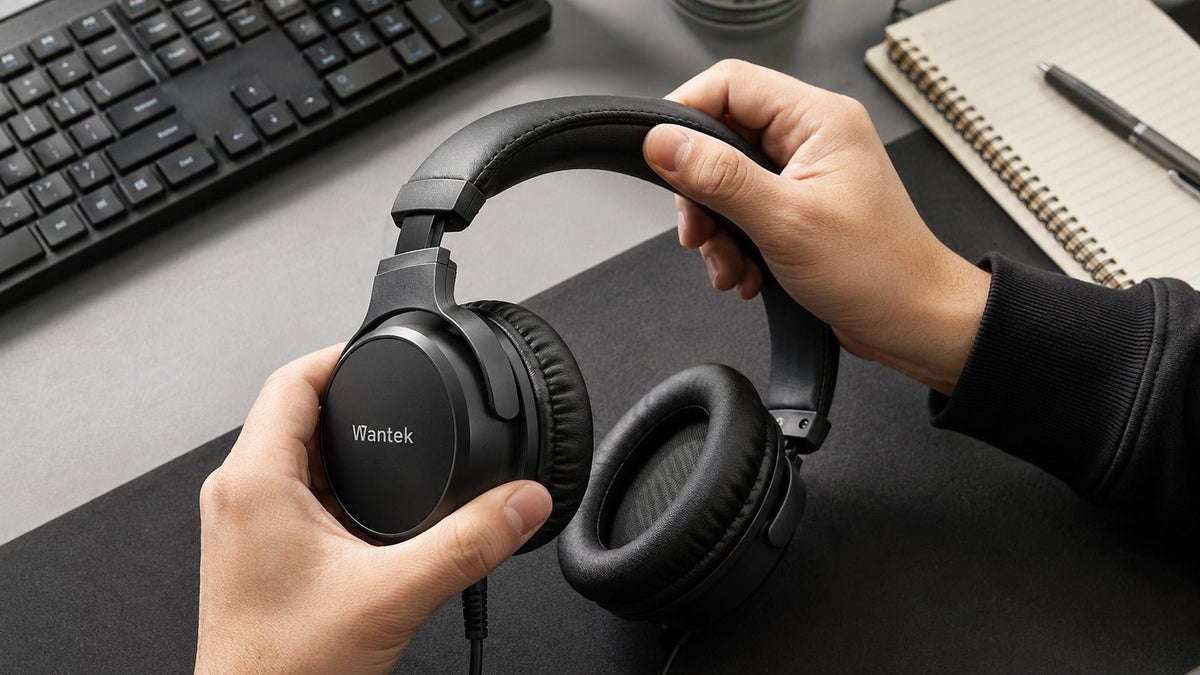
The best durable gaming headset is not automatically the heaviest model or the one with the most metal. Long-term ownership depends on the complete design: the headband and hinges, cable or charging connection, replaceable wear parts, battery design, spare-parts availability, and manufacturer support.
For buyers comparing durable gaming headphones, repairability matters almost as much as structural strength. A headset with replaceable pads, cables, batteries, or headband parts may remain useful after normal wear that would otherwise force a complete replacement.
Durability is only one buying dimension. If you still need to settle platform, connection, comfort, or microphone requirements, use the gaming headset buying guide first, then return to this durability checklist.
This guide compares current gaming headsets using documented construction and serviceability features rather than invented durability scores or universal lifespan claims.
Gaming Headsets and Their Documented Durability or Serviceability Evidence
| Model | Connection | Durability or serviceability features | Best fit |
|---|---|---|---|
| Beyerdynamic MMX 300 PRO | Wired | Spring-steel headband core; replacement ear pads, headband and cable | Buyers prioritizing repairability |
| HyperX Cloud Alpha | Wired | Aluminum frame; detachable braided cable; detachable microphone | Simple wired ownership |
| SteelSeries Arctis Nova Pro Wireless | Wireless | Two hot-swappable batteries | Wireless users prioritizing battery serviceability |
| HyperX Cloud III S Wireless | Wireless | Stainless-steel frame; aluminum forks | Buyers prioritizing documented structural materials |
| Wantek T2L | Wireless | No model-specific durability or repairability claim is documented on the current T2L product page. | Current Wantek wireless gaming comparison option; durability should be evaluated separately. |
None of these specifications proves how many years a headset will last. They show which long-term ownership factors can actually be verified before buying.
What Actually Makes a Gaming Headset Durable?
Headband, Yoke and Hinge Design
Headbands, yokes and hinges experience repeated movement whenever a headset is adjusted, removed or transported. Metal reinforcement can be useful at high-stress points, but material alone does not determine durability. Joint geometry, fasteners, tolerances and the way different components meet can matter just as much.
A metal headband connected to a poorly designed joint can still fail. A well-designed polymer component can provide useful flexibility without being inherently inferior. Instead of asking only whether a headset is “metal” or “plastic,” inspect the entire load path from the headband to the ear cups.
Detachable Cables and Strain Relief
Cable connections are another important ownership consideration. A detachable cable does not make the entire headset stronger, but it improves serviceability: if the cable is damaged, the owner may be able to replace the cable instead of replacing or repairing the complete headset.
For fixed cables, inspect the strain relief where the cable enters the headset and plug. The transition should allow normal bending without placing all movement at one sharp point.
This serviceability trade-off is also one reason the choice between an integrated gaming headset and headphones plus a separate mic can affect which parts you are able to replace later.
Replaceable Ear Pads and Wear Parts
Ear pads are consumable components. Repeated compression, heat, skin oils and normal use gradually change foam and covering materials. Replaceable pads therefore have practical long-term value even when the headset frame remains mechanically sound.
The same principle can apply to headband padding, suspension straps, microphones and other exposed components.
Batteries and Wireless Serviceability
Wireless gaming headsets remove the permanent audio cable but add a rechargeable battery, charging connection and wireless electronics. That does not make wireless headsets automatically less durable. It changes the parts that should be evaluated.
- Battery access: Check whether the battery is replaceable or swappable and whether replacement batteries are sold.
- Connection options: Check whether the headset can also operate through another documented connection supported by your setup.
- Charging hardware: Inspect the charging connector and avoid unnecessary mechanical stress during normal use.
- Support: Confirm that current firmware, documentation and product support are available for the model.
A long battery-life specification is useful for runtime, but it is not evidence that the headset itself will last longer.
Spare Parts and Manufacturer Support
Repairability becomes much more practical when manufacturers provide replacement parts and instructions. The European Commission Joint Research Centre notes that replaceable components, removable fasteners, accessible connectors and easier component access can improve repairability. Review the JRC repairability guidance.
- Ear pads: Confirm whether replacements exist for the exact model.
- Cables: For wired models, check whether damaged audio cables can be replaced separately.
- Headband parts: Look for replacement padding, suspension parts or structural components where available.
- Battery: For wireless models, verify whether the battery is removable or serviceable.

Durable Gaming Headsets to Compare in 2026
Beyerdynamic MMX 300 PRO — Documented Replaceable Parts and Wired Design
The MMX 300 PRO is one of the clearest current examples of a gaming headset designed around replaceable components. Beyerdynamic documents a spring-steel headband core and offers replacement ear pads, headband components and cables. The headset is wired, so there is no internal wireless battery to consider as part of long-term ownership.
That combination does not prove a specific lifespan, but it makes several common wear components easier to maintain or replace.
Best for: buyers who value wired operation, manufacturer-supported spare parts and repairability.
HyperX Cloud Alpha — Simple Wired Construction
The wired HyperX Cloud Alpha uses an aluminum frame and a detachable braided audio cable. Its boom microphone is also detachable. The detachable cable is especially relevant for serviceability because cable damage does not automatically require replacing the complete headset.
Its wired architecture also avoids a rechargeable battery and charging system.
Best for: gamers who want a relatively straightforward wired headset with documented structural materials and a replaceable audio cable.
SteelSeries Arctis Nova Pro Wireless — Best Battery-Serviceability Example
Battery design is one of the most important differences between wired and wireless long-term ownership. The Arctis Nova Pro Wireless uses two removable, hot-swappable batteries. SteelSeries states that each battery provides up to 22 hours of runtime, while the second battery can be kept ready for replacement.
This does not guarantee long-term reliability of every headset component, but it removes one important serviceability limitation found in wireless products with inaccessible internal batteries.
Best for: buyers who want wireless operation but consider battery replacement important.
HyperX Cloud III S Wireless — Documented Metal Structure
The Cloud III S Wireless uses a stainless-steel frame with aluminum forks. HyperX rates its 2.4 GHz wireless battery life at up to 120 hours under its stated test conditions and notes that maximum battery capacity naturally decreases with time and use.
The structural materials are useful information, but they should not be converted into an unsupported lifespan prediction.
Best for: wireless users who prioritize documented frame construction and long rated runtime.
Wantek T2L — A Lightweight Wantek Gaming Option
The Wantek T2L is a 260 g Bluetooth gaming headset with 40 mm drivers, a boom microphone with flip-to-mute positioning and up to 20 hours of rated battery life.
If voice-chat performance is a primary requirement, compare gaming headsets with good microphones separately rather than using durability features as a proxy for microphone quality.
Those specifications define the product's current gaming configuration, but they do not by themselves prove superior durability. For long-term ownership, evaluate the T2L using the same checklist applied to every other headset: joints, adjustment mechanism, ear pads, charging connection, battery, available replacement components and the connection requirements of your gaming setup.
Best for: buyers comparing current Wantek gaming options and willing to verify the complete device and connection path before choosing.
If purchase price is the main constraint, compare budget gaming headsets for 2026 separately. Price alone is not evidence that a headset is either durable or fragile.
Wired vs. Wireless: Which Is Better for Long-Term Ownership?
Neither is automatically more durable. A wired gaming headset eliminates the rechargeable battery and wireless charging system. Its main connection-related risk is the cable, particularly when the cable is fixed.
A wireless gaming headset eliminates a permanent audio cable during normal wireless use but adds a battery, charging connector and wireless electronics.
The more useful question is not “Is wired or wireless stronger?” It is “Which parts can be serviced if they wear out?” For wired models, a detachable cable is valuable. For wireless models, a replaceable battery is particularly valuable.
How to Check Gaming-Headset Durability Before You Buy
You do not need to abuse a headset or perform an uncontrolled drop test. Instead, inspect it using normal operating forces.
- Hinges and yokes: Move the ear cups through their intended range. Look for controlled movement without obvious looseness, sticking or grinding.
- Headband adjustment: Extend and retract both sides normally. The mechanism should move consistently and hold its selected position.
- Cable or charging connection: For wired models, inspect strain relief and whether the cable is detachable. For wireless models, inspect the charging connection and battery-serviceability options.
- Replacement parts: Check the manufacturer's current support and accessory pages before assuming pads, cables or batteries will be obtainable.
- Warranty and support: A warranty does not prove longer life, but clear support documentation helps define what happens if a component fails.

Moisture and IP Ratings
Do not assume that a gaming headset is waterproof because it looks rugged. IP ratings are standardized classifications for enclosure protection against solids and liquids under IEC 60529. See the IEC 60529 IP Code reference.
If moisture resistance is important, verify the exact model specification rather than applying an IP claim from another headset or product category. For ordinary gaming headsets without a documented rating, keep pads dry and avoid unnecessary exposure to liquids.
How to Make a Gaming Headset Last Longer
- Disconnect by the plug: Pull the connector rather than the cable itself to reduce unnecessary stress on the wire and strain relief.
- Avoid twisting during removal: Use both hands when practical instead of repeatedly lifting the headset by one ear cup.
- Store without crushing parts: Avoid placing heavy objects on the headset or leaving the boom microphone, headband or ear cups twisted.
- Maintain wear parts: Clean pads according to manufacturer instructions and replace serviceable wear parts when necessary.
Frequently Asked Questions
Are wired gaming headsets more durable than wireless headsets?
Not automatically. Wired models avoid rechargeable batteries and charging hardware, while wireless models remove the permanent audio cable but add a battery and charging system. Compare serviceability and construction at the model level.
Is a metal gaming headset always more durable?
No. Metal can reinforce high-stress areas, but joint design, fasteners, geometry and component interfaces also affect durability. A poorly designed metal structure is not automatically better than a well-engineered mixed-material design.
What should I look for in a long-lasting gaming headset?
Prioritize robust joints, replaceable ear pads, detachable cables where appropriate, serviceable batteries for wireless models, available spare parts and clear manufacturer support.
How long should a gaming headset last?
There is no reliable universal lifespan. Handling, usage frequency, joint design, cables, batteries, replaceable parts, storage and manufacturer support all affect how long an individual headset remains usable.
Does a longer battery-life rating mean a wireless headset will last longer?
No. Battery-life ratings describe runtime under specified conditions. They do not prove the lifespan of the battery, hinges, drivers, electronics or complete headset.
Final Verdict
If repairability is your priority, the MMX 300 PRO is supported by unusually explicit manufacturer documentation for replacement ear pads, headband parts, and cables. Other buyers may prioritize a detachable cable, swappable wireless batteries, or documented metal frame construction instead.
For a simpler wired design, the HyperX Cloud Alpha combines an aluminum frame with a detachable cable. For wireless buyers concerned specifically about battery serviceability, the SteelSeries Arctis Nova Pro Wireless offers the clearest solution in this group through its removable dual-battery system.
The HyperX Cloud III S Wireless provides documented stainless-steel and aluminum structural components, while the Wantek T2L remains a lightweight wireless comparison option that should be evaluated using the same durability checklist rather than an unsupported longevity claim.
Do not buy a gaming headset because one material looks rugged. Evaluate the complete ownership system—joints, cables, batteries, wear parts, repairability and manufacturer support.

