
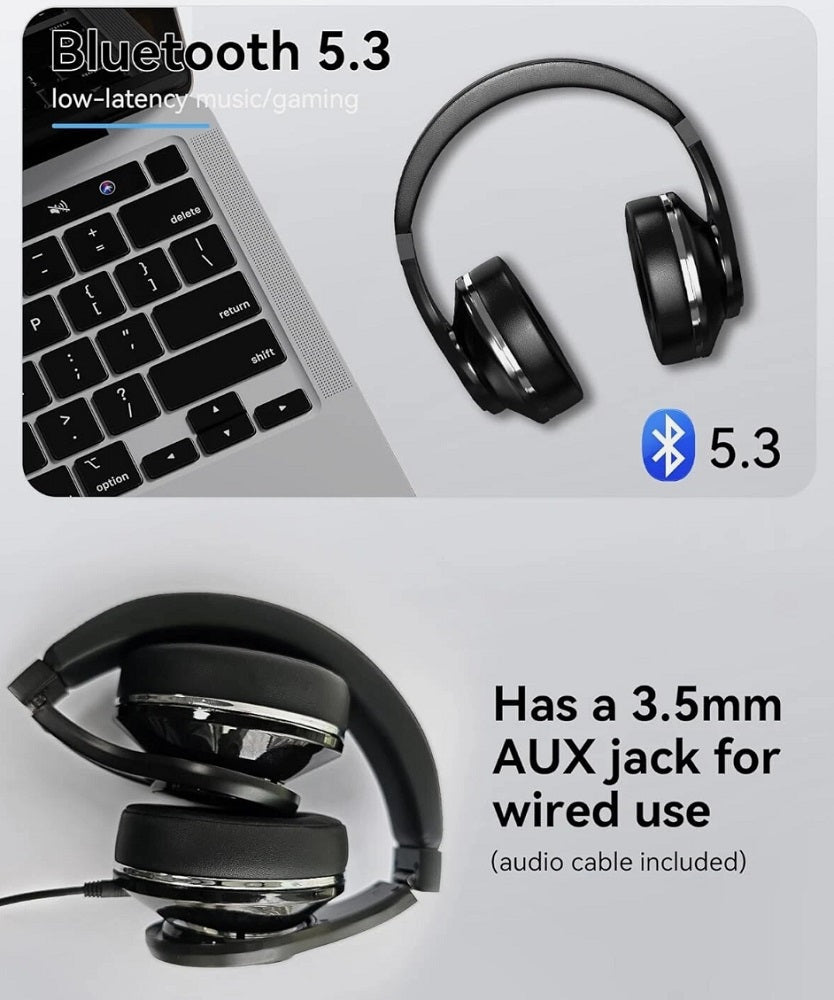
Black headphones are common because the finish is easy to match across office, travel and gaming setups. That makes black practical, but it is not a performance feature.
Quick take: Black is a practical headphone color because it is widely available and visually neutral, but it has no inherent sound-quality advantage.

| Reason | Benefit | Limit |
|---|---|---|
| Availability | Many models launch in black | Not every part matches |
| Neutral styling | Works across settings | Purely aesthetic |
| Visible wear | Can hide some stains | Dust/oils may show |
| Parts | Common finish | Model-specific |
Performance Is Independent of Color
Drivers, acoustics, microphones and electronics determine performance, not pigment. If function is still undecided, use Wantek's Headset Finder to narrow the connection and wearing style before choosing a finish.
Black Can Be Easier to Standardize
Businesses often prefer neutral colors because replacements look consistent.

Maintenance Still Matters
Matte black can show skin oils and dust; glossy black can show fingerprints.

Check the Exact Finish
Black, graphite and charcoal can look similar online.
Frequently Asked Questions
Do black headphones sound better?
No. Color does not improve audio performance.
Do black headphones stay cleaner?
They may hide some marks while showing dust or fingerprints.
Are black replacement pads easier to find?
Often, but availability depends on model.

