
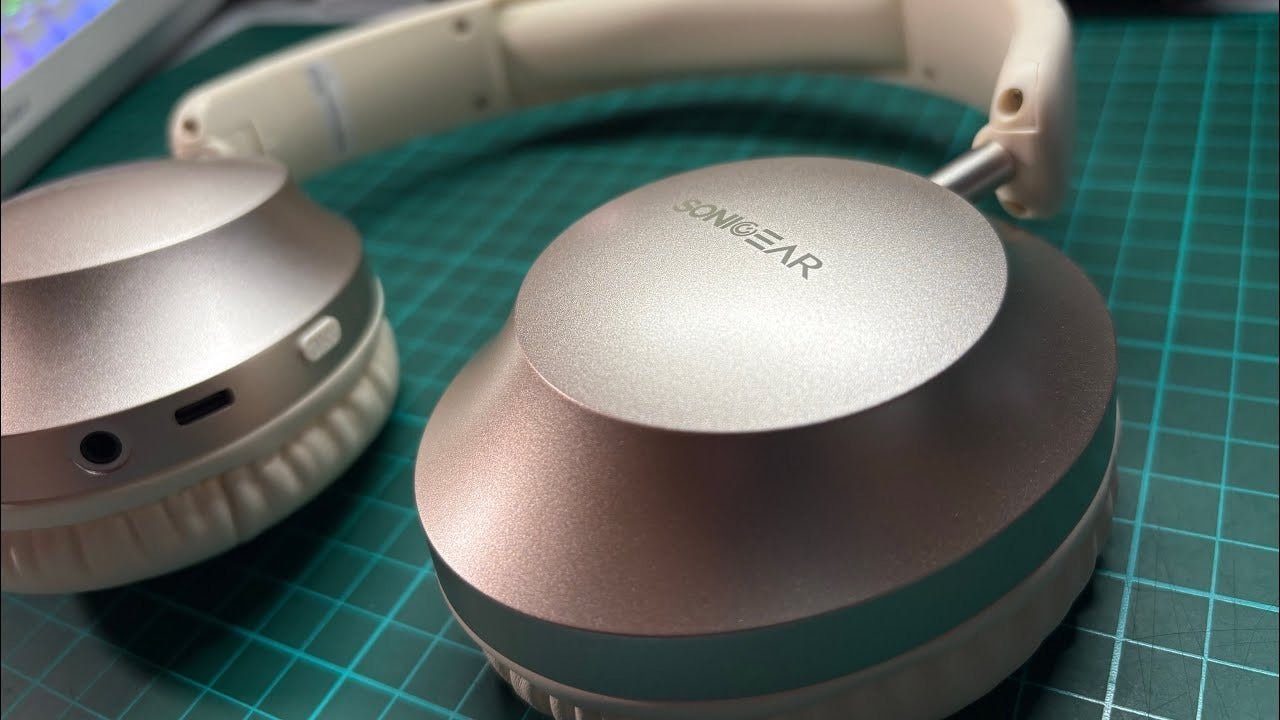
“Sony vs Sonic” is too broad for a credible winner. Sony sells multiple headphone families, while Sonic Lamb offers a distinct over-ear design. A useful comparison names the exact models and focuses on connection, noise control, battery, fit, and support.
Quick answer: Pick the exact Sony model first. Then compare it with Sonic Lamb on the features you will actually use; do not turn two brand names into a performance ranking.

Use a Named Sony Model
For example, Sony’s current WH-1000XM6 specifications document ANC, multipoint, Bluetooth 5.3, a detachable analog cable, and separate battery conditions. Another Sony model can have a very different feature set.
Sonic Lamb Uses a Different Feature Mix
Sonic Lamb’s official product page lists Bluetooth 5.1, USB digital audio, passive noise cancellation, and mode-dependent playback time. It should not be described as an ANC equivalent if the product page says passive isolation.
For a model-specific review of Sonic Lamb's connections, noise-control approach, battery conditions and regional buying checks, see Wantek's Sonic Lamb buying guide.
Compare Support and Ecosystem
App support, firmware updates, replacement parts, regional warranty, and retailer access are ownership factors that can matter as much as a headline specification.
Audition Subjective Differences
Bass presentation, soundstage, and tonal preference should be compared by listening at matched volume; manufacturer specifications do not establish a winner.
FAQ
Is Sonic Lamb the same type of product as Sony WH-1000XM6?
No. Their feature sets and noise-control approaches differ, so compare the exact products rather than the brand names.
Does Sonic Lamb have ANC?
Its current official product page lists passive noise cancellation. Do not label that as active noise cancellation.
Which sounds better?
That is subjective and should be evaluated with the same source, material, fit, and volume.

