
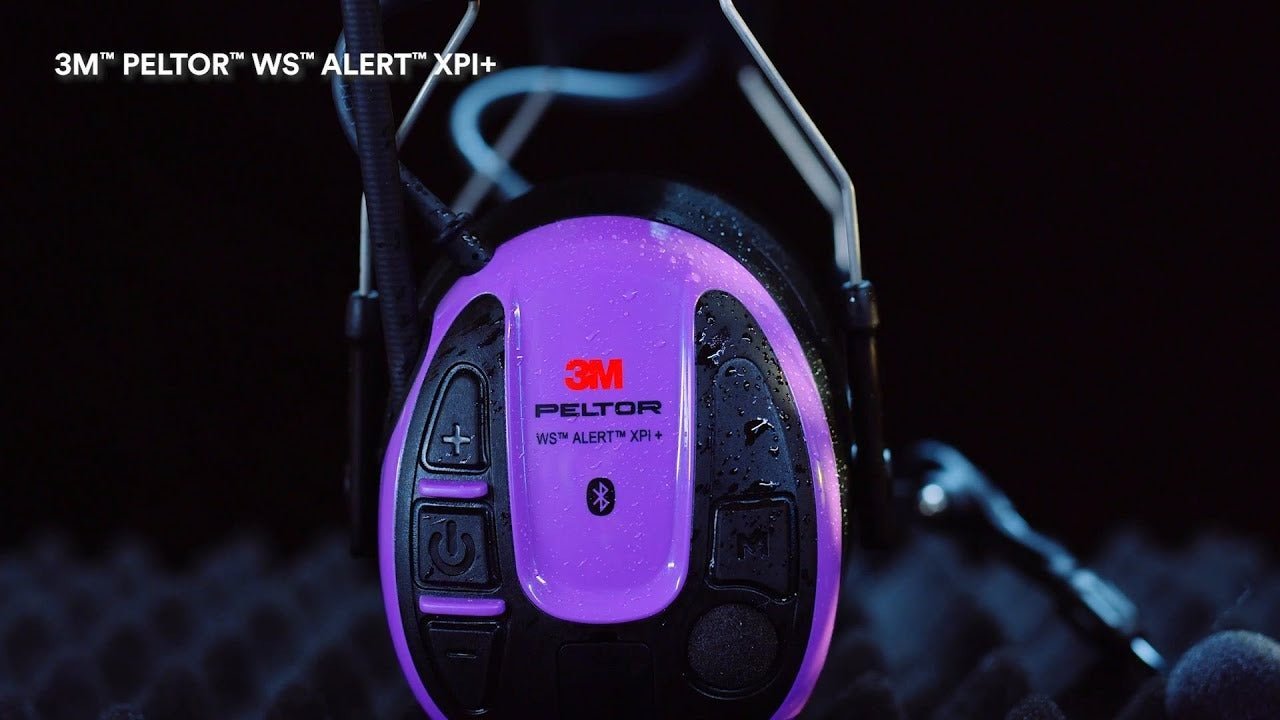
3M PELTOR covers several different jobs: passive hearing protection, electronic hearing protection for shooting, and protective communication for demanding work. A ComTac headset is not simply a more expensive version of an Optime earmuff, so the right choice starts with the environment and communication requirement.
Quick answer: Choose the specific PELTOR family by its documented protection and communication role. For hazardous noise, confirm the exact model's hearing-protection rating and fit. For radio communication, also confirm the headset lead, push-to-talk hardware, radio interface, and regional variant before ordering.

Start With the Job, Not the PELTOR Name
3M currently separates PELTOR products across hearing protection and protective communications. That distinction matters because a passive industrial earmuff, an electronic shooting protector, and a tactical communications headset solve different problems.
For a broader explanation of ratings, fit, and the difference between consumer noise cancellation and certified protection, see Wantek's hearing protection headphones and earmuffs guide.
| PELTOR family | Primary role | What to verify |
|---|---|---|
| ComTac VI | Protective communications with environmental listening in high-noise operational settings | Exact lead/wiring, radio and PTT compatibility, regional model, helmet or headband configuration |
| Sport Tactical 100 | Electronic hearing protection for indoor or outdoor shooting and hunting | NRR, fit, suppression settings and whether the product matches the shooting environment |
| Optime 95 | Passive industrial/occupational hearing protection | Exact model and mounting style, current NRR label, compatibility with other PPE |
ComTac VI Is a Protective Communications System
3M describes the PELTOR ComTac VI as a protective communication solution for clear communication in noisy environments. Its documented features include environmental microphones for level-dependent hearing protection and situational awareness, Natural Interaction Behavior (NIB) peer-to-peer communication on applicable models, and a noise-cancelling boom microphone for speech transmission.
That is different from ordinary consumer ANC. The headset manages hazardous-noise protection, environmental listening, and communications as an integrated system. The exact ComTac VI configuration still matters because 3M sells variants with different leads and wiring. Check the part number rather than assuming every ComTac VI connects to the same radio or push-to-talk setup. See the official 3M ComTac VI product information.
Sport Tactical 100 Is Built Around Electronic Hearing Protection
The PELTOR Sport Tactical 100 is documented by 3M as an electronic hearing protector for shooters and hunters. The U.S. product page lists an NRR of 22 dB and adjustable suppression behavior intended to help manage impulse noise and indoor echoes.
That does not mean every shooting environment requires the same protector. Exposure level, fit, other protective equipment, and applicable workplace or range rules still determine what protection is appropriate. Use the model's rating as an input to the decision, not as a universal promise of sound reduction at the ear.
Optime 95 Is a Passive Earmuff Family
Optime 95 models are passive earmuffs rather than tactical radio headsets. 3M's current U.S. pages show model-specific NRR values, and 3M announced attenuation-label updates for some Optime variants in 2026. For example, the H6P3E/V hard-hat-attached model is now listed at 20 dB NRR, while some over-the-head and folding listings still show 21 dB.
This is why a generic claim such as “Optime 95 has a 21 dB NRR” is too broad. Match the rating to the exact part number and current label. The mounting style also matters if the earmuff must work with a hard hat or other PPE. See 3M's Optime 95 product information.
NRR and Electronic Listening Are Different Questions
A hearing-protection rating addresses attenuation under a defined test framework. Electronic environmental listening can help a wearer hear speech or low-level surroundings while the device continues to provide its designed protection, but that feature should not be described as ordinary music-headphone ANC.
For occupational use, follow the employer's hearing-conservation process and the protector manufacturer's fitting instructions. 3M also notes that the labeled NRR can overestimate protection achieved in typical use, so fit and the actual noise environment remain important.
Check Communications Compatibility Before Buying
A tactical headset can be physically comfortable and still be wrong for a radio system. Before purchasing a communications model, record the exact radio, connector or lead, required PTT, helmet or headband setup, and whether single- or dual-communications routing is needed. Do not infer compatibility from the PELTOR family name alone.
Which PELTOR Type Fits Which Use Case?
- Protective radio communications: start with the relevant ComTac configuration and verify the full radio/PTT interface.
- Shooting or hunting: compare electronic hearing protectors such as Sport Tactical 100 by rating, fit, controls, and range requirements.
- Industrial passive protection: compare Optime or other rated earmuffs by the exact model's attenuation, mounting style, and PPE compatibility.
- General music or office calls: a PELTOR hearing protector is usually a different product category from a conventional consumer or office headset.
3M PELTOR Headset FAQ
Is ComTac VI an active noise-cancelling headphone?
It is better described as a protective communications headset with level-dependent environmental listening and hearing-protection functions. Consumer ANC terminology does not accurately describe its safety role.
Does every PELTOR headset have the same NRR?
No. Ratings vary by family, model, configuration, and current labeling. Check the exact part number and current manufacturer documentation before comparing protection.
Can any ComTac VI connect to any tactical radio?
No. ComTac VI variants use different leads and wiring. Confirm the radio, PTT, connector, regional variant, and required communication configuration before ordering.
Is Optime 95 a communications headset?
Optime 95 is primarily a passive hearing-protection earmuff family. If two-way communications are required, use a product designed and documented for that task.

