
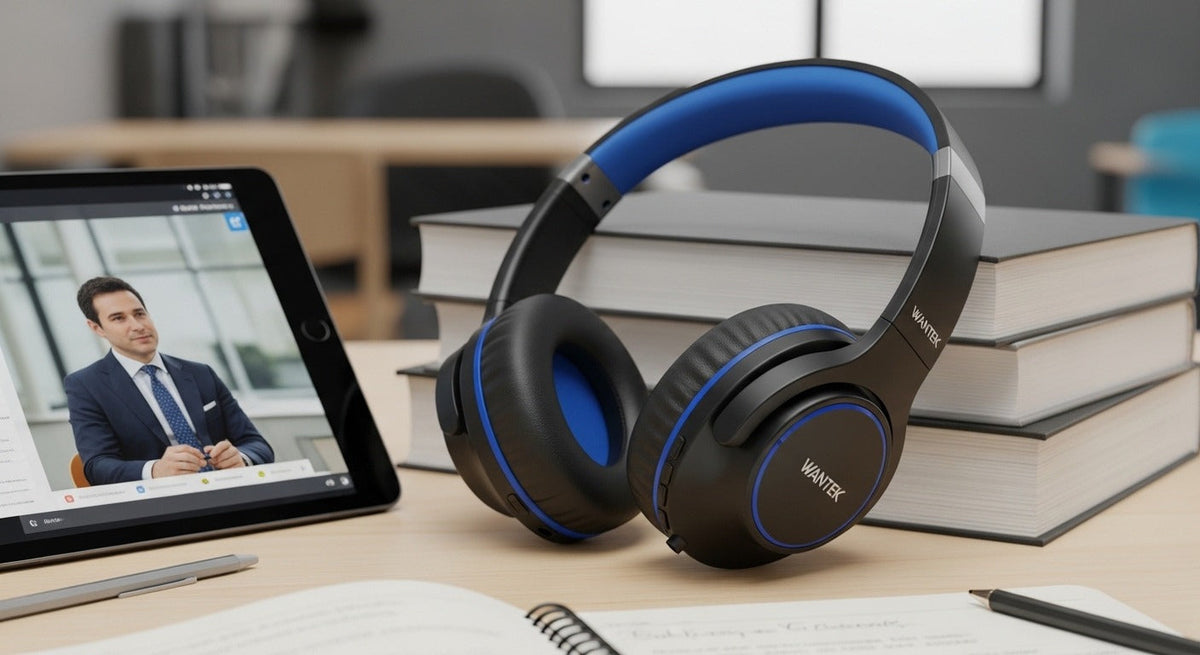
Noise cancelling headphones for studying are most useful when they reduce the distractions you actually face without becoming uncomfortable after an hour or two. Strong ANC matters, but so do fit, battery life with ANC turned on, awareness controls, and your budget.
Quick answer: for maximum verified noise reduction, start with the Sony WH-1000XM6. For a comfort-first premium option, compare the Bose QuietComfort Headphones. For a lower-priced model with strong independent ANC support, the Soundcore Space Q45 is a practical middle ground. Wantek T3 is a simpler specification-led option with ANC, transparency mode, Bluetooth 5.3, and up to 60 hours of listed battery life, but it does not have comparable independent ANC test data.

This guide focuses on over-ear ANC headphones for long study sessions. If your main problem is school-device compatibility, classroom calls, or choosing between wired and wireless options, use our broader headphones for students guide instead.
What Matters Most for Studying?
ANC performance varies widely. Independent testing from RTINGS shows that some current models reduce a broad range of environmental sound, while others with an ANC label are much less effective. For studying, that difference matters in dorm rooms, libraries, cafés, shared apartments, and transit.
- Noise type: steady HVAC, traffic, and engine noise are common ANC targets. Better systems can also reduce some speech and office chatter, but no consumer ANC headphone removes every voice or sudden sound.
- Comfort: clamp, ear-cup depth, pad material, heat, glasses, and head shape can matter more than a small difference in weight.
- Battery with ANC on: compare the figure that matches how you will actually study, not the larger ANC-off number.
- Awareness mode: transparency or ambient modes are useful when you need to hear an announcement, roommate, instructor, or traffic without removing the headphones.
- Connections: multipoint can be useful if you move between a laptop and phone. A wired option can also be helpful when battery life or Bluetooth restrictions are a concern.
Four Noise Cancelling Headphones to Compare for Studying
| Model | Study priority | Verified details | Important limit |
|---|---|---|---|
| Sony WH-1000XM6 | Strongest verified ANC in this comparison | Over-ear, Adaptive NC Optimizer, multipoint, ambient sound mode, about 8.96 oz, up to 30 hr with noise cancelling on | Premium price; seal can be affected by glasses or individual fit |
| Bose QuietComfort Headphones | Comfort-focused premium study sessions | Around-ear fit, ANC, Quiet and Aware modes, 0.520 lb, up to 24 hr battery | Shorter listed battery life than several alternatives here |
| Soundcore Space Q45 | Lower-priced ANC with strong feature coverage | Adaptive ANC, multipoint, Bluetooth 5.3, 292 g, up to 50 hr with ANC on | Heavier than the Sony and Bose options; independent testing notes an audible noise floor with ANC active and no content playing |
| Wantek T3 | Simple lower-cost specification-led ANC option | Over-ear, ANC, transparency mode, Bluetooth 5.3, inline microphone, up to 60 hr listed battery life | No comparable independent ANC benchmark in the sources reviewed for this guide |
Sony WH-1000XM6: Start Here When Noise Reduction Comes First
Sony lists the WH-1000XM6 at approximately 8.96 oz with Adaptive NC Optimizer, multipoint Bluetooth, Ambient Sound Mode, and up to 30 hours of continuous music playback with noise cancelling on. Sony's specifications also include passive wired operation through the supplied stereo cable.
RTINGS currently places the WH-1000XM6 at the top of its noise-cancelling headphone recommendations and reports strong attenuation across low-frequency rumble and midrange office chatter. The main fit warning is seal consistency: glasses or an imperfect ear-pad seal can reduce isolation.
Bose QuietComfort Headphones: A Comfort-First Alternative
Bose QuietComfort Headphones use an around-ear design with active noise cancellation, Quiet and Aware modes, removable cushions, and up to 24 hours of battery life. Bose lists the headset at 0.520 lb, about 236 g.
This is a useful comparison when you care as much about long-session fit as maximum ANC. No published comfort specification can tell you how a headband or cushion will feel on your head, so return policy and real wear time matter more than the word “comfortable” on a product page.
Soundcore Space Q45: Stronger Value When Premium Pricing Is Too High
Soundcore Space Q45 lists adaptive ANC, Bluetooth 5.3, multipoint, 292 g weight, and up to 50 hours of playtime with ANC on. RTINGS also identifies the Q45 as a lower-mid-range ANC pick with effective isolation across a wide range of environmental sound.
The trade-off is weight and refinement. RTINGS notes an audible noise floor with ANC active when no content is playing. If you prefer studying in near silence rather than with music or ambient audio, that behavior is worth testing before you commit.
Wantek T3: A Simpler Specification-Led Option
Wantek T3 is the current Wantek over-ear model with published active noise cancellation. Its product page lists ANC, transparency mode, Bluetooth 5.3, an inline microphone, and up to 60 hours of battery life.

The evidence boundary matters: these are manufacturer-listed features, not proof that T3 matches the ANC performance of Sony, Bose, or Soundcore in controlled comparative testing. It is better treated as a lower-cost option to compare on fit, current price, availability, and whether its simpler feature set is enough for your study environment.
Compare the Wantek ANC Option
Check the current T3 specifications and availability before deciding whether it fits your study setup.
How to Choose ANC Headphones for Your Study Environment
Library or Quiet Study Room
In an already quiet room, maximum ANC may not be worth paying for. Fit, low clamp pressure, heat management, and a low electronic noise floor can become more important because there is less environmental sound to mask small headphone noises.
Dorm Room or Shared Apartment
Speech is one of the harder distractions to remove completely. Prioritize models with strong measured midrange isolation, then check whether the ear pads seal well around your glasses and head shape. ANC can reduce the room, but it will not make nearby conversations disappear.
Café, Bus, or Train
These environments add steady low-frequency sound from ventilation, traffic, and engines. Strong ANC is more valuable here, while transparency mode gives you a quick way to hear announcements or surroundings when needed.
Long Reading or Exam-Prep Sessions
Comfort can become the limiting factor before battery life does. If you are sensitive to pressure or heat, compare ear-cup depth, clamp, pad material, and weight rather than choosing from one specification alone. Our lightweight wireless headphones guide covers those fit variables in more detail.
Study Volume Still Matters
Noise cancellation should not become a reason to raise playback volume. The World Health Organization's safe-listening guidance recommends keeping device volume below 60% of maximum, using well-fitted or noise-cancelling headphones in noisy settings, and taking listening breaks.
ANC headphones are consumer audio products, not automatically hearing protection. OSHA advises against substituting ordinary consumer ANC headphones for laboratory-tested hearing protectors when occupational protection is required.
Common Buying Mistakes
- Choosing by the ANC label alone. Actual noise reduction can vary significantly between models.
- Ignoring fit. A poor seal can reduce isolation, and excessive clamp or heat can end a study session early.
- Comparing unlike battery claims. ANC-on and ANC-off numbers answer different questions.
- Assuming ANC removes every voice. Better models can reduce speech, but nearby conversation may still remain audible.
- Buying features you do not use. Premium codecs, elaborate apps, or call features may matter less than comfort and noise control for a study-only headset.
Bottom Line
For study environments where noise reduction is the first priority, the Sony WH-1000XM6 has the strongest independent ANC support in this comparison. Bose QuietComfort Headphones are a sensible comfort-first alternative. Soundcore Space Q45 offers a lower-priced path with credible independent ANC performance and longer listed ANC battery life.
Wantek T3 belongs in a different evidence tier: it offers a simpler set of published ANC features and long listed battery life, but there is no comparable independent benchmark in the sources reviewed here. Choose it only if the fit, price, availability, and feature set make sense for your actual study environment.
Frequently Asked Questions
Are noise-cancelling headphones good for studying?
They can be useful in noisy study spaces because ANC reduces some environmental sound. Comfort, fit, battery life, and the specific noise around you still matter.
Does ANC block people talking?
Good ANC can reduce some speech, but it usually will not remove nearby conversations completely. Performance depends on the headphone, voice, distance, and ear-pad seal.
Can I study with ANC on and no music?
Many ANC headphones can run noise cancellation without music. Whether that feels more focused is personal, so test for pressure sensation, electronic hiss, and comfort.
How loud should I use headphones while studying?
WHO recommends keeping device volume below 60% of maximum and taking breaks. A good seal and effective ANC can reduce the need to raise volume in noisy places.

