
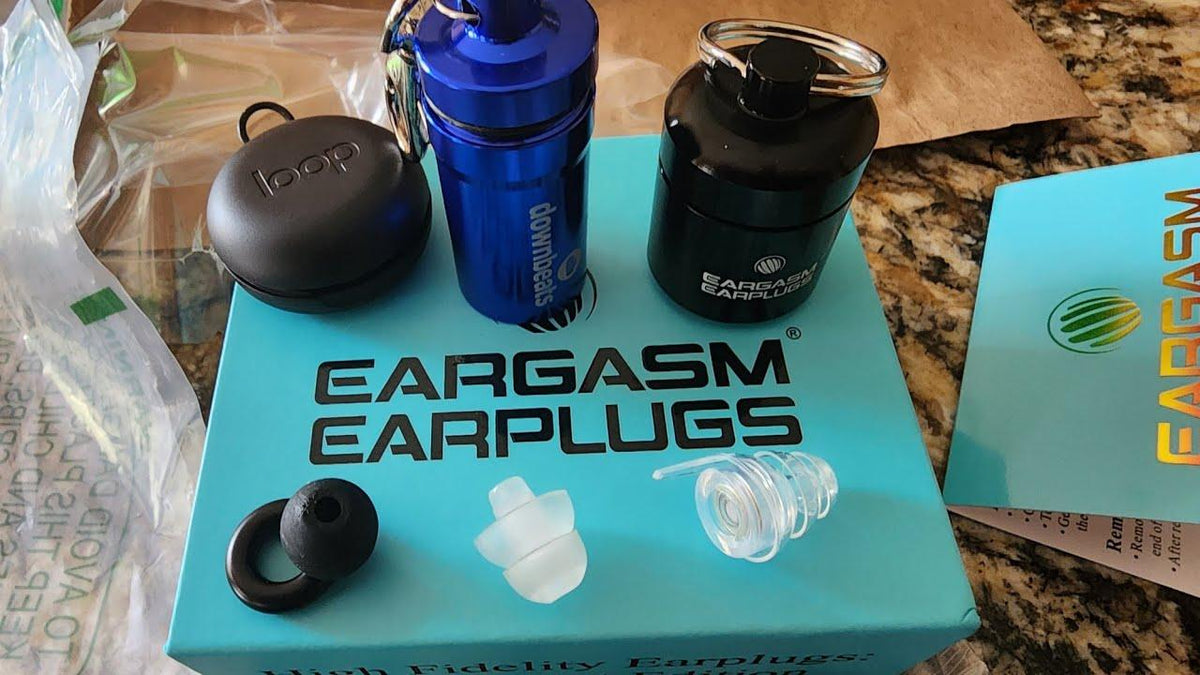
For concerts, the best ear protection is protection you can fit correctly and keep in for the loud parts of the event. Music-focused earplugs are designed to reduce level while preserving more of the frequency balance than basic foam plugs, but the right attenuation depends on the venue, duration, fit, and your exposure.
Quick answer: reusable high-fidelity earplugs are a practical starting point for many concertgoers; custom musician earplugs make more sense for frequent attendance, performing, or people who struggle with universal fit. Do not use ordinary ANC earbuds as a substitute for hearing protection unless the product is actually documented as hearing protection.

Why Concert Ear Protection Matters
The World Health Organization’s safe-listening work treats entertainment venues and events as a meaningful source of recreational sound exposure. Its Global Standard for Safe Listening Venues and Events recommends a combination of sound-level management, monitoring, optimized venue acoustics, access to hearing protection, quiet zones, and staff information rather than relying on the audience to solve the problem alone.
WHO’s venue standard uses 100 dB LAeq over 15 minutes as a maximum average sound-level recommendation for venues and events. That number is a venue-management recommendation, not a guarantee that every listener can remain at that level for any duration without risk.
Concert Earplug Types Compared
| Type | Why choose it | Main limitation |
|---|---|---|
| Disposable foam | Low cost, widely available, potentially high attenuation when fitted correctly | Can change music balance noticeably and is easy to fit poorly |
| Reusable high-fidelity plug | Designed for more even attenuation across frequencies than a simple solid plug | Universal fit may not seal comfortably or consistently for every ear |
| Custom musician earplug | Made from ear impressions and available with music-oriented filters | Higher cost and requires an impression / fitting process |
| Earmuff | Easy to see and reposition; useful when an earplug cannot be worn | Bulkier and less practical for many audience settings |
High-Fidelity Earplugs: The Practical Concert Option
A high-fidelity earplug uses an acoustic filter or tuned pathway to reduce sound while trying to preserve more of the original spectral balance. “High fidelity” does not mean zero coloration, and attenuation still depends on fit.
The current Etymotic ER20XS documentation, for example, lists a U.S. Noise Reduction Rating of 13 dB and an SNR of 17 dB. The same instructions warn that improper fit reduces effectiveness. Treat those numbers as the product’s standardized ratings, not a promise that every concertgoer receives exactly the same reduction at the ear.
Custom Musician Earplugs: For Frequent Concerts and Performers
Custom musician earplugs are made from impressions of the user’s ears and can use interchangeable attenuation filters. Sensaphonics ER Series Musician Earplugs, for example, are custom soft-silicone plugs offered with 9, 15, or 25 dB filters. Sensaphonics requires ear impressions made to its specifications.
Custom fit can be worthwhile when universal plugs repeatedly leak, become uncomfortable, or fall out, or when you attend or perform at loud events often enough that a dedicated fit is useful. It does not eliminate the need to select appropriate attenuation for the actual sound environment.
How Much Attenuation Should You Choose?
There is no single concert number that is correct for every venue. Too little attenuation can leave exposure higher than intended; excessive attenuation can make speech and musical cues harder to hear and may tempt a wearer to remove the plugs.
- Occasional listener: a well-fitting reusable high-fidelity plug can be a sensible first choice.
- Very loud or long event: prioritize enough attenuation to reduce the exposure and keep the plugs in consistently.
- Musician / production staff: compare filtered custom options and work with a hearing professional when accurate monitoring and repeated exposure are both important.
- Fit problem: change size/design or consider custom fit rather than assuming the product is ineffective.
For occupational exposure, hearing-protector selection follows different rules and may include formal fit testing. NIOSH’s 2025 policy update recommends individual quantitative fit testing for workers. Wantek’s hearing-protection headphones and earmuffs guide explains that workplace context separately.
Where You Stand Matters Too
Earplugs are only one control. Distance from loudspeakers, event duration, quiet breaks, and the venue’s own sound-management practices affect total exposure. WHO’s safe-listening standard specifically includes quiet zones and sound-level monitoring as parts of a safer event environment.
If the music feels painfully loud, your ears ring afterward, or hearing feels muffled after the event, do not treat those signs as proof that the earplugs were “good enough.” A hearing protector must be fitted and used correctly, and exposure accumulates across the event.
ANC Earbuds Are Not the Same as Earplugs
Active noise cancellation can make some environmental sound less noticeable, but consumer ANC is not automatically a hearing-protection rating. If you need actual protection, verify that the product is sold and documented as a hearing protector for the intended use.
This is the same distinction covered in Wantek’s Bluetooth earplugs guide: connectivity, ANC, and hearing-protection attenuation are separate features.
Concert Earplug Buying Checklist
- Check the documented rating. Look for the actual NRR, SNR, filter attenuation, or other applicable product documentation rather than an unqualified “reduces noise” claim.
- Check fit options. Flange size, foam size, stem length, material, and custom molds can change comfort and seal.
- Choose for the event. A small club, arena, festival, orchestra pit, and stage-monitoring job can require different protection.
- Practice insertion before the show. Do not learn the fit procedure in a dark venue after the music starts.
- Bring a backup pair. A cheap spare is more useful than no protection if a reusable plug is lost.
- Use quiet breaks. Step away from the loudest area when possible instead of relying on earplugs as the only control.
Frequently Asked Questions
What are the best earplugs for concerts?
For many listeners, reusable high-fidelity earplugs are a practical starting point because they are designed to reduce sound while preserving more musical balance. Frequent concertgoers or performers may benefit from custom musician earplugs.
Are foam earplugs bad for concerts?
No. Correctly fitted foam plugs can provide substantial attenuation. The trade-off is that they may change the perceived frequency balance more than music-focused filtered plugs.
Can I use AirPods or ANC earbuds as hearing protection?
Do not assume so. Consumer ANC and a quieter subjective experience are not the same as a documented hearing-protection rating. Verify the exact product’s intended use and protection documentation.
Are custom musician earplugs worth it?
They can be worthwhile for frequent exposure, performing, or persistent universal-fit problems. The value comes from individualized fit and filter options, not from a guarantee that custom plugs are always safer in every situation.

