
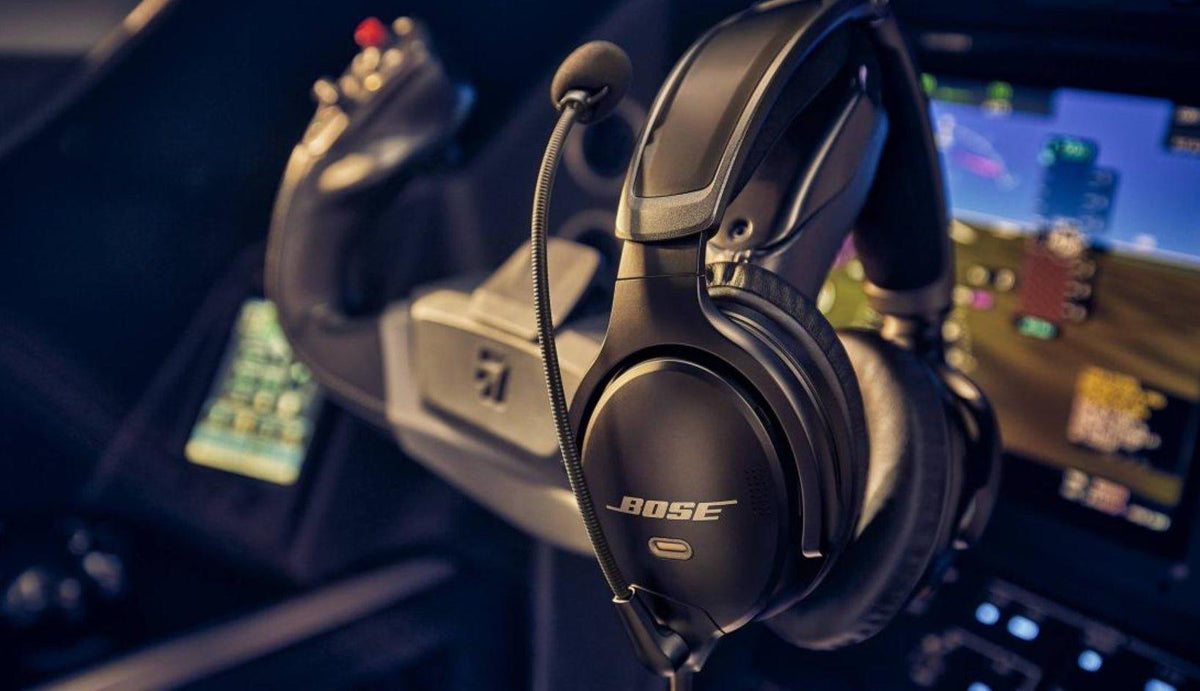
Bose A30 is the current successor to the A20 aviation headset. Bose says the A30 preserves the A20's acclaimed noise cancellation while reducing overall weight and clamping force and adding three selectable active-noise-reduction modes, tap-through communication and a more flexible microphone/down-cable arrangement.
Quick answer: If you already own an A20, compare the A30 changes you can actually use: 20% lower clamping force, lower overall weight, three ANR modes, tap control for talk-through, side-swappable microphone/down cable, current certifications and available connector configurations. Verify the exact aircraft connection before replacing a working A20.

A30 Is an Evolution of the A20
Bose explicitly positions A30 as an evolution of A20. The current Bose A30 product page says A30 upholds the A20's noise cancellation while using a lighter design with 20% less clamping force.
| Decision area | What to verify | Why it matters |
|---|---|---|
| Comfort | A30 has lower overall weight and 20% reduced clamping force compared with A20 | This is a direct generational change, but comfort still depends on head shape, glasses and flight duration. |
| Noise control | A30 adds three selectable active-noise-reduction modes and tap-through communication | Pilots can change the amount of attenuation for different aircraft or communication situations. |
| Configuration | A30 microphone and down cable can be mounted on either side without tools; connector and Bluetooth options vary by configuration | The aircraft interface must match the headset version you buy. |
Three ANR Modes Add More Control Than the A20 Workflow
Bose documents three selectable A30 noise-cancellation modes. The headset also supports a tap-control feature that lets the wearer hear someone nearby without removing the headset. These are workflow changes rather than proof that every pilot needs to replace an A20.
Comfort Improvements Are Specific but Still Personal
The 20% clamp reduction is a manufacturer comparison with A20. It does not tell you whether one headset will fit every pilot better. Sunglasses, hat use, head width, seal and session length can change comfort and noise attenuation.
Battery and Bluetooth Depend on the Configuration and Use
Bose states a minimum typical battery life of 45 hours from two AA batteries in aircraft without panel power, with at least 25 hours of continuous Bluetooth use. Treat those as Bose's stated conditions, not a universal flight-hour guarantee.
Check the Aircraft Connector Before Ordering
A30 is sold in several plug and cable configurations and optional Bluetooth variants. Match the aircraft, panel-power arrangement and connector to the exact A30 configuration. A correct headset family with the wrong connector is still an unusable purchase.
Current A30 Certifications Matter for Professional Use
Bose states that A30 is FAA TSO and EASA E/TSO-C139a certified. Pilots who operate under requirements where certification matters should verify the exact purchased configuration and current documentation rather than assuming a used A20 and new A30 have identical paperwork.
Frequently Asked Questions
Is Bose A30 better than A20?
Bose documents specific A30 changes, including lower weight, 20% less clamping force, three ANR modes and tap-through communication. Whether those changes justify replacement depends on your aircraft and workflow.
Does Bose A30 use batteries?
Bose documents two AA batteries for aircraft without panel power and states a minimum typical battery life of 45 hours, with lower continuous runtime when Bluetooth is used.
Can I use the same connector as my A20?
Do not assume so from the product family alone. A30 is offered in multiple connector and cable configurations, so match the exact version to your aircraft.

