
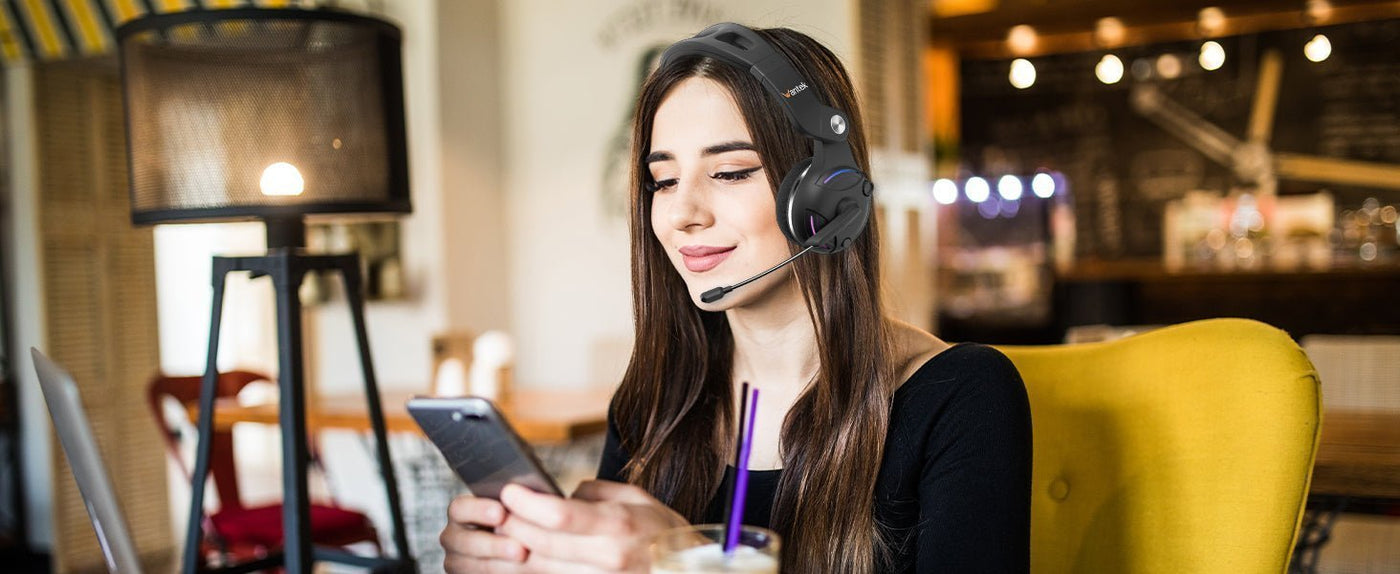
The best over-ear headphones depend on what you need them to do. Strong ANC matters for travel and noisy offices, comfort matters for long sessions, battery matters away from a charger, and wired or codec support can matter more for music-focused listening.
Current shortlist: Sony WH-1000XM6 for a feature-rich premium ANC option, Bose QuietComfort Ultra Headphones (2nd Gen) when comfort is a major priority, Sennheiser MOMENTUM 4 Wireless for long published battery life, and Wantek T3 as a lower-cost ANC starting point. This is a use-case shortlist based on current published specifications and independent testing, not a Wantek head-to-head lab ranking.

Best Over-Ear Headphones by Priority
| Priority | Model to compare | Why it belongs on the shortlist |
|---|---|---|
| Premium ANC and broad features | Sony WH-1000XM6 | Over-ear ANC, Bluetooth 5.3, ambient-sound features, LDAC/LC3 support, and up to 30 hours of continuous music playback with noise cancelling on. |
| Comfort-focused premium ANC | Bose QuietComfort Ultra Headphones (2nd Gen) | Recent independent testing identifies a comfortable fit and strong noise isolation; fit preference still varies by person. |
| Long published battery life | Sennheiser MOMENTUM 4 Wireless | Bluetooth 5.2, adaptive noise cancellation, aptX Adaptive/AAC/SBC, USB-C audio, and up to 60 hours of published battery life with ANC on. |
| Lower-cost Wantek ANC option | Wantek T3 | Over-ear design, Bluetooth 5.3, ANC, transparency mode, inline microphone, and up to 60 hours of listed battery life. |
Start With the Use Case, Not the Biggest Spec
Travel and commuting
Closed-back ANC headphones are a practical starting point when you want to reduce steady environmental noise. Portability, case size, transparency or ambient mode, battery life, and wired fallback can matter as much as the maximum ANC performance.
Office and remote work
Separate what you hear from what callers hear. Listener-side ANC can improve focus, while microphone noise reduction and call-platform compatibility affect the outgoing call. If office noise is the main problem, the noisy-office ANC guide goes deeper into that distinction.
Long listening sessions
Published weight is useful, but ear-cup space, clamp, headband pressure, heat, glasses, and pad material all affect comfort. The long-session comfort guide compares these fit variables in more detail.
Music-first listening
Do not infer sound quality from driver diameter, price, codec count, or “Hi-Res” labeling alone. Tuning, distortion, pad seal, DSP, source quality, and personal preference all contribute. If you use Bluetooth, verify that both the headphone and source device support the codec you care about.
ANC, Passive Isolation, and Transparency Are Different
Active noise cancellation uses microphones and signal processing to reduce some external sound reaching the listener. Passive isolation comes from the physical seal and materials around the ear. Transparency or ambient mode intentionally lets more environmental sound through using the headphone microphones.
These features solve different problems. A strong passive seal can help even with ANC turned off, while transparency is useful when you need to hear announcements or nearby conversation without removing the headphones.
Battery Claims Need Matching Conditions
Battery numbers are only comparable when the conditions match. ANC on versus off, music playback versus talk time, codec choice, volume, and extra features can change runtime. Sony, for example, publishes separate playback figures with noise cancelling on and off, while Sennheiser publishes an “up to” figure for MOMENTUM 4 with ANC on.
Use the manufacturer’s stated test conditions where available, and leave some reserve instead of choosing a model that only just covers your longest day.
Comfort Is Individual
Over-ear pads surround the outer ear, but that does not guarantee comfort. Small ear-cup openings can touch the ear, glasses can create pressure or break the seal, and sealed pads can trap heat during long sessions.
Try the headphones for longer than a few minutes when possible. Check ear clearance, pressure at the crown and temples, heat, and whether the seal changes when you wear glasses.
Wired Playback Still Matters for Some Buyers
A wired option can be useful for airplanes, audio interfaces, computers with weak Bluetooth performance, or listening when the battery is low. Verify whether the headphone supports passive analog playback, USB audio, or only charging through USB-C; these are not interchangeable features.
Where Wantek T3 Fits
Wantek T3 is the current Wantek over-ear model with published active noise cancellation. Its product page lists Bluetooth 5.3, ANC, transparency mode, an inline microphone, and up to 60 hours of battery life. Those specifications do not establish that its ANC, microphone, or sound quality matches premium Sony, Bose, or Sennheiser models in independent testing.
Compare the Wantek T3 Specs
Check the current ANC, transparency mode, Bluetooth version, microphone type, battery information, price, and availability before deciding whether it fits your listening needs.
Frequently Asked Questions
What are the best over-ear headphones right now?
There is no single winner for every user. Sony WH-1000XM6, Bose QuietComfort Ultra Headphones (2nd Gen), Sennheiser MOMENTUM 4 Wireless, and Wantek T3 represent different ANC, comfort, battery, and price priorities.
Are over-ear headphones always better than earbuds?
No. Over-ear models can provide more ear-cup space and strong isolation, while earbuds are smaller and often more practical for exercise. Fit, use case, and individual preference matter more than form factor alone.
Does a larger headphone driver mean better sound?
No. Driver size is one design variable. Tuning, enclosure design, distortion, pad seal, DSP, amplification, and the recording itself can matter more to the final listening experience.
Is ANC the same as microphone noise cancellation?
No. Headphone ANC primarily reduces environmental sound reaching your ears. Microphone noise reduction changes the signal sent to callers. A product may support one without being strong at the other.

