
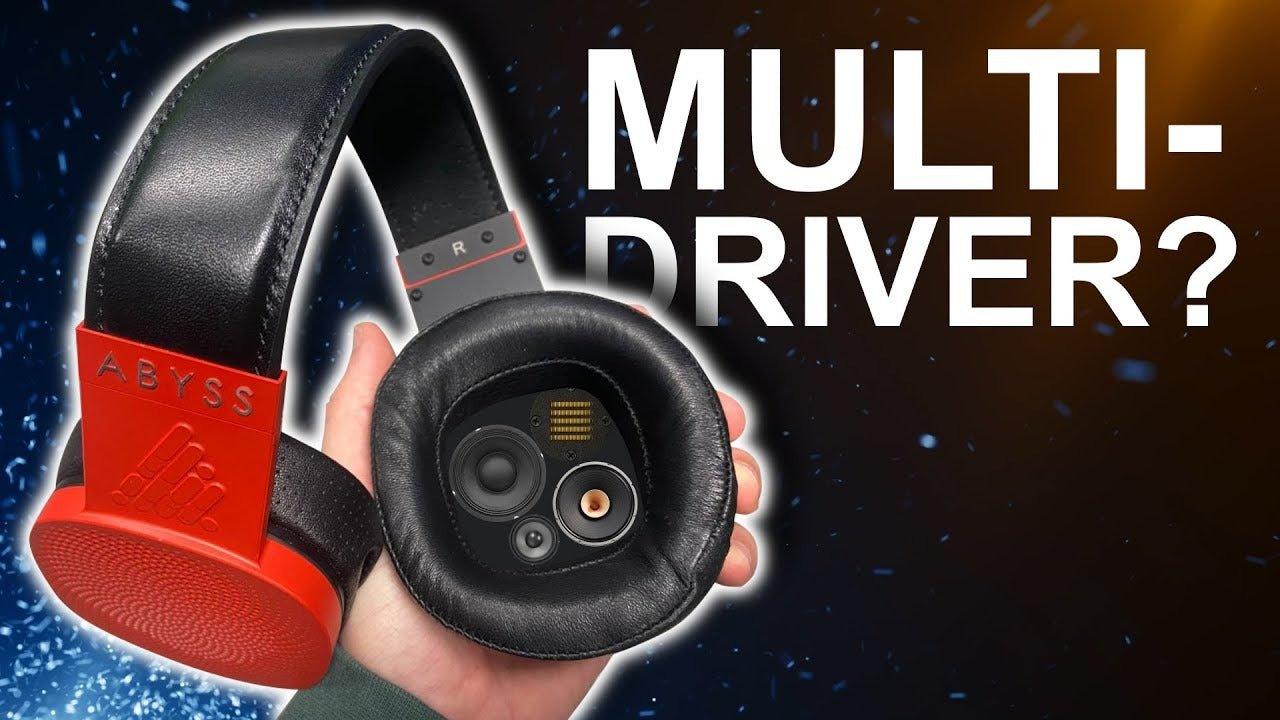
Multiple drivers can divide the audio band between specialized transducers, but a higher driver count is not a quality score. The crossover, acoustic chamber, phase alignment and tuning determine whether the system works coherently.
Key point: many multi-driver designs are IEMs using balanced-armature and/or dynamic drivers. Over-ear headphones more often use a single full-range driver per side, though exceptions exist.
Why Use More Than One Driver?
One transducer can reproduce a wide frequency range. A multi-driver design instead assigns different ranges to different drivers, usually through an electrical or acoustic crossover.
| Design | Potential benefit | Trade-off |
|---|---|---|
| Single dynamic driver | Simple signal path and coherent source | One driver handles the full band |
| Multi-BA IEM | Drivers can be assigned to different bands | Requires careful crossover and phase design |
| Hybrid IEM | Can combine dynamic bass with BA or planar/EST treble elements | More complex integration; more parts do not guarantee better tuning |
Why Driver Count Is a Weak Buying Metric
A well-tuned single-driver earphone can outperform a poorly integrated multi-driver design. Frequency response, distortion, fit, crossover behavior and consistency matter more than “8 drivers” versus “4 drivers” in isolation.
Gaming Claims Need Caution
Multiple drivers do not create a guaranteed reaction-time advantage. Positional cues depend on the game mix, HRTF/spatial processing, frequency response and the player's hearing and familiarity with the game.
If you are choosing headphones for music rather than evaluating driver topology itself, Wantek's music headphone selection guide puts fit, isolation, source, and tuning ahead of driver count.
Frequently Asked Questions
Are more drivers always better?
No. Driver integration and tuning matter more than count alone.
What is a hybrid IEM?
It combines two or more transducer types, commonly a dynamic driver with balanced-armature drivers.
Do multi-driver headphones create true surround sound?
Not necessarily. Most headphone surround experiences are created through spatial processing rather than a literal loudspeaker array around the listener.
Original Article Media

If the driver design is only one part of a broader purchase decision, continue with the music headphone selection guide.

