
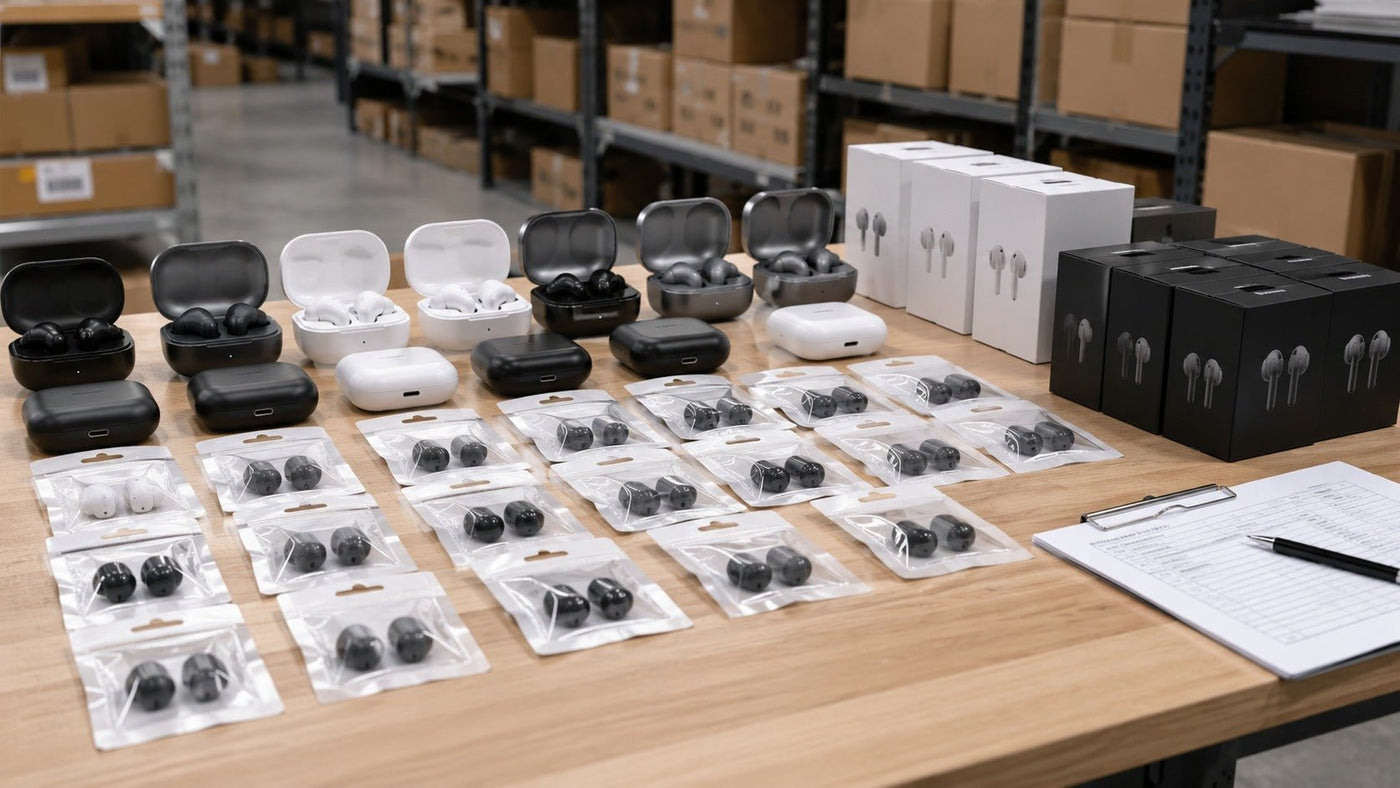
So you're thinking about buying wholesale wireless earphones in bulk. Maybe you're a school administrator drowning in tech requests. Or a small business owner trying to stock shelves with something that actually sells. Or perhaps you're just sick of untangling wires every time you want to hear a podcast. Trust me, I've been there. All of it.
Let me tell you a story. I once ordered a pallet of cheap Bluetooth earphones from a website that looked too good to be true. Spoiler alert: it was. The left earbud died after three days. The right one whispered static instead of music. The charging case melted in my car. Okay, it didn't actually melt, but it got alarmingly warm. I learned a brutal lesson that day.
Buying in bulk sounds simple. Just pick a supplier, click "add to cart," and boxes appear at your door. But the reality is messier. Way messier. This guide will walk you through everything I've learned from my mistakes. We'll cover finding reliable suppliers, dodging scams, and even niche stuff like earbuds in bulk for schools. Because yes, that's a real thing. And honestly? It's brilliant.
Why Wholesale Wireless Earphones Matter Now
Let's talk about the elephant in the room. The headphone jack is dead. Apple killed it. Samsung followed. Now even budget phones are ditching the 3.5mm port. Wireless earbuds aren't a luxury anymore. They're a necessity. But buying them individually from retail stores? That's like buying bottled water at an airport. You're paying a premium for pure convenience.
Buying wholesale wireless earphones changes the game. The cost per unit drops dramatically. But there's another layer most people miss. Customization. Many wholesalers let you slap your logo on the packaging. Imagine handing out branded earbuds at a trade show. Or better yet, think about classrooms.
I've seen schools where teachers use earbuds in bulk for schools for language labs. For audio books. For quiet study time. The applications are endless. But here's the catch. Kids lose everything. Earbuds vanish like candy at a parade. That's why bulk earbuds individually wrapped is the smart play. Each pair comes sealed. No hygiene worries. No missing pieces. Just clean, functional earbuds ready for distribution.
The Emotional Side of Sound
Here's something people don't talk about. Earbuds are personal. They plug directly into your ears. They carry your music, your podcasts, your private world. When you hand someone a pair of cheap earbuds that sound like garbage, you're not just giving them bad audio. You're ruining their experience. Their concentration. Their comfort.
I remember buying a bulk order for a small library. The earbuds were so uncomfortable that patrons complained after twenty minutes. Twenty minutes. A librarian told me, "These things are worse than silence." That stuck with me. Quality matters. Not just for your reputation, but for the people using your products.
The Trend You Can't Ignore
Wireless earbuds are everywhere. You see them on subways. In coffee shops. At the gym. They've become a fashion statement, a status symbol, a productivity tool. The market is exploding. Industry reports show the wireless earbud market continues to grow rapidly as phones drop headphone jacks and consumers shift toward Bluetooth audio.
If you're not tapping into this trend, you're missing out. But you can't just throw money at any supplier. You need strategy. You need knowledge. You need to avoid the pitfalls that'll leave you with a warehouse full of junk.
Source: Future Market Insights: True Wireless Stereo Earbuds Market

Finding a Reliable Supplier
Finding a supplier for wholesale wireless earphones is like dating. You have to kiss a few frogs. Do not rely on the first website that pops up on Google. I learned this the hard way. I ordered from a company that looked professional. Sleek website. Professional photos. Fast email responses. But the earbuds they shipped smelled like burning plastic. Literally. Burning plastic.
Start with platforms like Alibaba, Global Sources, or ThomasNet. But don't just scroll through photos. You're looking for factories with certifications. Bluetooth SIG certification. FCC certification. CE marking. If a supplier can't provide these documents, walk away. No, run. Sprint, even.
The Red Flags You Can't Ignore
Let me give you a list. Print it out. Tape it to your desk.
- Prices that make you suspicious: If a pair of wireless earbuds costs less than a fancy coffee, assume they'll sound like one. Scratchy and bitter.
- No minimum order quantity: Reputable suppliers usually have a MOQ. If they're willing to sell you just ten pairs, they're likely a middleman. Not a manufacturer.
- Vague product specs: Bluetooth 5.0 is standard now. If they list "Bluetooth 4.2" or just "Bluetooth," run. Seriously, run.
- No reviews or samples: Always ask for a sample before you commit to a thousand units. Yes, it costs a few bucks. But it's cheaper than a disaster.
What You Absolutely Must Ask
When you're chatting with a potential source, don't be shy. Ask hard questions. Push for details. Here's what I always ask:
- What's the real-world battery life? Not lab tests. Real-world.
- How durable is the charging case? The hinges often fail first.
- What's your warranty and return policy?
- Do you offer bulk earbuds individually wrapped for hygiene?
I once asked a supplier about packaging. They said "individual box." What showed up was a plastic bag with loose earbuds rattling around. Not ideal for schools. Not ideal for resale. Clarify everything in writing. Get it in a contract. Save the emails.
Earbuds in Bulk for Schools: The Smartest Investment
Let's zoom in on schools. Because honestly, earbuds in bulk for schools is one of the smartest investments a school can make. Think about it. Classrooms are moving digital. Kids have Chromebooks, tablets, and online testing. But sharing earbuds is gross. Sometimes it's banned by health policies.
I talked to a tech coordinator in Texas. She orders bulk earbuds individually wrapped every semester. She told me it's cheaper than replacing lost chargers or fixing broken headphone jacks. Plus, kids can't lose them if they're individually wrapped and distributed per lesson. She even gets them with the school logo. It's genius.
The Numbers Game
Here's the breakdown for schools:
- Cost per unit: Aim for three to eight dollars per pair for decent quality. Anything cheaper and you'll get ear pain or static.
- Volume discounts: Ordering five hundred or more units often drops the price by twenty to thirty percent.
- Packaging: Individually wrapped is non-negotiable for hygiene. No exceptions.
- Bulk storage: Make sure the packaging is compact. You don't want boxes taking up half a supply closet.
A caveat. Not all wireless earbuds are kid-friendly. Look for ones with a simple one-button control. No swipe gestures. No complicated touch commands. Battery life should last a full school day. At least six hours. And avoid overly complicated pairing. If a teacher has to help thirty kids connect each pair, you'll waste half the class.
A Personal Insight
I visited a school last year. The principal showed me their storage closet. Boxes of earbuds stacked to the ceiling. He said they ordered two thousand pairs from a cheap supplier. Half of them had connectivity issues. The other half broke within a month. He looked exhausted. Defeated. He told me, "I thought I was saving money. I ended up wasting it."
That's the trap. Cheap wholesale wireless earphones often cost more in the long run. You pay for replacements. You pay for shipping. You pay for customer complaints. Don't fall for it.
Quality vs. Price: The Eternal Struggle
You want cheap wholesale wireless earphones. But you also want them to work. This is where you gotta draw a line. I've seen resellers buy the cheapest possible units and then spend hours dealing with angry customers. It's not worth it.
The sweet spot for most buyers is mid-range. Here's what that means:
- Bluetooth 5.0 or 5.3 for stable connection.
- Four to eight hours of playback.
- A charging case that holds two to three full charges.
- IPX4 water resistance. Sweat-proof, not shower-proof.
If you're buying for yourself or a small team, you can go cheaper. But for resale or schools, cut corners at your own risk. A batch of five hundred dead earbuds is a nightmare to return.
Testing Your Samples Like a Pro
When you get a sample pair, test them like you're a reviewer. Here's my ritual:
- Pair them to an iPhone and an Android phone.
- Listen to music, a podcast, and a call. Mic quality often sucks on cheap ones.
- Wear them for an hour. If your ears ache, imagine how students or customers will feel.
- Drop them from waist height onto concrete. Yes, do it. If they break, don't buy.
I dropped a sample pair on purpose once. The case cracked. The earbuds stopped charging. The supplier argued it was "user error." I argued with my wallet. I didn't buy.
Packaging: More Important Than You Think
You might think packaging is just a box. But when you're selling or distributing bulk earbuds individually wrapped, the packaging is the first thing people see. Cheap flimsy boxes scream "trash product." For schools, broken packaging means broken earbuds in transit.
Here are your options:
- Individual blister packs: Common and cheap, but hard to stack.
- Paper or cardboard sleeves: Eco-friendly, but less protective.
- Plastic wrap: For bulk earbuds individually wrapped, this is the most practical. Each pair in a sealed bag, easy to hand out.
If you're branding them, get the logo printed on the packaging. It adds maybe fifty cents per unit. But it makes the earbuds look premium. For schools, you can add instructions right on the pack. "Hold button for three seconds to pair." Simple. Effective.
Shipping and Logistics: The Part Nobody Talks About
You've found your supplier. You've agreed on wholesale wireless earphones at a great price. Then the shipping quote arrives. And you choke on your coffee. Shipping from overseas can double your costs. Literally double.
Here's what you need to know:
- Sea freight: Cheapest option. Takes thirty to sixty days.
- Air freight: Fast. Five to ten days. Expensive.
- DDP: Delivered Duty Paid. The supplier handles customs and duties. Costs more upfront but saves headaches.
For smaller orders, use air freight or a global shipping service like DHL. For larger ones, like a thousand or more units, sea freight makes sense. But factor in the time. Schools and businesses don't like waiting.
Also, check your country's import rules for electronics. Batteries are regulated. Lithium-ion batteries in earbuds need special labeling. I once had a shipment held at customs because the supplier didn't include the right paperwork. It took two weeks to untangle. Two weeks of angry emails.
The Hidden Costs You Didn't Think Of
Let's talk about "extras." When you buy wholesale wireless earphones, the per-unit price isn't the only cost. Here's what sneaks up on you:
- Customs duties: Varies by country. In the US, it's typically three to five percent for electronics.
- Storage: If you don't have a warehouse, you'll need to rent space or use fulfillment centers.
- Returns: Expect two to five percent of your bulk order to be defective. Have a plan for replacements.
- Marketing: If you're reselling, don't forget the cost of product photography and advertising.
For schools, budget for spare units. If you order two hundred earbuds in bulk for schools, buy two hundred and ten. That extra ten covers losses and breakage.
A Tangent on Waste
Here's a random fact. The world produces over fifty million tons of electronic waste every year. Earbuds contribute to that. Cheap earbuds that break after a month end up in landfills. It's a problem. When you buy quality wholesale wireless earphones, you're not just saving money. You're reducing waste. That feels good. It should.
A Quick Personal Story
I once helped a friend who owns a small electronics store. He bought three hundred pairs of wholesale wireless earphones from a new supplier. The first batch worked fine. So he ordered two thousand more. Bad idea.
The second batch had a firmware bug. The earbuds disconnected randomly every fifteen minutes. Customers started returning them. His store's reputation took a hit. The supplier refused a refund. They said it was a "user compatibility issue." My friend ended up selling the rest at a loss on eBay. Labeled "for parts."
The lesson? Never order massive quantities without testing a larger sample first. Always get a warranty in writing. And trust your gut. If something feels off, it probably is.

Future Trends: What to Expect
Wireless earbuds aren't static. They evolve fast. In the next few years, expect these changes:
- Longer battery life: Some models already hit twelve hours per charge.
- Better noise cancellation: Even budget models will include ANC.
- USB-C standard: No more micro-USB charging cables. Finally.
- Health sensors: Heart rate monitors and temperature sensors are already appearing.
For schools, this means earbuds in bulk for schools will need upgrades every two to three years. Plan ahead. Budget for it.
The Cultural Shift
Earbuds are more than tech. They're cultural. Think about it. People walk around with earbuds in all day. They use them for calls, music, meetings, meditation. They've become an extension of our bodies. When you buy wholesale wireless earphones, you're not just buying gadgets. You're buying tools for human connection.
That sounds dramatic. But it's true. I've seen students with learning disabilities use earbuds to focus. I've seen elderly people use them to hear their grandchildren's voices. Earbuds matter. Don't cheap out.
Final Checklist Before You Buy
Before you hit "order" on your wholesale wireless earphones, run through this list:
- Specs confirmed? Bluetooth 5.0 or higher. Battery life. Charging case capacity.
- Samples tested? Drop test. Sound test. Comfort test.
- Supplier verified? Certifications. Reviews. A real person to talk to.
- Packaging decided? Individually wrapped for hygiene. Branded for marketing.
- Shipping calculated? Include duty, insurance, and potential delays.
- Return plan? What happens if ten percent are defective?
- Budget for extras? Spare units. Storage. Customs fees.
You don't need to be an expert. You just need to be careful. I've learned that the hard way. More than once. But if you follow this guide, you'll avoid the worst mistakes. You'll end up with earbuds that actually work. That people actually like. That don't cost you your sanity.
So go ahead. Find that supplier. Order that sample. Soon, you'll have a stack of bulk earbuds individually wrapped ready for anything. A classroom. A store shelf. A last-minute holiday gift for your entire family. Because let's face it. Nobody wants to share earbuds. Ever.
FAQ: The Ultimate Guide to Buying Wholesale Wireless Earphones
1. What are the key factors to consider when choosing a supplier for wholesale wireless earphones?
Look for suppliers with a proven track record, positive customer reviews, and reliable shipping times. Verify product quality through sample orders, check for warranty or return policies, and ensure they offer competitive bulk pricing without hidden fees.
2. How does bulk pricing work for wireless earphones, and what is the typical minimum order quantity?
Bulk pricing typically decreases per unit as order volume increases, with discounts often starting at 50 to 100 units. Minimum order quantities (MOQs) vary by supplier but commonly range from 100 to 500 units. Always confirm the MOQ and tiered pricing before committing.
3. What are the most important technical specifications to verify before buying wholesale earphones?
Focus on battery life (at least 4-6 hours per charge), Bluetooth version (5.0 or higher for stable connectivity), charging case capacity, water resistance rating (IPX4 or higher), and driver size for sound quality. Also confirm compatibility with both iOS and Android devices.
4. How can I ensure the earphones meet safety and regulatory standards for my target market?
Request certifications such as CE, FCC, or RoHS depending on your region. For the U.S., FCC compliance is required; for the EU, CE marking and WEEE registration are necessary. Ask for test reports or certificates from the supplier to avoid customs or liability issues.
Stop Choosing the Cheapest Option — Choose Long-Term Value
Cheap bulk earphones can cost more through returns, replacements, and poor user experience. Wantek focuses on reliable, practical audio gear that helps reduce friction for teams, resellers, and business buyers.

