
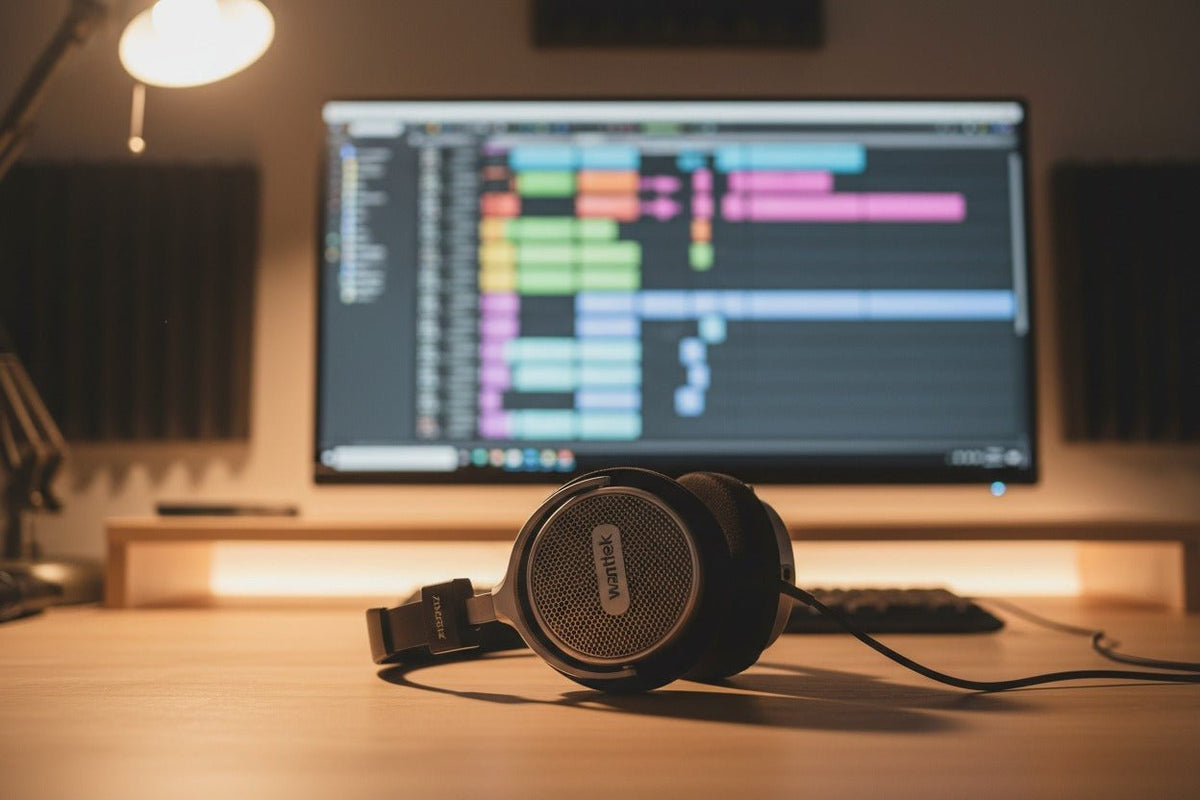
Le cuffie aperte sono lo standard professionale per il missaggio e il mastering audio critico grazie al loro design acustico superiore. A differenza dei modelli chiusi, i loro padiglioni traforati permettono alle onde sonore e all'aria di fuoriuscire, il che minimizza la risonanza interna e crea un soundstage più ampio e naturale. Ciò si traduce in una risposta in frequenza più piatta e precisa — in particolare nella critica gamma medio-bassa — e migliora drasticamente l'immagine stereo e la precisione del panning. Per i tecnici che lavorano in studi domestici o di progetto, questo si traduce in mix che si mantengono affidabili su autoradio, auricolari, sistemi da club e smartphone, riducendo le congetture e i cicli di revisione. Sebbene richiedano un ambiente silenzioso e spesso un amplificatore dedicato, i loro benefici per l'ascolto critico sono impareggiabili.
Il ruolo indispensabile delle cuffie nella produzione audio moderna

Il panorama della musica e della produzione audio ha subito un cambiamento epocale. Con la proliferazione di Digital Audio Workstations (DAW) accessibili come Ableton Live, Logic Pro e Pro Tools, e l'ascesa dello studio domestico, le cuffie di grado professionale si sono evolute da strumento supplementare a soluzione di monitoraggio primaria. Sebbene l'ideale di una stanza perfettamente trattata con monitor da studio a risposta piatta (di marchi come Yamaha HS Series, Neumann o Genelec) rimanga valido, i vincoli acustici e spaziali lo rendono irraggiungibile per molti. In questi scenari, le cuffie forniscono un ambiente acustico coerente e isolato, privo di filtri a pettine, onde stazionarie e nodi di basso causati dalle modalità della stanza.
La decisione tra cuffie aperte o chiuse per il mixaggio non è quindi solo una questione di preferenza, ma di necessità tecnica. Influisce direttamente su ogni aspetto di un mix: bilanciamento, EQ, compressione ed effetti spaziali. Questa guida completa illustrerà la scienza acustica, i vantaggi pratici e le integrazioni nel flusso di lavoro che consolidano le cuffie aperte come la scelta inequivocabile per i tecnici dediti a ottenere mix professionali pronti per la traduzione.
La scienza acustica: decostruzione del design aperto

Per capire il "perché", dobbiamo esaminare il "come". L'architettura fondamentale di una cuffia aperta presenta padiglioni con griglie, retine o deflettori aperti sull'alloggiamento esterno. Questo design permette un flusso bidirezionale di aria ed energia sonora.
Principi acustici fondamentali e relazioni tra entità:
- Riduzione dell'accumulo di risonanza e della distorsione armonica: In una camera sigillata e chiusa, le onde sonore si riflettono internamente, creando onde stazionarie che amplificano artificialmente alcune frequenze (spesso nell'intervallo 80-300Hz) e sporcano la risposta ai transienti. Il design aperto funge da deflettore infinito, dissipando questa energia posteriore e risultando in tempi di decadimento più puliti e rapidi. Questo è cruciale per giudicare accuratamente la forza di una grancassa o l'attacco di una corda pizzicata.
- Soundstage espansivo ed esternalizzato: Il nostro udito naturale localizza il suono in base alle interazioni con il padiglione auricolare e a sottili differenze temporali tra le orecchie (Interaural Time Difference). Le cuffie chiuse spesso producono una localizzazione "dentro la testa". Permettendo al suono di fuoriuscire, i modelli aperti creano il crosstalk interaurale, imitando più da vicino l'esperienza di ascolto dei diffusori in una stanza. Ciò porta a un' immagine stereo precisa e tridimensionale dove è possibile posizionare accuratamente gli strumenti tramite il panning e giudicare la profondità degli effetti di riverbero e delay.
- Risposta in frequenza lineare e tonalità neutra: Lo smorzamento della risonanza interna produce solitamente una curva di risposta in frequenza più piatta. Marchi come Sennheiser (con la loro serie HD 600) e Audio-Technica (con l' ATH-R70x) progettano i loro modelli aperti per aderire strettamente alle riconosciute curve target diffuse o Harman, fornendo una base neutra per decisioni di EQ critiche.
Vantaggi chiave: perché le cuffie aperte migliorano i tuoi mix
1. Precisione senza pari nel campo stereo e nell'elaborazione spaziale

Il mixaggio è l'arte di creare un paesaggio spaziale coerente e coinvolgente. Le cuffie aperte offrono una finestra panoramica su questo paesaggio. L'ampio soundstage ti consente di:
- Rilevare sottili problemi di fase tra i canali sinistro e destro.
- Impostare con precisione la larghezza di sintetizzatori stereo, microfoni overhead della batteria ed effetti chorus.
- Giudicare la coda e la diffusione degli effetti ambientali senza il mascheramento che si verifica nei design chiusi. Questa precisione aiuta a evitare le insidie comuni come l'abuso di espansori stereo, che possono causare il collasso di un mix durante i controlli di compatibilità mono — un test critico per la riproduzione nei club e negli altoparlanti degli smartphone.
2. Rappresentazione veritiera dei bassi e dei medio-bassi
L'intervallo di frequenza tra 150Hz e 500Hz è la "zona fangosa", dove i mix diventano spesso congestionati. Le cuffie chiuse, a causa della loro natura risonante, possono rappresentare erroneamente quest'area, portando i tecnici a equalizzare eccessivamente o a lasciare accumuli problematici. Le cuffie aperte forniscono una rappresentazione più chiara e onesta. Questa precisione ti consente di effettuare tagli di EQ chirurgici con sicurezza, assicurando che ogni strumento — che si tratti di una chitarra ritmica, di un rullante o della voce — abbia il proprio spazio definito, risultando in un mix che appare potente ma chiaro.
3. Superiore traslazione del mix su diversi sistemi di riproduzione
La traslazione è il santo graal del mixaggio. Un mix che suona fenomenale nel tuo studio ma che si perde altrove è un fallimento professionale. L'uscita neutra e non colorata delle cuffie aperte funge da strumento predittivo più affidabile. Poiché non stai compensando la firma sonora intrinseca delle cuffie (come bassi pompati o medi arretrati), il bilanciamento che crei ha maggiori probabilità di essere fondamentalmente corretto. Ciò riduce il noioso "ciclo di controllo" tra sistemi auto, AirPods e altoparlanti Bluetooth, semplificando il tuo flusso di lavoro.
4. Riduzione dell'affaticamento uditivo per sessioni prolungate
Il design aperto attenua diversi fattori che causano l' affaticamento dell'ascoltatore: la pressione di suzione sul timpano (effetto di occlusione), l'accumulo di calore intorno all'orecchio e lo sforzo mentale derivante dall'ascolto di un suono artificialmente risonante. La presentazione più naturale, simile a quella di un diffusore, è meno faticosa, consentendo sessioni di mixaggio più lunghe, produttive e coerenti, dove il giudizio critico rimane acuto.
Cuffie aperte vs. chiuse: un confronto analitico
Questa tabella chiarisce i ruoli distinti e complementari di ogni tipo di cuffia in un flusso di lavoro audio professionale.
| Caratteristica | Cuffie Aperte | Cuffie Chiuse |
|---|---|---|
| Uso professionale primario | Mix critico, Mastering, Ascolto di riferimento | Tracking/Registrazione, Audio dal vivo, DJing, Broadcasting |
| Design acustico | Padiglioni forati/grigliati (il suono esce) | Padiglioni sigillati e isolati |
| Soundstage e Imaging | Ampio, naturale, esternalizzato ("fuori dalla testa") | Stretto, intimo, internalizzato ("dentro la testa") |
| Risposta ai bassi | Accurata, lineare, decadimento rapido | Spesso enfatizzata, può essere rimbombante o risonante |
| Isolamento acustico | Minimo. Il suono entra ed esce. | Alto. Blocca il rumore esterno e previene il rientro nel microfono. |
| Affaticamento uditivo | Generalmente inferiore | Generalmente superiore a causa di pressione e risonanza |
| Esigenze di amplificazione | Richiede spesso un amplificatore per cuffie dedicato | Spesso pilotabili da laptop/interfacce |
| Ambiente ideale | Studio silenzioso e controllato | Sale live rumorose, palchi, spazi pubblici |
Le scelte migliori: le cuffie aperte per il mixaggio
Quando si ricercano le migliori cuffie aperte per il mixaggio, il consenso professionale e i forum della community come r/audioengineering e r/headphones di Reddit (spesso in thread intitolati "migliori cuffie aperte per mixare su reddit") evidenziano costantemente un gruppo di modelli affidabili. La tua scelta dipende dalla firma sonora desiderata, dal budget e dal comfort.
- Sennheiser HD 600 / HD 650 / HD 660S: Il punto di riferimento duraturo. La Sennheiser HD 600 è famosa per la sua incontaminata precisione della gamma media, cruciale per voci e chitarre. La HD 650/6XX offre un timbro leggermente più caldo, mentre la HD 660S fornisce un migliore adattamento dell'impedenza per le interfacce moderne.
- Beyerdynamic DT 1990 Pro: Un cavallo di battaglia dettagliato e analitico. Costruita come un carro armato in Germania, presenta driver Tesla per un'alta sensibilità e viene fornita con cuscinetti in velluto sia analitici (B) che bilanciati (A), consentendo la modifica della firma sonora. La sua parte alta brillante rivela ogni dettaglio.
- Audio-Technica ATH-R70x: Unica per il suo design ultra-leggero e l'alloggiamento in rete a nido d'ape. Come Audio-Technica's ammiraglia aperta, offre un suono di grado di riferimento supremamente neutro con un soundstage straordinariamente naturale, ideale per lunghe sessioni.
- AKG K702 / K712 Pro: I campioni del soundstage. Queste cuffie prodotte in Austria sono rinomate per offrire una delle immagini stereo più ampie e ariose della loro categoria, rendendole eccezionali per il mixaggio orchestrale, ambient o qualsiasi altro dove lo spazio è un elemento chiave.
- HiFiMan Sundara: Un'opzione magnetica planare di alto livello. I driver magnetici planari offrono velocità e bassa distorsione eccezionali, in particolare nei bassi. La Sundara fornisce una risposta in frequenza pulita ed estesa che rivaleggia con modelli che costano il doppio.
- (Fascia premium) Audeze LCD-X / Focal Clear: Per chi ha budget maggiori, queste rappresentano la vetta. La tecnologia magnetica planare di Audeze offre un'estensione dei bassi e una chiarezza impareggiabili, mentre il driver dinamico di Focal nella Clear offre impatto e dinamica che ricordano i monitor da studio di fascia alta.
Affrontare considerazioni pratiche e limitazioni

L'uso professionale richiede di riconoscere i compromessi. Le cuffie aperte sono strumenti specializzati con requisiti specifici.
- Isolamento zero: Sono inutilizzabili in ambienti rumorosi (es. bar, spazi condivisi) e lasceranno fuoriuscire il suono, disturbando gli altri. Sono assolutamente controindicate per la registrazione di cantanti o strumentisti, dove le cuffie chiuse (come la Sony MDR-7506 o la Beyerdynamic DT 770 Pro) sono obbligatorie per prevenire il rientro del microfono.
- L'amplificazione è spesso obbligatoria: I modelli aperti ad alta fedeltà hanno spesso un' alta impedenza (es. 300Ω per le HD 650) o una bassa sensibilità. Abbinarle a un stack DAC/Amp di qualità o a un'interfaccia audio con un'uscita cuffie robusta (di marchi come Universal Audio, RME, Schiit Audio o JDS Labs) è non negoziabile per ottenere dinamiche e risposta in frequenza corrette.
- Verifica dei sub-bassi: Sebbene le aperte forniscano medio-bassi accurati, alcuni modelli hanno un calo sotto i 40-50Hz. Per generi come EDM, hip-hop o colonne sonore dove il sub-basso (20-60Hz) è critico, un approccio ibrido è il migliore: usa le cuffie aperte per il 90% del mix e verifica incrociata la regione dei sub-bassi usando un analizzatore di spettro (come iZotope Insight o FabFilter Pro-Q 3) e un sistema secondario fidato, come monitor da studio con un subwoofer o un singolo paio familiare di cuffie chiuse.
Integrazione avanzata: ottimizzare il flusso di lavoro con cuffie aperte
Possedere semplicemente delle cuffie aperte non è abbastanza. Integratele in un sistema professionale.
- Investi nella qualità della catena del segnale: Le tue cuffie sono valide solo quanto la tua catena del segnale. Un' interfaccia audio USB esterna (es. serie Focusrite Scarlett o Audient iD) con un DAC di qualità e un amplificatore per cuffie dedicato fornisce potenza pulita e dettaglio.
- Impiega software di correzione per cuffie: Anche le cuffie più piatte hanno una firma. Software come Sonarworks SoundID Reference o Waves NX misurano il tuo specifico modello di cuffie e applicano una curva di EQ correttiva per ottenere una risposta quasi perfettamente piatta, standardizzando il tuo ambiente di ascolto.
- Stabilisci un rigoroso protocollo di verifica incrociata: Crea una "lista di controllo" dei sistemi di riproduzione: la tua autoradio, gli Apple EarPods, un altoparlante Bluetooth consumer e l'altoparlante del tuo telefono. Effettua controlli brevi e mirati su questi sistemi durante tutto il mix per identificare i problemi di traduzione precocemente.
- Calibra i tuoi livelli di ascolto: Fare costantemente il mixaggio a un volume moderato e standardizzato (circa 75-85 dB SPL) previene l'affaticamento dell'orecchio e garantisce decisioni bilanciate. Usa un'app fonometro (SPL meter) per calibrare.
FAQ complete: risposte all'intento di ricerca principale
Posso usare cuffie aperte per registrare voci o strumenti dal vivo?
Le cuffie aperte sono adatte per il mixaggio in una stanza non trattata acusticamente?
Perché forum come Reddit consigliano sempre la serie HD 600 di Sennheiser per il mixaggio?
Ho davvero bisogno di un amplificatore per cuffie da 200 $ per le mie cuffie da 300 $?
Come posso controllare efficacemente i sub-bassi se le mie cuffie aperte non scendono così in basso?
Raccomandazioni finali e consigli pratici
Adottare le cuffie aperte per il mixaggio è un investimento nell'accuratezza e nella professionalità del tuo lavoro. Per riassumere e fornire i prossimi passi chiari:
- Fai la scelta strategica: Dai la priorità a modelli aperti di marchi audio professionali affermati per le tue attività principali di mixaggio e ascolto critico.
- Costruisci un sistema completo: Metti in conto nel tuo budget il costo di un valido DAC/amplificatore per cuffie e possibilmente di un software di calibrazione.
- Rispetta il loro scopo: Usale esclusivamente in ambienti silenziosi e mai per la registrazione. Mantieni un paio di cuffie chiuse per tali compiti.
- Valida e fai riferimenti incrociati: Non fare mai affidamento su una singola sorgente di monitoraggio. Stabilisci un processo rapido e ripetibile per controllare i tuoi mix su diversi sistemi di consumo.
- Fidati delle tue orecchie, supportate dalla scienza: Il suono spazioso, naturale e dettagliato che senti non è un'esaltazione, ma una rappresentazione più accurata del tuo audio. Fidati delle decisioni che prendi in questo ambiente.
Integrando le cuffie aperte in un flusso di lavoro ponderato e professionale, ottieni uno strumento potente e affidabile che colma il divario tra lo studio domestico e il mondo professionale. Il risultato è un processo decisionale efficace, flussi di lavoro efficienti e, soprattutto, mix che si traducono con coerenza e impatto ovunque vengano riprodotti.
🎚️ I professionisti lo sanno: i grandi mix richiedono più delle semplici cuffie
Hai appena imparato perché le cuffie aperte sono essenziali per il mixaggio. Ma nelle sessioni in studio reali, hai bisogno sia di cuffie aperte che chiuse per un flusso di lavoro completo.
Wantek Studio Pro Bundle: la soluzione di monitoraggio completa
Per il mixaggio critico (alternativa aperta):
- Serie Wantek Monitor: firma sonora accurata e neutra
- Ampio palcoscenico per un'immagine stereo precisa
- Cuscinetti in velluto per un comfort prolungato
- Risposta in frequenza piatta di livello professionale
Per le sessioni di registrazione (chiuse):
- Wantek Iso-Track Pro: zero fuoriuscite di suono
- Massimo isolamento per evitare rientri nel microfono
- Costruzione durevole per l'uso quotidiano in studio
- Cavi staccabili per una facile sostituzione
Perché gli ingegneri del suono scelgono l'approccio a doppia cuffia di Wantek:
✓ Passaggio fluido nel flusso di lavoro: passa istantaneamente dal mixaggio al tracking
✓ Qualità del suono professionale: entrambi i modelli testati da ingegneri del mix
✓ Prezzo del pacchetto completo: ottieni entrambi a meno di un singolo concorrente premium
✓ Compatibilità universale: funziona con tutte le DAW e le interfacce
✓ Componenti sostituibili: investimento sostenibile a lungo termine
Studio Bundle: 249 $ (Risparmi 80 $ rispetto all'acquisto individuale)
[Acquista le soluzioni Wantek Studio →] | [Confronta con i marchi Premium →]
"Ho confrontato le cuffie da monitoraggio di Wantek con le mie HD 650. Per il mixaggio nel mio studio domestico, le Wantek hanno offerto l'85% delle prestazioni al 40% del costo. È una scelta ovvia per i project studio." – Marcus R., Ingegnere del mix
Leggi di più
📖 Le migliori cuffie da gaming per PC: scelte migliori per opzioni cablate e wireless
📖 Le migliori cuffie wireless per TV: scelte migliori e guida all'acquisto
📖 Guida alle migliori cuffie PS5: configurazione, compatibilità e scelte migliori
📖 Le migliori cuffie wireless per la musica: scelte migliori per audiofili
📖 Le migliori cuffie da nuoto 2025: scelte migliori e guida all'acquisto
📖 Le 10 migliori cuffie carine per l'uso quotidiano: wireless ed eleganti
📖 I migliori auricolari a cancellazione del rumore per i viaggi in aereo: una recensione approfondita
📖 Scopri le migliori cuffie con orecchie di gatto: guida definitiva wireless e Bluetooth
📖 Le migliori cuffie da palestra 2025: scelte migliori wireless e resistenti al sudore
📖 Le migliori cuffie resistenti al sudore per la tua intensa routine di allenamento

