
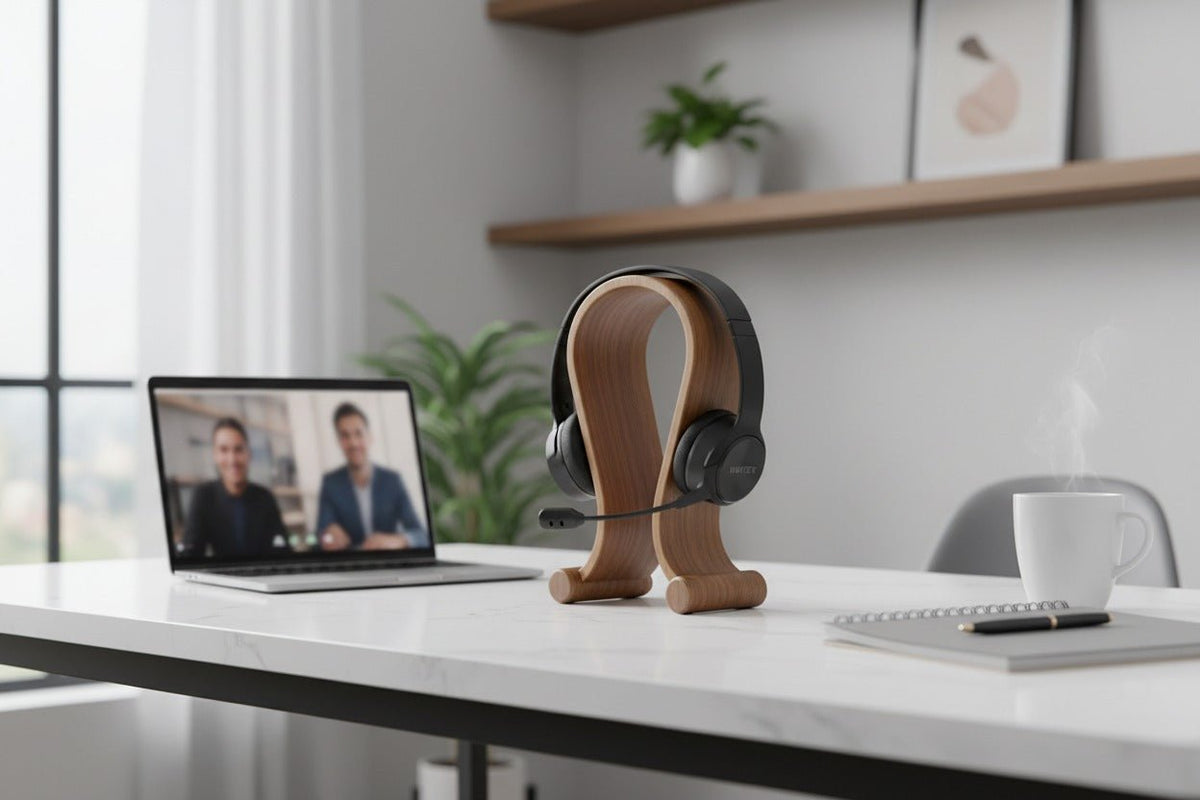
La scelta di un auricolare per ufficio dovrebbe basarsi innanzitutto sul percorso effettivo della chiamata: il dispositivo che gestisce le chiamate, la connessione supportata, l'efficacia del microfono nel tuo ambiente e se l'auricolare rimane comodo durante le riunioni standard. Funzionalità come ANC, multipoint, certificazione della piattaforma e lunga durata della batteria sono rilevanti solo quando risolvono un'esigenza di flusso di lavoro reale.
Risposta rapida: Per una postazione di lavoro fissa con computer, un auricolare USB cablato è spesso il punto di partenza più semplice. Scegli il wireless quando la necessità di movimento giustifica la ricarica e un altro percorso di connessione. In spazi rumorosi, valuta la riduzione del rumore del microfono separatamente dall'ANC o dall'isolamento passivo, che influenzano ciò che sente chi indossa l'auricolare.

Le funzionalità dell'auricolare da ufficio che cambiano davvero la decisione
Non iniziare dalle dimensioni del driver, dall'ultima versione Bluetooth o da un'etichetta generica di "cancellazione del rumore". Parti dalla compatibilità e dal compito che l'auricolare deve svolgere, quindi verifica le caratteristiche che influiscono sulle chiamate.
| Funzionalità | Cosa verificare | Perché è importante |
|---|---|---|
| Dispositivo e connessione | Computer, telefono da scrivania, dispositivo mobile, USB-A, USB-C, 3,5 mm, Bluetooth, DECT, ricevitore o base | L'auricolare deve funzionare con il dispositivo che effettua effettivamente la chiamata. |
| Percorso del microfono | Posizione dell'asta, voce in uscita, gestione del rumore di fondo e comportamento del tasto mute | Determina ciò che ascolta l'altra persona. |
| Controllo del rumore | Riduzione del rumore del microfono, isolamento passivo e ANC come funzioni separate | Risolvono problemi diversi e non dovrebbero essere trattati come un'unica funzionalità. |
| Vestibilità e stile di utilizzo | Mono o stereo, pressione, calore, regolazione, compatibilità con occhiali e stabilità | Un auricolare scomodo durante riunioni reali non verrà utilizzato costantemente. |
| Controlli e supporto piattaforma | Mute, volume, risposta/chiusura, certificazione esatta Teams/Zoom/Webex o comportamento supportato | L'audio di base può funzionare anche quando i controlli hardware o le integrazioni non lo fanno. |
| Alimentazione wireless e accessori | Condizioni di durata in conversazione, ricarica, ricevitore o base, firmware e accessori inclusi | La comodità del wireless comporta requisiti operativi e di supporto aggiuntivi. |
1. Dai priorità al microfono per lavori ad alto volume di chiamate
Per le chiamate di lavoro, le prestazioni del microfono dovrebbero essere valutate come un percorso completo: posizionamento del microfono, elaborazione dell'auricolare, rumore della stanza, impostazioni del sistema operativo e applicazione di chiamata. Un microfono con asta può essere utile perché offre una posizione ripetibile vicino alla bocca, ma l'asta in sé non garantisce una migliore soppressione del rumore o una voce più chiara.
Posiziona il microfono secondo le istruzioni del produttore, quindi effettua una chiamata di prova reale. Parla a un livello normale mentre digiti e in presenza di rumore d'ufficio rappresentativo. Chiedi all'interlocutore se le tue parole rimangono comprensibili e se l'elaborazione taglia le sillabe morbide o lascia che le conversazioni vicine dominino.
Un controllo fisico del mute può ridurre le difficoltà durante le chiamate frequenti, ma verifica il comportamento esatto di cui hai bisogno. Il mute hardware, il mute software e gli indicatori di mute sincronizzati non sono automaticamente identici su ogni auricolare, connessione e applicazione di chiamata.
2. Separa la riduzione del rumore del microfono dall'ANC
"Cancellazione del rumore" è un termine troppo ampio per basarvi una decisione d'acquisto. Possono essere coinvolte tre funzioni diverse:
- La riduzione del rumore del microfono mira al suono di fondo inviato all'altro lato della chiamata.
- L'isolamento passivo deriva dalla vestibilità fisica e dai cuscinetti che riducono parte del suono circostante che raggiunge chi indossa l'auricolare.
- La cancellazione attiva del rumore (ANC) utilizza microfoni ed elaborazione per ridurre alcuni suoni ambientali percepiti da chi indossa l'auricolare.
Un ufficio silenzioso potrebbe non aver bisogno dell'ANC. Un ufficio condiviso o aperto potrebbe necessitare sia di un migliore controllo del rumore per l'interlocutore, sia di una gestione più forte del rumore del microfono. Se il rumore è il problema principale, utilizza la guida agli auricolari con cancellazione del rumore e microfono per confrontare tali funzioni separatamente.
3. Abbina la connessione alla postazione di lavoro effettiva
La connessione precede le funzionalità secondarie, poiché un auricolare con il percorso audio errato è l'auricolare sbagliato per il lavoro. Un modello cablato USB tradizionale può semplificare una postazione di lavoro fissa perché elimina la necessità di ricaricare l'auricolare e l'accoppiamento Bluetooth dalla routine quotidiana. Il wireless ha più senso quando gli utenti devono effettivamente alzarsi, muoversi nello spazio di lavoro o passare da un dispositivo supportato all'altro.

Per un computer, conferma l'esatta configurazione USB-A, USB-C, 3,5 mm, Bluetooth o basata su ricevitore. Per un telefono da scrivania, verifica il modello esatto del telefono e il percorso dell'auricolare supportato, piuttosto che presumere che un connettore simile funzioni. Per un flusso di lavoro che prevede laptop e telefono, conferma il comportamento multi-dispositivo documentato del modello, invece di trattare ogni etichetta "multipoint" come equivalente.
Se sei ancora indeciso tra un cavo e la mobilità wireless, la guida agli auricolari da ufficio cablati vs wireless analizza questa decisione in base a movimento, ricarica, ricevitori, DECT, Bluetooth e uso con scrivania fissa.
4. Verifica la certificazione della piattaforma e i controlli delle chiamate in base alla variante esatta
La certificazione della piattaforma è utile quando la tua organizzazione dipende da controlli delle chiamate prevedibili, comportamento di implementazione o una configurazione di collaborazione convalidata. Non dovrebbe essere trattata come un badge di qualità universale per ogni caso d'uso.
La documentazione sulla certificazione delle periferiche di Microsoft Teams elenca funzioni come la registrazione plug-and-play, i controlli di base delle chiamate, mute/riattivazione e il comportamento del volume per i dispositivi certificati. Microsoft distingue anche le configurazioni standard con dongle USB da alcuni dispositivi certificati Bluetooth nativi, quindi il metodo di connessione è importante.
Zoom mantiene un elenco aggiornato di auricolari Workspace Certified con dettagli su modello e firmware. Anche Cisco documenta le opzioni di auricolari certificati Webex e Microsoft. Se la certificazione è un requisito di acquisto, verifica l'esatto SKU, la connessione e l'elenco attuale della piattaforma prima dell'acquisto.
5. Considera il comfort come un test di vestibilità, non come una scorciatoia tecnica
Il solo peso non predice il comfort. La pressione dell'archetto, il materiale dei cuscinetti auricolari, la forma dei padiglioni, l'ampiezza della regolazione, il calore, l'uso di occhiali, l'acconciatura e la forma della testa individuale possono cambiare il modo in cui un auricolare viene percepito durante una lunga riunione.
Scegli la versione mono quando è importante mantenere un orecchio libero per colleghi, visitatori o consapevolezza dell'ambiente. Scegli quella stereo o a doppio auricolare quando coprire entrambe le orecchie si adatta meglio all'ambiente di lavoro e alle preferenze di ascolto. Nessuno dei due stili è automaticamente più professionale o più comodo.
Prima di un acquisto per l'intero team, indossa l'auricolare esatto durante una riunione rappresentativa. Nota i punti di pressione, l'accumulo di calore, lo scivolamento, la tensione del cavo, la stabilità dell'asta e quanto spesso chi lo indossa deve regolare l'auricolare.
6. Per i modelli wireless, controlla l'alimentazione e il kit completo
Non fare acquisti basandoti solo sul dato della batteria. Confronta le condizioni dichiarate dal produttore con il blocco di chiamate più lungo che l'utente deve effettivamente completare. La riproduzione musicale, il tempo di standby e il tempo di conversazione sono misurazioni diverse, e un dato generico sulla batteria "fino a" non dovrebbe essere inteso come tempo di chiamata garantito.
Verifica anche cosa è incluso e cosa è richiesto: cavo di ricarica, dock, ricevitore USB, base DECT, cavo per telefono da scrivania, adattatori, software firmware e parti soggette a usura sostituibili. Una dock di ricarica non prova di per sé la connettività con il telefono da scrivania, e un cavo di ricarica USB non garantisce audio USB cablato.
Esegui un test pratico di accettazione per le chiamate in ufficio
Una scheda tecnica può restringere la scelta, ma non può riprodurre la tua stanza, lo stack software, i dispositivi o gli utenti. Testa la configurazione finale prima di standardizzarla.
Utilizza il percorso di connessione finale
Collega l'auricolare, il ricevitore, la base, il cavo o l'adattatore esatto che i dipendenti riceverebbero effettivamente.
Controlla la voce in uscita
Effettua una chiamata reale digitando normalmente e con rumore rappresentativo nelle vicinanze. Giudica l'intelligibilità, non le etichette di marketing.
Verifica i controlli
Testa mute, volume, risposta/chiusura e qualsiasi comportamento della piattaforma di riunione effettivamente richiesto dal ruolo.
Indossalo durante una sessione normale
Controlla pressione, calore, stabilità, interazione con occhiali e posizione del microfono durante una riunione rappresentativa.
Testa l'onere operativo
Per i modelli wireless, testa la ricarica, il movimento, la riconnessione e il cambio di dispositivo. Registra gli accessori esatti e i problemi di compatibilità irrisolti.
Una lista di controllo finale per l'acquisto di auricolari da ufficio
- Quale dispositivo effettua effettivamente la chiamata?
- Quale connessione e variante esatta di auricolare supporta quel dispositivo?
- Il microfono rimane chiaro nella stanza in cui avvengono le chiamate?
- Hai bisogno di riduzione del rumore del microfono, ANC per chi ascolta, isolamento passivo o una combinazione?
- I design mono o a doppio auricolare si adattano meglio alle esigenze di consapevolezza e concentrazione dell'utente?
- I controlli di mute, volume, risposta/chiusura e quelli della piattaforma funzionano nell'applicazione prevista?
- Se wireless, la routine di batteria e ricarica documentata si adatta al blocco di chiamate più lungo?
- Per acquisti di team, la configurazione hardware finale è stata testata con utenti rappresentativi?
Trova un auricolare per la tua configurazione
Inizia dal tuo dispositivo di chiamata e dalla connessione, quindi restringi la scelta in base allo stile di utilizzo, alle esigenze del microfono e alla preferenza per il cablato o il wireless.
Domande frequenti
Un auricolare per ufficio ha bisogno dell'ANC?
No. L'ANC riduce principalmente alcuni suoni percepiti da chi indossa l'auricolare. In un ufficio silenzioso, una buona vestibilità e le prestazioni del microfono potrebbero contare di più. In spazi rumorosi, valuta l'ANC e la riduzione del rumore del microfono separatamente.
Gli auricolari cablati sono migliori per le chiamate di lavoro?
Non automaticamente. I modelli cablati eliminano la ricarica e l'accoppiamento wireless da una postazione fissa. I modelli wireless aggiungono mobilità. La chiarezza del microfono, il comfort, i controlli e la compatibilità dipendono comunque dall'auricolare specifico e dalla configurazione.
Un dongle USB è sempre meglio del Bluetooth diretto?
No. Alcuni auricolari certificati sono progettati attorno a un ricevitore USB, mentre altri supportano il Bluetooth nativo convalidato. Controlla il modello esatto, il dispositivo host, l'ambiente radio, i controlli di chiamata e i requisiti della piattaforma.
Cosa conta di più per un ufficio rumoroso?
Testa entrambi i lati della chiamata. La gestione del rumore del microfono influisce su ciò che sentono i colleghi; l'isolamento passivo e l'ANC influiscono su ciò che senti tu. Un campione di chiamata reale nello spazio di lavoro abituale è più utile di un'etichetta di marketing.
Un'azienda dovrebbe standardizzare un unico auricolare per tutti?
Solo quando i dispositivi e i flussi di lavoro sono simili. I ruoli legati a scrivania fissa, mobilità, reception, telefono da scrivania e multi-dispositivo possono richiedere connessioni o stili di utilizzo diversi. Sperimenta la configurazione finale prima di un roll-out più ampio.

