
The top earphones with mic depend on where you take calls, which device you use, and whether you prefer sealed in-ear buds or an open-ear fit. A good microphone matters, but so do comfort, controls, and the ability to hear the person on the other end.
Quick picks: Consider Sony WF-1000XM6 for premium wireless calling, Nothing Ear (3) for flexible microphone options, CMF Buds Pro 2 for a tighter budget, Apple EarPods (USB-C) for a simple wired connection, or Wantek OBT030 for open-ear everyday listening and casual calls. These are use-case recommendations, not a Wantek laboratory ranking.
Five Earphones With Microphones Compared
| Earphones | Best fit | Main trade-off |
|---|---|---|
| Sony WF-1000XM6 | Premium wireless calls and commuting | In-ear seal and higher-end positioning; loud sounds can still affect outgoing speech |
| Nothing Ear (3) | Flexible calling with an optional case microphone | Case-mic workflow is different from ordinary hands-free earbud use |
| CMF Buds Pro 2 | Budget wireless calls, music, and ANC | Speech pickup is not as refined as pricier call-focused picks in independent testing |
| Apple EarPods (USB-C) | Simple wired calls on supported USB-C devices | No ANC; cable and USB-C compatibility must suit your device |
| Wantek OBT030 | Open-ear comfort, awareness, and casual calls | Open-ear audio provides little isolation in noisy spaces |
Which Earphones With Mic Should You Choose?
Sony WF-1000XM6 — Premium Wireless Calls
Sony's WF-1000XM6 combines in-ear noise isolation, microphones, and a bone-conduction sensor for voice pickup. Its official specifications confirm multipoint connectivity and a maximum of five hours of continuous communication with noise canceling on. Independent testing by RTINGS also identifies strong call performance in moderately busy surroundings.
Choose it if: you split time between calls, travel, and music and want a premium sealed earbud. Watch out for: in-ear comfort and very loud intermittent background noise, which can still disrupt speech processing. For model-specific details, see Sony's specifications.
Nothing Ear (3) — An Optional Microphone in the Case
The Nothing Ear (3) offers ordinary in-ear calling alongside a separate Super Mic built into its charging case. Nothing describes using a TALK button to switch between the earbuds' microphone and the case microphone. That extra option can be useful when you can hold the case closer to your mouth, but it is not the same as hands-free speaking through the earbuds.
Choose it if: you want a flexible microphone arrangement as well as wireless music listening. Check first: whether your calling app and preferred workflow support the case-microphone feature. See Nothing's Super Mic explanation.
CMF Buds Pro 2 — Budget Wireless Option
The CMF Buds Pro 2 include six microphones, manufacturer-described voice and wind-noise processing, active noise cancellation, and dual-device connection. Those features make them a sensible budget shortlist candidate, although microphone count does not guarantee clear speech in your particular room.
Choose it if: you want inexpensive true-wireless earphones that can handle everyday calls and music. Watch out for: thinner-sounding outgoing voice and less effective noise handling than some higher-cost models in independent testing. Compare the CMF feature listing with the independent microphone review before buying.
Apple EarPods (USB-C) — A Straightforward Wired Choice
Apple EarPods (USB-C) have a wired connection and an inline remote for volume, playback, and answering or ending calls. There is no charging case to manage. Apple's compatibility list covers supported USB-C iPhone, iPad, and Mac models, with operating-system requirements.
Choose it if: you prefer a cable and mainly use a compatible Apple USB-C device. Check first: your device port and microphone/remote support, especially when using a non-Apple computer or adapter. See the Apple EarPods product page.
Wantek OBT030 — Open-Ear Listening and Casual Calls
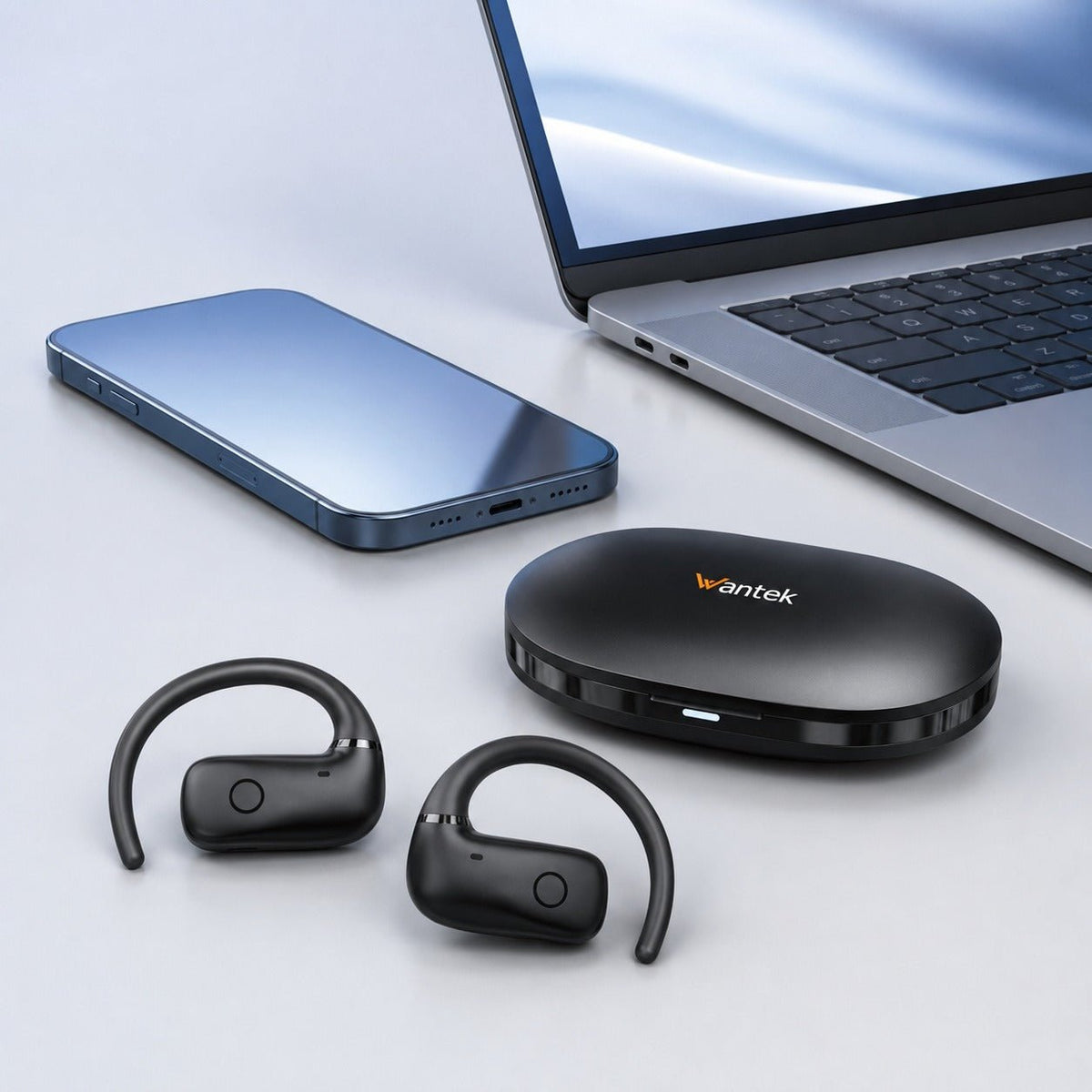
Wantek OBT030 uses an open-ear clip-on design with a built-in microphone and Bluetooth 5.4. Its product listing states up to eight hours of earbud battery life and up to 50 hours with the charging case. The speaker sits outside the ear canal, so you can hear more of your surroundings while listening.
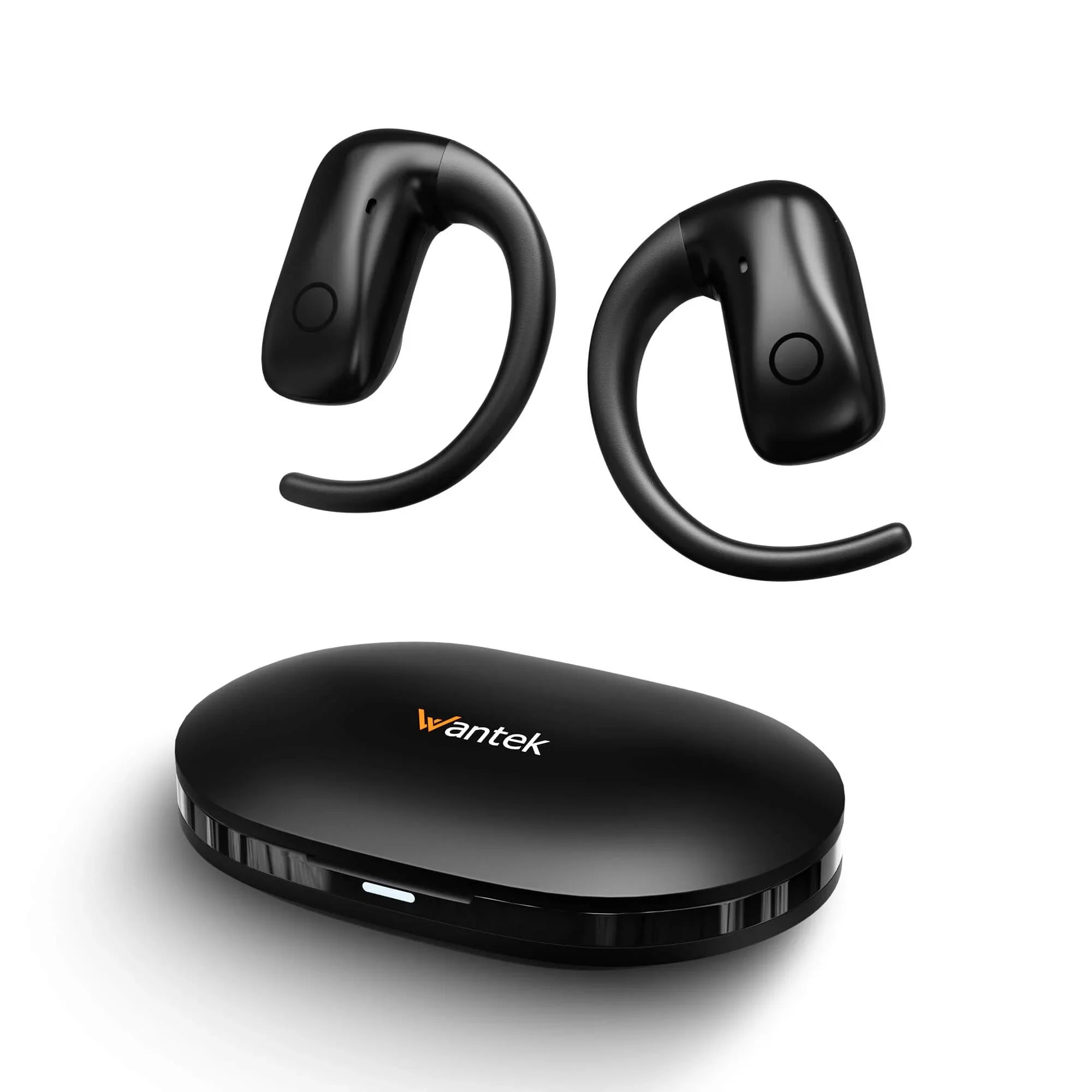
Choose it if: in-ear tips feel uncomfortable and you want earphones for everyday listening, short calls, or voice messages. Watch out for: background noise, sound leakage, and reduced isolation compared with sealed earbuds. The built-in mic does not establish professional-grade call noise suppression.
How to Judge Earphone Microphone Quality
- Test outgoing speech, not only ANC: active noise cancellation mainly changes what you hear. Microphone noise handling determines what your caller hears.
- Check the actual call device: Bluetooth music playback, a laptop meeting app, and a mobile phone call can use different audio paths or controls.
- Consider fit and room noise: sealed earbuds can improve what you hear in a noisy setting; open-ear models favor awareness instead of isolation.
- Check call time separately: advertised music playback hours and charging-case totals do not equal continuous talk time.
- Compare realistic recordings: use the same call app and test a quiet room, nearby speech, and moderate outdoor noise before committing.
For a deeper connection decision, compare wired and wireless earphones with microphones. If you spend entire shifts in meetings, Wantek's headset-and-microphone guide for work calls explains why a boom microphone may be the more appropriate form factor.
Earphones With Mic FAQ
Are earbuds with a mic good for Zoom and Teams?
They can be, if the laptop or phone recognizes both speaker output and microphone input. Make a test call in the actual app and confirm mute, device routing, and audio quality before an important meeting.
Does noise canceling make my microphone better?
Not necessarily. Listening ANC reduces sound reaching your ears; microphone noise reduction processes outgoing speech. Look for recorded call samples rather than relying on an ANC label.
Should I choose open-ear or in-ear earphones for calls?
Open-ear designs leave the ear canal unobstructed and suit awareness-focused listening. Sealed in-ear options can help you hear callers in noisier places. For important speech calls, microphone performance still needs separate testing.
Prefer an Open-Ear Fit?
Review Wantek OBT030's design, microphone support, connectivity, and current product details to decide whether it suits your everyday use.

