
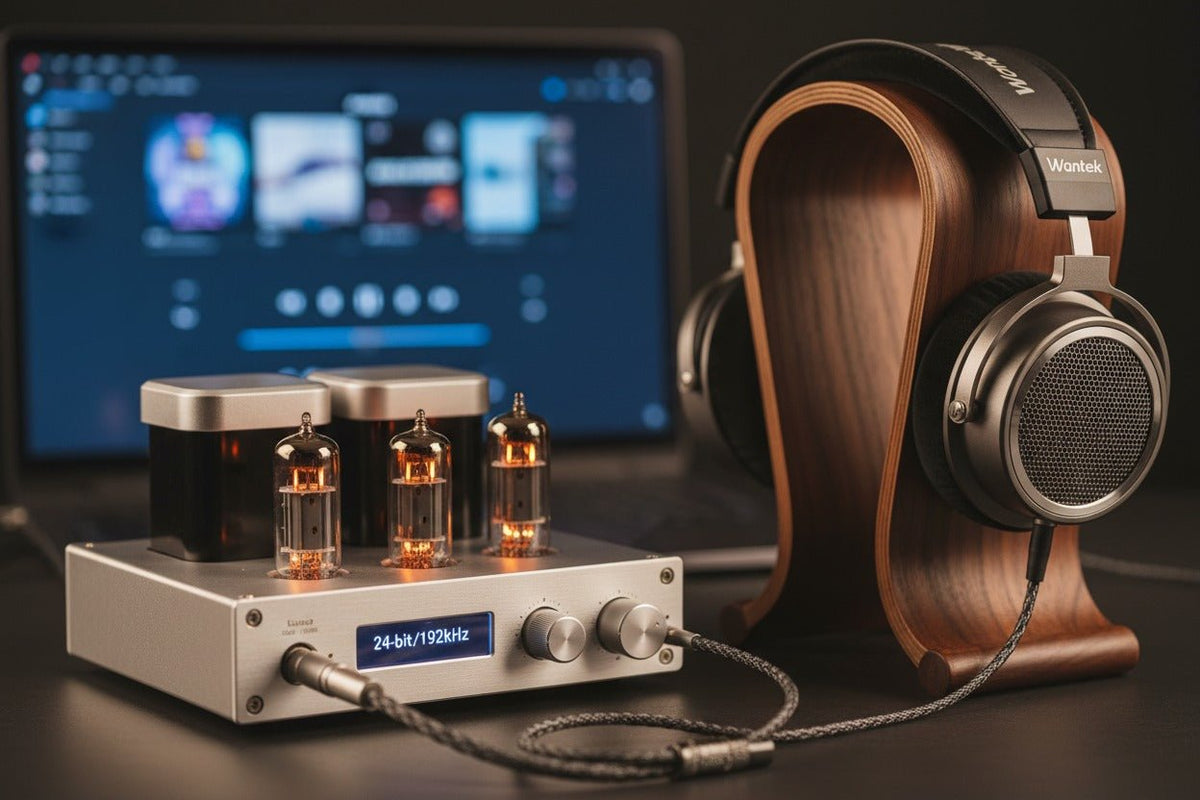
L'audio sans perte (lossless) ne nécessite pas une catégorie spéciale de « casques lossless ». Il requiert une source sans perte, une chaîne de lecture qui préserve le signal, et un casque adapté à votre environnement d'écoute et à votre matériel source. Pour une lecture sans perte prévisible, une connexion filaire reste la solution la plus simple, mais le casque en lui-même n'est qu'un maillon de la chaîne.
Réponse rapide : Pour une écoute dans une pièce calme, le Sennheiser HD 660S2, l'Audeze LCD-X, le Focal Clear Mg, le Beyerdynamic DT 1990 PRO MKII et le Sony MDR-MV1 sont cinq options filaires à dos ouvert actuelles, dotées de forces distinctes et de spécifications fabricant vérifiées.
Important : Il s'agit d'une sélection basée sur les spécifications et les cas d'utilisation, et non d'un classement testé en laboratoire. Un DAC externe ou un amplificateur casque n'est utile que si votre source, votre connexion, votre format ou le niveau de sortie requis l'exigent.
Ce que nécessite réellement l'audio sans perte

Les formats sans perte tels que le FLAC et l'ALAC conservent les données audio nécessaires pour reconstruire le signal source après le décodage. Le terme « Hi-Res » est un concept distinct : il décrit généralement l'audio numérique avec une profondeur de bit ou une fréquence d'échantillonnage supérieure à l'audio qualité CD (16 bits/44,1 kHz).
La chaîne complète a son importance. Une application de streaming ou un fichier local est décodé par l'appareil source, converti de numérique en analogique quelque part dans la chaîne, amplifié, puis reproduit par les haut-parleurs du casque. Les casques analogiques passifs ne décodent pas eux-mêmes le FLAC ou l'ALAC ; qualifier un casque passif de « sans perte » est donc une manière simplifiée de dire qu'il peut être utilisé dans une chaîne de lecture sans perte.
La certification Hi-Res Audio n'est pas un classement de qualité sonore
Les critères Hi-Res Audio de la Japan Audio Society définissent les exigences techniques pour les produits et les chemins de signal éligibles. Satisfaire à ces critères ne prouve pas qu'un casque certifié sonne mieux qu'un autre, et un très bon casque ne devient pas inadapté à l'écoute sans perte simplement parce qu'il n'arbore pas ce logo.
Filaire, Bluetooth et USB : là où le sans perte peut être altéré
L'audio Bluetooth conventionnel ajoute généralement une étape de codec entre la source et le casque. Apple précise explicitement que les connexions Bluetooth ne sont pas sans perte, tout en notant que les modèles actuels d'AirPods Max avec USB-C peuvent lire de l'audio sans perte via un câble USB-C. Cette distinction est importante : un casque peut être sans fil pour un usage quotidien et prendre en charge un mode numérique filaire séparé.
Un casque passif avec une prise 3,5 mm ou 6,35 mm reçoit un signal analogique après que la conversion numérique-analogique a déjà eu lieu dans le téléphone, l'ordinateur, le dongle, l'interface, le DAC ou l'amplificateur. L'audio USB reste numérique plus longtemps et est converti plus tard dans la chaîne. Pour une décision plus large sur les types de connexion, consultez le guide Wantek sur les casques filaires vs sans fil pour la musique.
Règle pratique : N'achetez pas un DAC ou un amplificateur externe simplement parce qu'un casque est commercialisé pour les audiophiles. Vérifiez d'abord ce que votre source peut fournir, quel connecteur vous utilisez et si le casque atteint proprement votre niveau de volume préféré.
Comment ces cinq casques ont été sélectionnés
Cette sélection conserve le concept des cinq modèles de la page originale, mais resserre les critères de sélection. Chaque modèle doit disposer d'une page fabricant actuelle, de spécifications vérifiables, d'une conception filaire à dos ouvert adaptée à une pièce calme ou à un studio, et d'une raison distincte de le considérer. Cette liste ne prétend pas être le résultat de tests pratiques ni d'un classement de performance absolu.

Cinq casques filaires pour l'écoute sans perte et Hi-Res
| Modèle | Spécifications vérifiées | Usage pratique |
|---|---|---|
| Sennheiser HD 660S2 | Dynamique ouvert, 38 mm, 300 Ω, 104 dB SPL à 1 Vrms, 260 g | Écoute à domicile si vous recherchez une conception traditionnelle à haute impédance à dos ouvert et pouvez confirmer une sortie source adéquate. |
| Audeze LCD-X | Magnétique planaire ouvert, 106 mm, 20 Ω, 103 dB/1mW, 612 g | Usage en studio ou à domicile lorsque la conception magnétique planaire est la priorité et que le poids de 612 g est acceptable. |
| Focal Clear Mg | Dynamique ouvert, transducteur magnésium 40 mm, 55 Ω, 450 g | Écoute haut de gamme à domicile avec une impédance modérée et un chemin de signal à transducteur dynamique conventionnel. |
| Beyerdynamic DT 1990 PRO MKII | Dynamique ouvert, TESLA.45, 30 Ω, 376 g, 5 Hz–40 kHz | Mixage, mastering et montage ; le modèle MKII actuel est plus facile à associer à diverses sources que l'ancien modèle 250 Ω. |
| Sony MDR-MV1 | Moniteur de studio dynamique ouvert, réponse annoncée par le fabricant de 5 Hz–80 kHz | Production spatiale et stéréo ou monitoring léger à dos ouvert là où la flexibilité de la source est importante. |
Sennheiser HD 660S2 : Modèle traditionnel à haute impédance
Sennheiser spécifie le HD 660S2 comme un casque dynamique ouvert avec un transducteur de 38 mm, une impédance de 300 Ω, 104 dB SPL à 1 Vrms, et un poids de 260 g. Il comprend des câbles de 6,3 mm et 4,4 mm ainsi qu'un adaptateur de 3,5 mm. Cette combinaison en fait une option d'écoute à domicile simple, mais son impédance de 300 Ω signifie que la capacité de la source mérite plus d'attention qu'avec les modèles à plus faible impédance ci-dessous.
La distinction importante est que 300 Ω ne signifie pas automatiquement qu'il faut acheter un amplificateur dédié. La vraie question est de savoir si votre source actuelle peut fournir suffisamment de tension propre pour le niveau d'écoute souhaité.
Audeze LCD-X : Magnétique planaire pour studio et usage domestique
Le LCD-X utilise des transducteurs magnétiques planaires de 106 mm et est spécifié à 20 Ω, avec une sensibilité de 103 dB/1mW et un poids de 612 g. Audeze recommande également un niveau de puissance supérieur à 250 mW. Ces chiffres rendent l'adéquation de la source moins dépendante de l'impédance seule et plus dépendante de la puissance disponible, de la marge de manœuvre et de l'étage de sortie que vous prévoyez d'utiliser.
Son plus grand compromis pratique est facile à identifier sans inventer de classement sonore : le poids. Avec 612 g, il est nettement plus lourd que les autres modèles ici présents ; le confort sur les longues sessions mérite donc d'être évalué avant l'achat.
Focal Clear Mg : Option haut de gamme à transducteur dynamique
Focal présente le Clear Mg comme un casque à dos ouvert doté d'un transducteur à dôme en magnésium en forme de M de 40 mm, d'une impédance de 55 Ω, d'un poids de 450 g et d'une réponse en fréquence de 5 Hz à 23 kHz selon sa tolérance déclarée. Le câblage fourni prend en charge à la fois l'écoute asymétrique courante et une connexion XLR à 4 broches.
L'étendue de la réponse en fréquence sur une fiche technique ne doit pas être traitée comme un raccourci vers une « meilleure » lecture sans perte. Le Clear Mg figure ici car il s'agit d'un modèle filaire à dos ouvert haut de gamme actuel, avec des spécifications électriques et acoustiques clairement documentées, et non parce qu'un seul chiffre prouverait une fidélité supérieure.
Beyerdynamic DT 1990 PRO MKII : Successeur actuel axé sur le studio
Le modèle actuel DT 1990 PRO MKII remplace l'ancien DT 1990 Pro de 250 Ω utilisé dans l'article original. Beyerdynamic spécifie le MKII à 30 Ω, 376 g et 5 Hz–40 kHz, utilisant son transducteur TESLA.45. L'entreprise le positionne pour le mixage, le mastering et le montage, et fournit des câbles détachables droits et torsadés.
Cette mise à jour est importante car répéter le chiffre de 250 Ω de la première génération donnerait aux lecteurs une attente erronée concernant l'adéquation avec la source pour le modèle actuel. Une impédance nominale plus faible ne garantit pas un couplage parfait avec chaque sortie, mais elle élimine l'hypothèse générale de l'article original selon laquelle ce modèle exige nécessairement un amplificateur casque à haute tension.
Sony MDR-MV1 : Moniteur à dos ouvert pour la production spatiale et stéréo
Sony positionne le MDR-MV1 comme un moniteur de référence à dos ouvert pour le mixage et le mastering de sons spatiaux et stéréo. Sa réponse en fréquence, déclarée par le fabricant, s'étend de 5 Hz à 80 kHz, et le câble détachable se termine par une fiche de 6,3 mm avec un adaptateur de 3,5 mm pour une compatibilité plus large avec les équipements.
Le MDR-MV1 est l'option la plus spécifique à la production de cette sélection. Sa présence ne repose pas sur l'affirmation que l'audio spatial améliore automatiquement la musique sans perte ; elle repose sur le fait que Sony l'a conçu pour le monitoring en studio à dos ouvert, le travail stéréo et la production spatiale, tout en prenant en charge la lecture haute résolution.
Avez-vous besoin d'un DAC ou d'un amplificateur casque ?
Pas toujours. Toute chaîne de lecture numérique nécessite une conversion numérique-analogique quelque part, mais ce convertisseur peut déjà se trouver dans votre téléphone, votre ordinateur, votre interface audio, votre dongle USB ou tout autre appareil de lecture. Un DAC séparé est utile lorsque votre appareil actuel ne peut pas fournir la connexion, la prise en charge de la fréquence d'échantillonnage, les performances de bruit ou le chemin de sortie dont vous avez besoin.
Apple, par exemple, déclare qu'un DAC externe est nécessaire sur iPhone ou iPad pour les pistes Apple Music au-delà de 48 kHz. Il s'agit d'une limitation de l'appareil source, pas d'une règle universelle pour chaque piste sans perte ou chaque casque.
Un amplificateur casque séparé est tout aussi conditionnel. Envisagez-en un si votre sortie actuelle ne peut pas atteindre proprement votre niveau d'écoute préféré ou si le fabricant du casque spécifie des besoins en puissance que votre source ne peut pas satisfaire. Utilisez l'impédance et la sensibilité ensemble plutôt que de traiter l'un ou l'autre chiffre isolément.
Options de streaming sans perte actuelles
| Service | Offre sans perte actuelle | Points à vérifier |
|---|---|---|
| Apple Music | Lossless et Hi-Res Lossless ; Apple documente une lecture jusqu'à 24 bits/192 kHz. | Chemin de connexion et prise en charge du DAC ; au-delà de 48 kHz, un DAC externe peut être nécessaire sur certains appareils Apple. |
| TIDAL | FLAC 16 bits/44,1 kHz pour High et HiRes FLAC jusqu'à 24 bits/192 kHz pour Max. | Format de piste, prise en charge de l'appareil et si votre DAC prend en charge la qualité sélectionnée. |
| Qobuz | FLAC 16 bits/44,1 kHz plus audio haute résolution 24 bits jusqu'à 192 kHz. | Version disponible de l'album et matériel de lecture utilisé pour la sortie haute résolution. |
| Spotify | Sans perte pour les auditeurs Premium éligibles, jusqu'à 24 bits/44,1 kHz. | Éligibilité du forfait, prise en charge de l'application/appareil, conditions réseau et type de connexion. |
Mise à jour TIDAL : Le format MQA ne fait plus partie du chemin sans perte actuel de TIDAL. TIDAL a supprimé l'accès au MQA et au 360 Reality Audio le 24 juillet 2024 et utilise désormais le FLAC/HiRes FLAC pour la lecture stéréo sans perte.
Comment choisir le bon modèle pour votre installation
- Commencez par la pièce. Les cinq modèles ici sont à dos ouvert. Ils laissent fuir le son et offrent peu d'isolation ; ils sont donc plus pertinents dans une pièce calme que lors d'un trajet ou dans un bureau partagé.
- Vérifiez la source avant d'acheter des accessoires. Identifiez le connecteur de sortie, les formats pris en charge et la puissance disponible pour le casque avant de supposer que vous avez besoin d'un nouveau DAC ou amplificateur.
- Utilisez les spécifications électriques ensemble. L'impédance, la sensibilité et la capacité de sortie de la source importent plus qu'une simple étiquette « facile à piloter ».
- Tenez compte du confort physique. L'Audeze LCD-X pèse 612 g tandis que le Sennheiser HD 660S2 pèse 260 g ; cette différence peut être plus importante sur une longue session qu'une ligne supplémentaire sur une fiche technique de format.
- Adaptez-vous à la tâche. Un moniteur orienté studio comme le MDR-MV1 ou le DT 1990 PRO MKII peut être pertinent pour un travail de production, tandis qu'un auditeur domestique privilégiera le confort, le couplage avec la source et le réglage sonore préféré.
Conclusion
Pour l'écoute sans perte, le meilleur achat n'est pas le casque avec le chiffre de réponse en fréquence le plus élevé ou le marketing « Hi-Res » le plus agressif. Choisissez un casque qui correspond à votre pièce, votre source, vos besoins en confort et votre tâche d'écoute, puis vérifiez que la chaîne de lecture complète préserve le format que vous avez l'intention d'utiliser.
Les cinq modèles ci-dessus restent des candidats utiles car ils couvrent différentes approches filaires à dos ouvert sans nécessiter de classement global fictif. Si votre source actuelle pilote déjà votre casque choisi proprement et prend en charge le format souhaité, l'ajout de matériel supplémentaire est optionnel, et non un prérequis pour la lecture sans perte.
Questions fréquemment posées
Les casques rendent-ils l'audio sans perte ?
Non. Le terme « sans perte » décrit la source et le chemin de transmission/décodage. Les casques filaires passifs reproduisent le signal analogique qu'ils reçoivent ; ils ne décodent pas eux-mêmes le FLAC ou l'ALAC.
Ai-je besoin d'un casque filaire pour l'audio sans perte ?
Un chemin filaire est l'option prévisible la plus simple, mais tous les casques « sans fil » ne sont pas limités au Bluetooth. Certains modèles prennent également en charge la lecture sans perte via USB-C ou un autre mode filaire.
Ai-je toujours besoin d'un DAC externe pour le Hi-Res sans perte ?
Non. Vous avez besoin d'un DAC quelque part dans la chaîne, mais il peut déjà être intégré à votre source. N'ajoutez un DAC externe que lorsque la source ou le format cible l'exige.
Un logo Hi-Res Audio garantit-il un meilleur son ?
Non. Le logo indique la conformité à des critères techniques définis. Il ne classe pas les casques les uns par rapport aux autres et ne prouve pas qu'un modèle certifié sonnera mieux pour chaque auditeur.
Les AirPods Max peuvent-ils lire l'audio sans perte ?
Apple déclare que les modèles actuels d'AirPods Max avec USB-C peuvent lire l'audio sans perte via un câble USB-C. La lecture Bluetooth reste non sans perte, le mode de connexion actif est donc important.

