
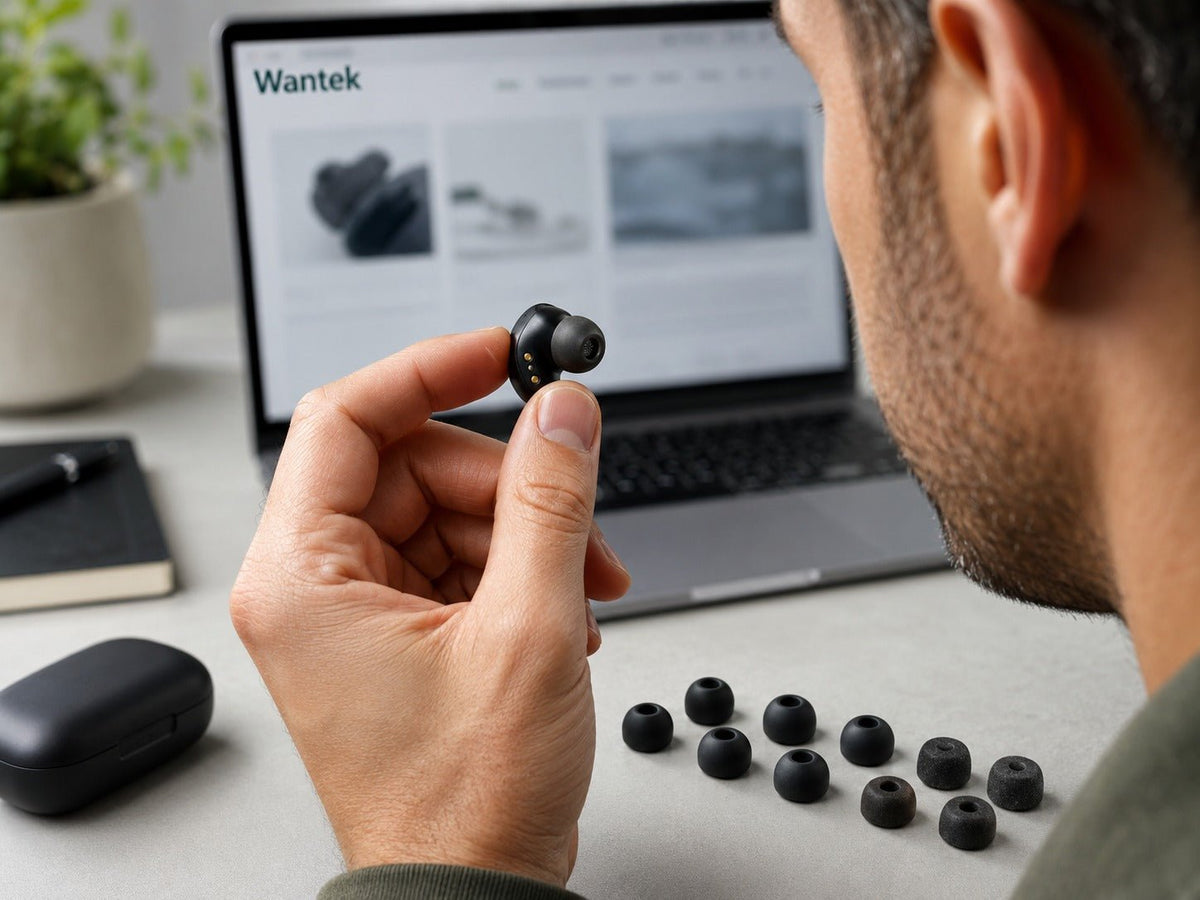
Choisir des écouteurs hypoallergéniques pour des oreilles sensibles ne consiste pas à faire confiance à une étiquette, mais à comprendre ce qui est réellement en contact avec votre peau. Le métal exposé, les adhésifs, les matériaux des embouts, l'humidité emprisonnée, la friction, la pression et les produits de nettoyage sont autant de facteurs qui comptent. Un processus d'achat pragmatique commence par l'identification de l'élément déclencheur probable, la vérification des divulgations de matériaux par le fabricant et le choix d'un ajustement que vous pouvez personnaliser.
Réponse rapide : Aucun écouteur n'est garanti sans allergène pour tout le monde. Si vous avez les oreilles sensibles, privilégiez des informations claires sur les matériaux, des pièces de contact remplaçables, de multiples options d'ajustement et des instructions de nettoyage adaptées au produit spécifique. Si la pression intra-auriculaire ou l'humidité constitue le problème principal, une conception à oreilles libres (« open-ear ») peut être un format plus approprié à évaluer.
Pourquoi les écouteurs peuvent irriter les oreilles sensibles
Les démangeaisons, rougeurs, gonflements, desquamations ou douleurs après l'utilisation d'écouteurs peuvent avoir plusieurs causes. La dermatite de contact allergique est une réaction immunitaire retardée à une substance spécifique, tandis que la dermatite de contact irritative peut résulter de la friction, de l'humidité, de la pression ou de l'exposition répétée à des résidus irritants. Des symptômes similaires peuvent également survenir lorsque plusieurs facteurs se superposent.
La question utile n'est pas simplement « Ces écouteurs sont-ils hypoallergéniques ? ». C'est plutôt : « Quels matériaux sont en contact avec ma peau, combien de temps y restent-ils, et qu'est-ce qui change lorsque je modifie l'ajustement, l'embout, la méthode de nettoyage ou le style de port ? »
Matériaux et déclencheurs courants à vérifier
Nickel et autres métaux
Le nickel est un allergène de contact bien connu. Pour les écouteurs, la préoccupation pratique est de savoir si un métal contenant du nickel est présent sur une surface en contact avec la peau et si l'usure, la transpiration ou la corrosion peuvent augmenter l'exposition. Le cobalt et le chrome peuvent également provoquer une allergie de contact chez les personnes sensibilisées ; par conséquent, des mentions vagues telles que « acier inoxydable » ou « acier chirurgical » ne suffisent pas à prouver qu'un écouteur particulier convient à une allergie spécifique.
Acrylates, méthacrylates et adhésifs
Les acrylates et les méthacrylates sont utilisés dans de nombreux systèmes adhésifs et polymères. Certaines personnes développent une allergie de contact à des composés spécifiques de ces familles. Les directives actuelles d'Apple sur les matériaux portables, par exemple, indiquent que les AirPods et produits associés contiennent des traces d'acrylates et de méthacrylates provenant d'adhésifs, et que leur maille acoustique en acier inoxydable contient un peu de nickel. Ce type de divulgation spécifique au produit est plus utile qu'une allégation générique de type « doux pour la peau ».
Additifs du caoutchouc et colophane
Les thiurames, carbamates, composés mercapto et produits chimiques apparentés au caoutchouc sont des allergènes de contact reconnus. La colophane ou ses dérivés peuvent également déclencher une dermatite de contact allergique chez les utilisateurs sensibles. Leur présence ne doit pas être supposée dans un embout ou un adhésif particulier sans preuve spécifique au produit.

Ce que le terme « hypoallergénique » vous dit — et ne vous dit pas
« Hypoallergénique » doit être considéré comme un terme de dépistage, pas comme une garantie. La FDA (U.S. Food and Drug Administration) précise qu'il n'existe aucune norme ou définition fédérale régissant le terme « hypoallergénique » pour les cosmétiques. Cette règle concerne les cosmétiques, pas les écouteurs, mais la leçon pour l'acheteur est la même : le mot en lui-même constitue une preuve plus faible qu'une divulgation claire des matériaux ou qu'un test spécifique au produit.
La transparence sur les matériaux compte davantage qu'une étiquette rassurante. Recherchez les matériaux exacts en contact avec la peau, les revêtements, les adhésifs et les pièces remplaçables plutôt que de supposer qu'un produit est sûr parce qu'il est commercialisé comme adapté aux peaux sensibles.
Titane et acier inoxydable
Certains alliages de titane et aciers inoxydables strictement contrôlés sont largement utilisés dans des applications médicales, mais cela ne rend pas chaque produit de consommation contenant du titane ou de l'acier résistant aux allergies. La finition de surface, les revêtements, la composition, l'usure, la corrosion et le contact réel avec la peau restent déterminants.
Silicone
Les embouts en silicone sont courants car ils sont flexibles, lavables dans de nombreuses conceptions et disponibles en plusieurs tailles. Une allégation de « qualité médicale » n'a de sens que si le fabricant identifie la formulation ou l'évaluation justificative. La norme ISO 10993-1:2025 décrit l'évaluation de la sécurité biologique des dispositifs médicaux dans le cadre d'un processus de gestion des risques ; ce n'est pas une certification universelle qui rendrait un écouteur grand public ou une formulation de silicone non allergène.
Mousse à mémoire de forme et autres élastomères
La mousse à mémoire de forme en polyuréthane peut améliorer la conformité et l'étanchéité, mais les formulations diffèrent et les instructions de nettoyage sont spécifiques au matériau. Les élastomères thermoplastiques et les silicones spécialisés varient également en termes d'additifs et de chimie de surface. Pour les oreilles sensibles, le nom de la famille de matériaux est rarement une information suffisante.

Écouteurs à évaluer pour les oreilles sensibles
Il n'existe pas d'écouteur « le plus sûr » universel pour toutes les allergies. Une comparaison plus utile consiste à demander ce que le fabricant divulgue réellement, quelles parties touchent la peau, si ces parties sont remplaçables et quelle flexibilité d'ajustement la conception offre.
| Modèle | Ce que le fabricant divulgue | Pourquoi cela peut être important | Limitation importante |
|---|---|---|---|
| Apple AirPods Pro | Apple répertorie le boîtier en plastique, les embouts en silicone ou en mousse, la maille acoustique en acier inoxydable, un peu de nickel dans la maille, et des traces d'acrylates/méthacrylates issus des adhésifs. | Une divulgation inhabituellement détaillée des zones en contact avec la peau aide les utilisateurs ayant des sensibilités connues à évaluer des matériaux spécifiques. | La transparence sur les matériaux ne rend pas le produit exempt de nickel ou d'acrylates. |
| Jabra Elite 10 Gen 2 | Jabra répertorie quatre tailles d'EarGels et publie l'ajustement, l'indice IP et les spécifications du produit. | Plusieurs tailles d'embouts peuvent aider à réduire la pression et les problèmes d'étanchéité lorsque l'ajustement est le principal déclencheur d'irritation. | La flexibilité d'ajustement n'est pas une preuve d'hypoallergénicité. |
| Bose QuietComfort Ultra Earbuds | Bose fournit trois tailles d'embouts et trois tailles de stabilisateurs qui peuvent être combinés. | La taille séparée des embouts et des stabilisateurs offre davantage de moyens de modifier la répartition de la pression. | Un ajustement confortable n'exclut pas une sensibilité à un matériau de contact. |
| Sony WF-1000XM5 | Sony fournit des embouts à isolation phonique et publie des conseils d'ajustement et de nettoyage spécifiques au modèle. | L'ajustement peut être réglé selon la taille de l'embout, et Sony avertit que ses embouts en mousse de polyuréthane nécessitent une manipulation spécifique. | La mousse ne doit pas être automatiquement décrite comme hypoallergénique. |
| Shure AONIC 215 Gen 2 | Shure inclut des manchons « Soft Flex » remplaçables et des manchons en mousse dans plusieurs tailles. | Les pièces de contact remplaçables facilitent l'expérimentation de l'ajustement et du type de manchon. | La remplaçabilité est utile, mais elle ne garantit pas la compatibilité avec une allergie spécifique. |
Principe de comparaison : Les performances de réduction de bruit, l'autonomie de la batterie, la résistance à l'eau et la qualité sonore peuvent compter dans votre achat, mais aucune de ces caractéristiques ne prouve indépendamment un risque d'allergie plus faible.
Comment réduire l'irritation liée à l'ajustement, à l'humidité et au nettoyage
1. Commencez avec la bonne taille
L'embout doit créer l'étanchéité prévue sans pression douloureuse. Les oreilles gauche et droite n'ont pas toujours besoin de la même taille. Si une irritation apparaît exactement là où l'embout ou le boîtier appuie, changer de taille ou de forme peut être plus important que de changer de marque.
2. Évitez la pression continue
Même un matériau relativement inerte peut devenir inconfortable lorsqu'il frotte ou appuie sur la même zone pendant des heures. Une sensibilité persistante est un problème d'ajustement qui mérite d'être traité, et non quelque chose à « assouplir ». Le retrait périodique réduit également la chaleur et l'humidité continues.
3. Suivez scrupuleusement les instructions de nettoyage
Ne traitez pas l'alcool isopropylique à 70 % comme un nettoyant universel pour écouteurs. Les solvants peuvent endommager certains revêtements, plastiques, mailles et embouts en polyuréthane. Utilisez les instructions de nettoyage du fabricant pour le modèle et le composant exacts. Remplacez les embouts lorsqu'ils se déchirent, durcissent, se compriment de façon permanente, perdent leur élasticité ou ne peuvent plus être nettoyés adéquatement.

Lorsque la sensibilité aux matériaux est floue
Les tests de confort et les tests d'allergie répondent à des questions différentes. Une période de retour peut vous aider à évaluer la pression, la stabilité et le confort sur une longue durée. Elle ne peut pas identifier un allergène de contact spécifique.
Les tests épicutanés (patch tests) cliniques utilisent des allergènes définis et des lectures différées pour étudier la dermatite de contact allergique. L'American Academy of Dermatology explique comment les patch tests sont utilisés pour identifier les substances pouvant provoquer une éruption cutanée récurrente. Apporter des informations sur les matériaux du produit suspecté peut aider à restreindre les expositions pertinentes.
Le Bluetooth lui-même peut-il causer une dermatite de contact allergique ?
La radiofréquence Bluetooth n'est pas un allergène de contact. La dermatite de contact allergique est causée par une réponse immunitaire à des substances en contact avec la peau. L'inconfort lié aux écouteurs peut toujours provenir d'autres facteurs tels que la pression, la friction, la transpiration, l'occlusion ou les résidus de nettoyage.
Envisagez un style de port différent
Si l'irritation persiste à l'intérieur du conduit auditif, changer de format peut être plus utile que de changer continuellement de marque d'embouts en silicone. Les casques supra-auriculaires déplacent la principale zone de contact vers des coussinets autour de l'oreille, tandis que les conceptions à oreilles libres laissent le conduit auditif ouvert. Chaque approche crée des points de contact et des compromis différents.
Le guide des types de casques de Wantek compare les conceptions intra-auriculaires, supra-auriculaires, circum-auriculaires et ouvertes afin que vous puissiez distinguer un problème de matériau d'un problème de format.

Alternative « open-ear » : éviter les embouts en silicone dans le canal
Le Wantek OBT030 utilise une conception à clipser sur l'oreille (oreilles libres), de sorte que les embouts en silicone ne sont pas insérés dans le conduit auditif. Cela peut être utile lorsque le problème est lié à une pression dans le canal ou lorsque vous préférez simplement une conception qui laisse le canal ouvert. Il ne doit pas être décrit comme à l'épreuve des allergies, car les surfaces de contact de l'oreille externe comptent toujours.
Comparez un style de port à oreilles libres
Examinez la conception, l'ajustement, les informations sur la batterie et les spécifications du Wantek OBT030 avant de décider si un format ouvert à clipser répond mieux à vos besoins.
Une liste de contrôle d'achat pratique
- Identifiez le déclencheur que vous essayez d'éviter : un allergène connu, une pression dans le canal, une friction, de l'humidité ou une réaction récurrente incertaine.
- Vérifiez les matériaux en contact avec la peau : recherchez les matériaux exacts plutôt que des étiquettes vagues telles que « métal de qualité supérieure », « qualité médicale » ou « hypoallergénique ».
- Recherchez des pièces de contact remplaçables : des embouts ou manchons amovibles facilitent le changement d'interface sans remplacer l'écouteur entier.
- Privilégiez la flexibilité d'ajustement : plusieurs tailles d'embouts, des pièces de stabilisation alternatives ou un style de port différent peuvent réduire l'irritation liée à la pression.
- Lisez les instructions de nettoyage avant l'achat : un matériau qui nécessite un entretien que vous ne suivrez pas de manière réaliste est un mauvais choix.
- Utilisez les conditions de retour pour tester le confort : évaluez des sessions de port réalistes plutôt que de supposer qu'un court essai garantit un confort toute la journée.
Références clés pour les allégations sur les matériaux et la sensibilité cutanée
- FDA américaine : Cosmétiques « hypoallergéniques » — utile pour comprendre pourquoi le mot « hypoallergénique » ne remplace pas une justification scientifique.
- ISO 10993-1:2025 — la norme actuelle pour l'évaluation biologique des dispositifs médicaux dans le cadre d'un processus de gestion des risques.
- Apple : Porter vos AirPods, EarPods ou appareils Beats — divulgations sur les matériaux et la sensibilité cutanée par famille de produits, incluant le nickel et les acrylates.
- American Academy of Dermatology : Patch testing — explique comment les patch tests sont utilisés pour étudier la dermatite de contact allergique.
- Jabra Elite 10 Gen 2, Kit d'ajustement Bose QuietComfort Ultra, Spécifications Sony WF-1000XM5, et Shure AONIC 215 Gen 2 — sources des fabricants pour le tableau comparatif.
Questions fréquemment posées
Les écouteurs hypoallergéniques sont-ils sûrs pour toutes les personnes allergiques aux métaux ?
Non. « Hypoallergénique » ne signifie pas « sans allergène ». Si le nickel est un allergène connu, privilégiez des informations explicites sur les matériaux et minimisez le contact direct avec les surfaces contenant du nickel plutôt que de vous fier uniquement à l'étiquette.
Les embouts en silicone peuvent-ils toujours irriter les oreilles sensibles ?
Oui. Même lorsque le matériau lui-même est toléré, un embout peut provoquer une irritation par pression, friction, humidité emprisonnée, mauvaise taille ou résidus de produits de nettoyage.
Comment effectuer un patch test pour les matériaux des écouteurs ?
Le test épicutané place des allergènes sélectionnés sur la peau et vérifie la présence de réactions retardées sur plusieurs jours. Les informations sur les matériaux du produit peuvent aider à identifier les allergènes les plus pertinents à examiner.
Le Bluetooth peut-il causer une réaction allergique ?
Le Bluetooth n'est pas un allergène de contact. Les réactions aux écouteurs sont plus probablement liées à des substances touchant la peau ou à des facteurs non allergiques tels que la friction, la pression, l'humidité ou les résidus.
À quelle fréquence dois-je remplacer les embouts ?
Remplacez-les lorsqu'ils se fissurent, se déchirent, durcissent, se compriment de façon permanente, perdent leur élasticité, ne ferment plus correctement ou ne peuvent plus être nettoyés adéquatement. Suivez les conseils spécifiques au matériau du fabricant lorsque cela est possible.
Conclusion
La meilleure approche pour les écouteurs hypoallergéniques consiste à privilégier les preuves. Commencez par le déclencheur probable, puis comparez les matériaux et surfaces exacts en contact avec l'oreille, la capacité à modifier l'ajustement ou les embouts, et les instructions de nettoyage du produit. Si le format intra-auriculaire étanche cause lui-même des problèmes de pression ou d'humidité, envisagez un style de port différent au lieu de rechercher une étiquette universelle « sans allergie ».

