
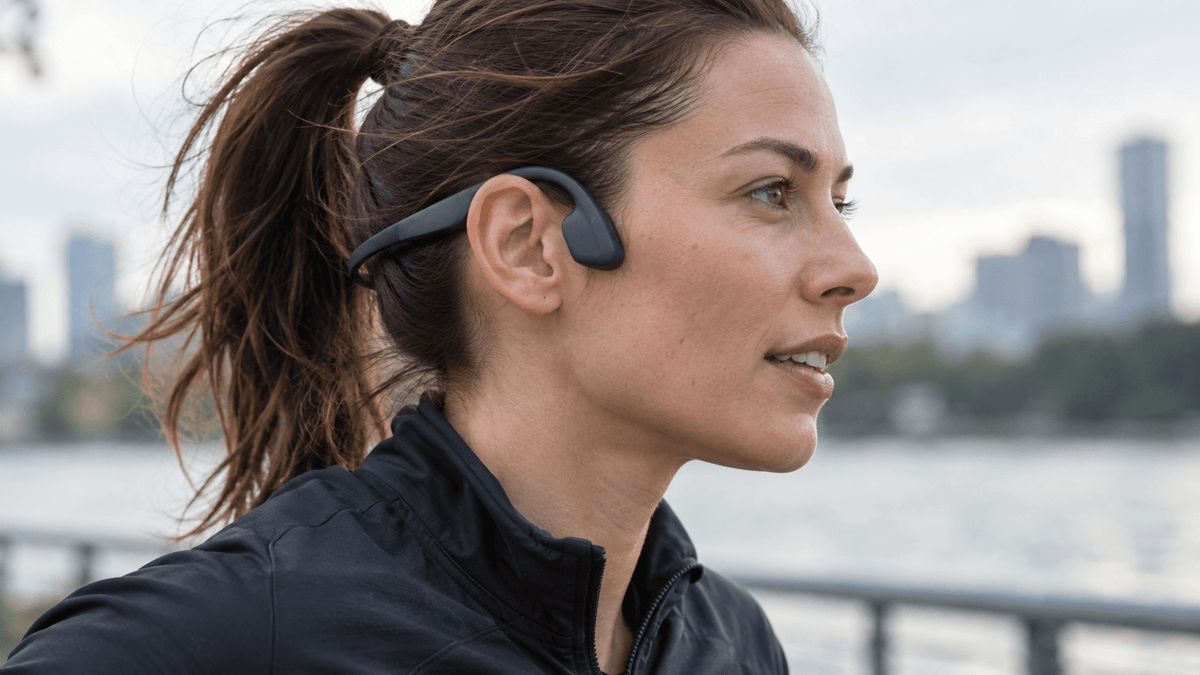
If you are looking for top-rated bone conduction headphones, the strongest current all-around consensus is Shokz OpenRun Pro 2. Tom’s Guide, TechRadar, and SoundGuys all place it at or near the top of their tested recommendations. The better choice can still change if your priority is running, swimming, price, or multi-sport training.
Quick answer: Choose Shokz OpenRun Pro 2 for the strongest overall independent consensus, Shokz OpenRun for a lighter running-focused option, Shokz OpenSwim Pro for swimming, Creative Outlier Free Pro for a lower-cost waterproof model with local storage, or H2O Audio TRI 2 PRO for long multi-sport sessions and Playlist+ offline playback.
This shortlist combines current independent testing with manufacturer specifications checked October 6, 2026. Wantek did not run a controlled head-to-head test of these five models, so “top-rated” here means well-supported by current review evidence for a defined use case, not a proprietary Wantek score.
How These Top-Rated Bone Conduction Headphones Were Chosen
The shortlist starts with current test-based recommendations from Tom’s Guide, TechRadar, and SoundGuys. Current manufacturer pages were then used to verify battery, water protection, weight, and onboard-storage claims where relevant.
The publications do not agree on every category. That matters: a model that ranks well for swimming can be a poor choice for someone who only runs, and a lower-cost model can trade sound quality for waterproofing or storage. If you are new to the format, Wantek’s bone conduction headphones guide explains how the technology works and where open-ear bone conduction differs from conventional headphones.
Five Top-Rated Bone Conduction Headphones Compared
| Model | Best fit | Current evidence and specs | Main trade-off |
|---|---|---|---|
| Shokz OpenRun Pro 2 | Best overall | Best overall or best for most in multiple current test-based guides; up to 12 hours, IP55, about 30.3 g. | Not designed for swimming and no onboard music storage. |
| Shokz OpenRun | Running | Tom’s Guide running pick; 26.4 g, up to 8 hours, IP67, Standard and Mini sizes. | Older, simpler audio design than OpenRun Pro 2; not for swimming. |
| Shokz OpenSwim Pro | Swimming | Swimming pick in Tom’s Guide and TechRadar; IP68, 32GB storage, up to 9 hours Bluetooth or 6 hours MP3. | Higher price and swim-focused features may be unnecessary for dry-land-only use. |
| Creative Outlier Free Pro | Budget + swimming | Tom’s Guide budget pick; Creative lists IPX8, 8GB storage, up to 10 hours, Bluetooth 5.3. | Independent testing flags weaker sound quality than the leading Shokz models. |
| H2O Audio TRI 2 PRO | Long multi-sport sessions | TechRadar long-workout pick; IPX8, 8GB storage, Bluetooth 5.3, Playlist+, about 6–9 hours depending on mode and volume. | Expensive, and independent reviewers do not agree that it beats OpenSwim Pro for pure swimming use. |
1. Shokz OpenRun Pro 2: Best Overall Consensus
OpenRun Pro 2 is the clearest place to start when you want one bone conduction headset for running, workouts, walking, and everyday open-ear listening. Tom’s Guide calls it the best option for most people, TechRadar names it best overall, and SoundGuys also places it first for most listeners after testing.
Shokz currently lists up to 12 hours of battery life, IP55 protection, a 30.3 g standard weight, quick charging, and Standard and Mini sizes. The important limitation is equally clear: IP55 covers sweat and splashes, not swimming. It also lacks onboard music storage, so normal listening depends on a nearby source device.
Choose it if: you want the strongest cross-publication recommendation and care more about dry-land comfort, sound, and battery life than pool use.
Skip it if: swimming or phone-free local playback is a core requirement.
2. Shokz OpenRun: A Lighter Running-Focused Choice

OpenRun remains a useful specialist choice even though OpenRun Pro 2 is the newer all-around recommendation. Tom’s Guide names OpenRun its running pick and highlights its low weight and secure fit. Shokz lists a 26.4 g weight, up to eight hours of battery life, IP67 protection, and Standard and Mini sizes.
The IP67 rating gives it stronger published water protection than OpenRun Pro 2, but Shokz explicitly says OpenRun is not intended for swimming. The trade is straightforward: less battery life and a simpler audio system in exchange for a lighter frame and lower price than the Pro model.
Choose it if: running comfort and low weight matter more than maximum battery life or the newer Pro audio system.
3. Shokz OpenSwim Pro: Best for Dedicated Swimming

OpenSwim Pro is the most consistently supported swim-specific pick in the current sample. Tom’s Guide and TechRadar both select it for swimming, and Shokz documents IP68 protection, 32GB of integrated storage, Bluetooth 5.4 for land use, and local MP3 playback underwater.
Shokz lists up to nine hours in Bluetooth mode and six hours in MP3 mode. It also states that Bluetooth is not functional underwater because water disrupts the signal, so submerged listening depends on the internal storage. That distinction matters more than a waterproof label alone.
If swimming is your main use, see Wantek’s bone conduction headphones for swimming comparison for a deeper look at water-use limits, storage, playback mode, and care.
Choose it if: you want a purpose-built swim model with documented underwater local playback plus Bluetooth for dry land.
4. Creative Outlier Free Pro: A Lower-Cost Waterproof Pick
Tom’s Guide currently names Creative Outlier Free Pro its budget-friendly bone conduction pick. Creative lists the model at $79.99 as of October 6, 2026, with IPX8 protection, 8GB of onboard storage, Bluetooth 5.3, multipoint connectivity, and up to 10 hours of playback.
The lower price comes with a meaningful trade-off. Tom’s Guide found the sound less clear than the Shokz models above. Creative’s own water guidance also sets specific limits: the IPX8 claim covers freshwater submersion up to 1.5 m for up to 40 minutes, not salt water.
Choose it if: you want local storage and documented freshwater swimming support without paying OpenSwim Pro pricing, and you can accept the audio compromise.
5. H2O Audio TRI 2 PRO: Best Fit for Long Multi-Sport Sessions
TRI 2 PRO earns its place for a different reason. TechRadar names it the best bone conduction option for long workouts and describes it as particularly strong for triathlon-style transitions between water and land. H2O Audio lists IPX8 protection to 12 ft/3.6 m, 8GB of storage, Bluetooth 5.3, and 6–9 hours of playback depending on mode and volume.
Its standout feature is Playlist+, which lets the headset store audio from supported Bluetooth playback for later offline use. H2O Audio also states that Bluetooth itself does not work underwater, so submerged listening uses MP3 or Playlist+ mode.
This is not a universal fifth-place ranking. Tom’s Guide also tested TRI 2 PRO and prefers OpenSwim Pro for a pure swimming purchase. That disagreement is useful: TRI 2 PRO makes more sense when multi-sport workflow and Playlist+ matter enough to justify its price.
Choose it if: you train across swimming, running, cycling, or other long sessions and want offline playback flexibility beyond a basic MP3 transfer workflow.
Where Wantek BC3 Pro Fits
Wantek BC3 Pro is not included in the independent top-rated five above because the current review sample does not provide the same cross-publication test evidence. It is better presented as a lower-cost swim-focused alternative with a clearly documented feature set.
As of October 6, 2026, Wantek lists BC3 Pro at $45 with IP68 protection, 32GB of onboard MP3 storage, Bluetooth 5.3 for dry-land use, a 32 g frame, a built-in microphone, and up to six hours of battery life. That makes it relevant if your priority is local underwater playback at a much lower current price than the premium swim models.
Need a Lower-Cost Swim-Focused Option?
Check the current BC3 Pro specifications, storage, water-use guidance, and price before deciding whether the simpler feature set fits your routine.
How to Choose Between Top-Rated Models

Start with the activity, not the ranking
A general “best overall” pick can still be wrong for a swimmer. Decide first whether the headset must handle dry-land workouts, pool use, long endurance sessions, phone-free playback, or several of those jobs.
Treat water protection and swimming support separately
IP55, IP67, IP68, and IPX8 do not mean the same thing, and the rating alone does not define an approved activity. OpenRun is IP67 but explicitly not for swimming. OpenSwim Pro and Creative Outlier Free Pro provide model-specific swim guidance and local storage. Read the manufacturer’s stated depth, water type, duration, playback mode, and care instructions.
Check whether local storage actually matters
OpenRun Pro 2 and OpenRun are built around Bluetooth streaming. OpenSwim Pro, Creative Outlier Free Pro, TRI 2 PRO, and BC3 Pro add onboard storage for phone-free playback. That feature becomes especially important underwater, where a normal Bluetooth link is not dependable.
Compare battery numbers with their test conditions in mind
Published battery figures come from different manufacturers and modes. Use them to decide whether a headset gives you enough margin for your routine, not as proof that one model will always last an exact percentage longer in real use.
Expect open-ear trade-offs
Bone conduction leaves the ear canal unsealed, which can be useful when you do not want an in-ear seal. The same open design also means outside noise competes with what you are listening to. If isolation and full-range music quality are your main priorities, conventional earbuds or headphones may be a better fit.
Which Pick Makes the Most Sense?
For most buyers, OpenRun Pro 2 has the strongest current evidence because three independent test-based guides converge on it as the overall or most-listeners choice. OpenRun is the lighter running specialist. OpenSwim Pro is the safer shortlist choice when swimming is the central requirement. Creative Outlier Free Pro gives budget-conscious swimmers local storage and IPX8 protection with a sound-quality compromise, while TRI 2 PRO is the more specialized option for multi-sport users who value Playlist+ and long-session flexibility.
If you are deciding whether premium features are worth paying for at all, Wantek’s premium bone conduction headphones comparison separates audio, charging, storage, swim, and training features so you can see what the extra spend actually buys.
Frequently Asked Questions
What are the top-rated bone conduction headphones overall?
Shokz OpenRun Pro 2 has the strongest current cross-publication consensus in this review sample. Tom’s Guide, TechRadar, and SoundGuys all place it at or near the top for most buyers.
Which bone conduction headphones are best for running?
Shokz OpenRun is Tom’s Guide’s current running pick, while OpenRun Pro 2 adds longer battery life and a more advanced audio system. Choose between lower weight and the Pro model’s broader feature set.
Which top-rated bone conduction headphones are best for swimming?
Shokz OpenSwim Pro is the most consistent swim pick across the current independent sample. It combines IP68 protection with 32GB of local storage because Bluetooth is not functional underwater.
Are cheaper bone conduction headphones worth buying?
They can be. Creative Outlier Free Pro trades some sound quality for a lower price, IPX8 protection, 8GB storage, and up to 10 hours of playback. Match the compromise to your use.
Do top-rated bone conduction headphones sound as good as regular headphones?
Usually not if isolation and full-range music reproduction are the priority. Bone conduction is mainly valuable for its open-ear wearing style, so outside sound remains part of the listening environment.

