
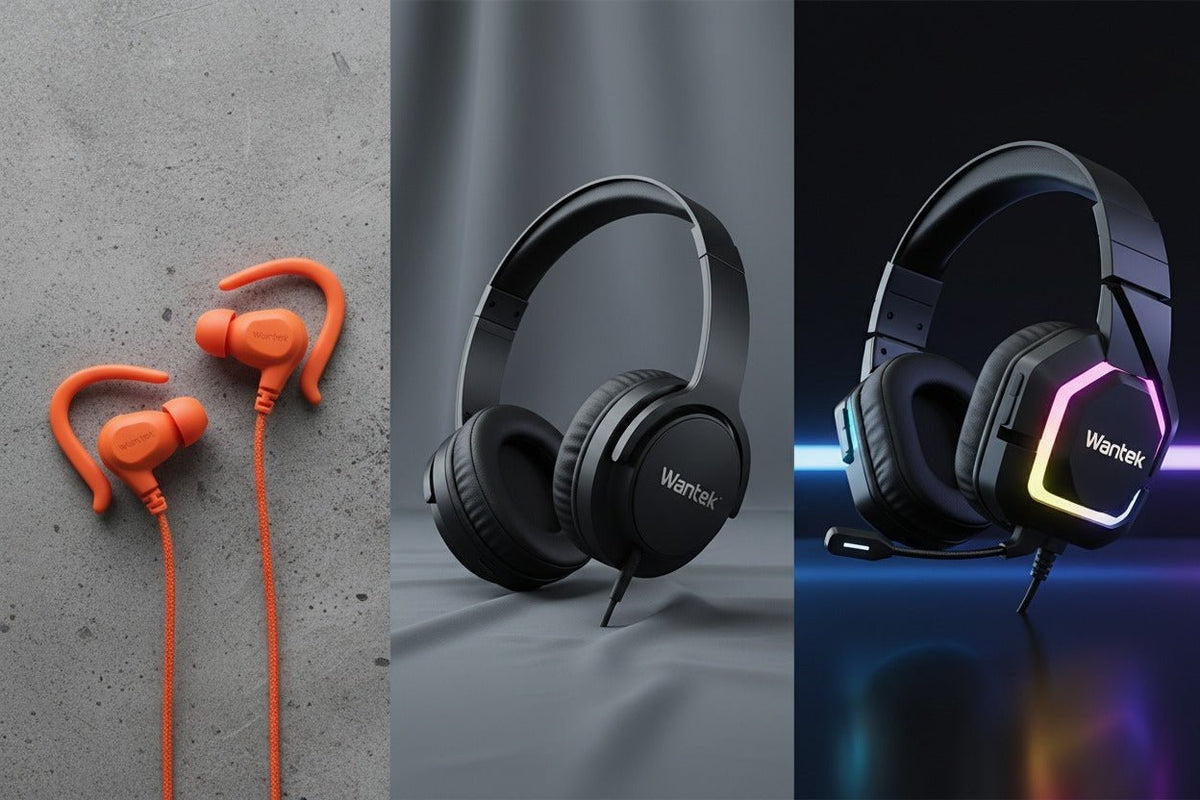
L'achat de casques Bluetooth en gros ne consiste pas tant à trouver le prix unitaire le plus bas qu'à maîtriser le risque de déploiement. Commencez par les utilisateurs et les appareils, traduisez ces besoins en un cahier des charges écrit, vérifiez la conformité et les documents de transport, testez des échantillons équivalents à la production et comparez le coût total rendu avant d'approuver le volume.
Pour les acheteurs professionnels aux États-Unis : traitez chaque devis comme un ensemble comprenant le produit, la documentation, les contrôles qualité, la logistique, les conditions de garantie et les engagements de contrôle des modifications. Un devis moins cher n'est pas avantageux si le modèle change après l'échantillonnage, si les enregistrements requis sont manquants ou si les remplacements sont difficiles à obtenir.

1. Définissez le déploiement avant de comparer les produits
Un même casque Bluetooth peut être parfaitement adapté à un déploiement et inadapté à un autre. Définissez ce qui pourrait faire échouer l'achat dans l'environnement réel avant de demander les prix aux fournisseurs.
| Déploiement | Vérifier en premier | Pourquoi c'est important |
|---|---|---|
| Bureaux et équipes d'appel | Disposition du microphone, commandes de sourdine, compatibilité des appareils, temps de port | La qualité des appels et la convivialité au quotidien comptent généralement plus que les fonctionnalités axées sur le divertissement. |
| Revente au détail | Client cible, processus de garantie, emballage, disponibilité répétée | Le produit doit rester facile à prendre en charge après la première expédition, pas seulement être attrayant sous forme d'échantillon. |
| Événements et programmes promotionnels | Portée de la personnalisation, emballage, simplicité de configuration, date de livraison | La personnalisation et la logistique peuvent devenir le chemin critique. |
| Fitness et usage extérieur | Maintien, indice IP déclaré, commandes, méthode de charge | Les allégations de durabilité doivent être liées au modèle exact et à l'indice documenté. |
Si l'achat est destiné à une école, un bureau, un centre de contact ou un déploiement multi-appareils, la page de planification des casques et écouteurs en gros de Wantek est une étape suivante pratique pour comparer les cas d'utilisation, les connecteurs, les quantités, la compatibilité et les exigences de devis.
2. Établissez un cahier des charges que les fournisseurs peuvent chiffrer de manière cohérente
Une demande de devis (RFQ) utile décrit le résultat exact dont vous avez besoin. Évitez de vous fier à des étiquettes vagues telles que « premium », « réduction de bruit » ou « Bluetooth 5.x » sans définir la fonctionnalité qui compte.
Compatibilité Bluetooth et appareils
- Demandez la version Bluetooth exacte, les profils pris en charge, les codecs, le comportement multipoint et toute fonctionnalité LE Audio réellement implémentée.
- Listez les téléphones, ordinateurs, tablettes, systèmes d'exploitation ou environnements UC avec lesquels les appareils doivent fonctionner.
- Vérifiez le couplage, le comportement de reconnexion, les commandes, le routage du microphone et la commutation sur les mêmes types d'appareils que ceux que vos utilisateurs déploieront.
Un numéro de version seul ne doit pas être utilisé comme substitut pour chaque fonctionnalité Bluetooth. La qualification du produit est également distincte de la sélection des fonctionnalités : le Bluetooth SIG déclare que les produits Bluetooth doivent terminer son processus de qualification avant la vente ou la distribution, et les noms de produits et numéros de modèle commercialisés doivent correspondre à la liste de qualification. Le guide de qualification du Bluetooth SIG explique le processus actuel.
Allégations sur le microphone et la réduction de bruit
Pour les casques utilisés lors d'appels, distinguez la réduction de bruit du microphone de la réduction de bruit active (ANC) dans les oreillettes. Demandez au fournisseur d'identifier quelle fonction le modèle fournit réellement, puis testez la captation de la voix dans l'environnement qui vous intéresse au lieu de traiter une étiquette marketing comme une preuve.
Batterie et charge
Demandez les chiffres d'autonomie de la batterie ainsi que les conditions de test qui les ont produits. Confirmez si le chiffre cité se réfère à la lecture de musique, au temps de parole, avec ANC activé ou désactivé, ou à la capacité combinée du boîtier pour les écouteurs sans fil. Enregistrez le connecteur de charge et les exigences attendues du chargeur dans le cahier des charges.
Durabilité et indices IP
Si la protection contre l'eau ou la poussière est importante, exigez l'indice IP exact pour le modèle exact et la documentation justificative plutôt que d'accepter des termes vagues comme « étanche ». L'indice IP est normalisé selon la norme IEC 60529.
3. Choisissez le mode d'approvisionnement correspondant à vos besoins de contrôle
Les casques Bluetooth en gros peuvent provenir de distributeurs en stock, de fabricants directs ou de fournisseurs proposant des designs existants avec personnalisation en marque blanche. La meilleure voie dépend du degré de contrôle dont vous avez besoin sur le produit et de la charge de travail de la chaîne d'approvisionnement que vous êtes prêt à gérer.
| Voie | Utile quand | Vérifier avant de commander |
|---|---|---|
| Distributeur en stock | Vous avez besoin d'une disponibilité plus rapide ou de quantités initiales plus faibles | Modèle exact, continuité des stocks, responsable de la garantie, processus de retour |
| Fabricant direct | Vous avez besoin d'un meilleur contrôle du produit ou d'un volume répétitif | Entité légale, rôle de l'usine, contrôle des changements, capacité de production, documentation |
| Programme de marque blanche / type ODM | Vous souhaitez utiliser une plateforme existante avec des changements de marque ou d'emballage | Ce qui est réellement personnalisable, échantillons d'approbation, coûts d'outillage ou de configuration, MOQ par variante |

Des termes tels que OEM et ODM sont utilisés de manière incohérente entre les fournisseurs. Au lieu de supposer que l'étiquette définit la relation, mettez le périmètre réel par écrit : qui possède le design, ce qui peut changer, qui contrôle le firmware, quels composants peuvent être substitués et ce qui nécessite l'approbation de l'acheteur.
4. Vérifiez le fournisseur et le produit exact, pas seulement la vitrine
Les badges de fournisseur et l'historique de la marketplace peuvent aider à la découverte, mais ils ne remplacent pas la vérification au niveau du produit. Demandez des enregistrements liés au modèle que vous achetez et recoupez les identifiants lorsque cela est possible.
- Identité de l'entreprise : raison sociale, adresse, entité de facturation, bénéficiaire bancaire et rôle de fabricant ou de commerçant.
- Identité du produit : numéro de modèle, révision matérielle, version du firmware si nécessaire, version de l'emballage et substitutions de nomenclature approuvées.
- Dossiers de conformité : rapports, autorisations, déclarations ou entrées de base de données qui correspondent au modèle et au marché cible.
- Contrôles commerciaux : responsable de la garantie, gestion des défauts, processus de remplacement, délais de livraison et ce qui se passe si un composant change.
Autorisation radiofréquence aux États-Unis
Les produits Bluetooth transmettent intentionnellement de l'énergie RF. Les conseils de la FCC expliquent que les émetteurs intentionnels nécessitent généralement une certification avant d'être commercialisés aux États-Unis. Pour un achat en gros, vérifiez que les documents d'autorisation s'appliquent à la conception radio et à la configuration du produit exactes que vous prévoyez d'acheter. Le guide d'autorisation d'équipement de la FCC fournit le contexte réglementaire.
Documentation de transport des batteries au lithium
Les casques et écouteurs sans fil contiennent généralement des batteries au lithium. La PHMSA note que les batteries au lithium sont soumises aux tests de la sous-section 38.3 du Manuel d'épreuves et de critères des Nations Unies et que les fabricants et distributeurs doivent rendre un résumé des tests disponible. Demandez le résumé des tests applicable avant l'expédition. Le guide de la PHMSA sur le résumé des tests des batteries au lithium liste les informations requises.
5. Échantillonnez avant le volume, puis définissez le plan d'acceptation de production
Un échantillon n'est utile que s'il représente ce qui sera produit. Enregistrez le modèle de l'échantillon, sa révision, son firmware, son emballage, ses accessoires et le devis du fournisseur afin que l'unité approuvée puisse devenir la référence pour la production.
Testez le flux de travail réel
Couplez avec les appareils cibles, passez des appels si le microphone est important, vérifiez le comportement des commandes, portez le produit pendant la durée de session attendue, et testez le comportement de charge et de reconnexion.
Gelez la configuration approuvée
Documentez le modèle accepté, la version cosmétique, l'emballage, les accessoires, le firmware le cas échéant, et tout attribut qui ne peut changer sans approbation écrite.
Définissez les critères d'inspection
Spécifiez ce qui compte comme défaut critique, majeur et mineur, comment les unités seront échantillonnées, quels contrôles fonctionnels sont requis et ce qui se passe lorsqu'un lot échoue.
Si vous utilisez l'échantillonnage statistique d'acceptation, faites référence à une méthode actuelle plutôt que de copier une ancienne table AQL à partir d'un modèle de fournisseur. L'ISO a publié la norme ISO 2859-1:2026 pour l'inspection lot par lot par attributs.
6. Comparez le coût total rendu, pas seulement le devis unitaire
La décision d'achat doit inclure les coûts et les responsabilités nécessaires pour acheminer le produit du fournisseur à l'inventaire utilisable. Un modèle de coût rendu pratique peut inclure le prix du produit, l'emballage, l'outillage ou la configuration, le fret, l'assurance, le courtage en douane, les droits ou tarifs supplémentaires, la livraison intérieure, l'inspection, les frais de paiement et la gestion attendue de la garantie.

Classification tarifaire
Les matériaux actuels de l'USITC listent les casques et écouteurs autres que les combinés téléphoniques sous le code HTS 8518.30.20.00, incluant les produits combinés ou non avec un microphone. Ne transformez pas cela en une hypothèse de droit fixe : les détails de classification, le pays d'origine et les mesures tarifaires supplémentaires peuvent modifier le montant réel dû. Consultez le Harmonized Tariff Schedule actuel pour l'expédition que vous prévoyez.
Incoterms et responsabilité
Inscrivez le lieu désigné et la règle Incoterms choisie dans l'accord commercial. La règle affecte la livraison, l'allocation des coûts et le transfert des risques ; elle ne remplace pas les responsabilités en matière de conformité du produit, de documentation ou d'importateur. Les règles Incoterms 2020 de la CCI sont la référence faisant autorité.
7. Incluez le contrôle des modifications et les conditions après-vente dans l'accord d'achat
Les commandes en gros échouent lorsque l'accord commercial est moins spécifique que l'approbation de l'échantillon. Au minimum, enregistrez le modèle et la révision, l'échantillon approuvé, les spécifications du produit et de l'emballage, les substitutions autorisées, la méthode d'inspection, la fenêtre d'expédition, la gestion de la garantie et le processus pour les changements.
- Pas de substitutions silencieuses : les composants, le firmware, l'emballage, les accessoires et les matériaux cosmétiques qui comptent pour l'acceptation doivent nécessiter une approbation avant l'expédition.
- Définissez les preuves : listez quels rapports de test, enregistrements de qualification, documents de batterie, étiquettes, manuels et documents d'emballage doivent être fournis.
- Définissez les recours : convenez de ce qui se passe si la production échoue à l'inspection, arrive avec la mauvaise configuration ou produit un taux de défaut anormal.
- Planifiez les remplacements : décidez si les remplacements sous garantie proviennent du stock de réserve, des futures expéditions, de crédits ou d'une autre méthode documentée.
Raccourci d'approvisionnement : si deux fournisseurs ne peuvent pas chiffrer sur la base du même cahier des charges écrit, vous ne comparez pas les prix pour le même produit.
Liste de contrôle pour l'achat de casques Bluetooth en gros
- Définissez les utilisateurs, les appareils, l'environnement, la quantité et la date limite de livraison.
- Écrivez les fonctionnalités requises concernant le Bluetooth, le microphone, la batterie, la charge, le maintien et la durabilité.
- Vérifiez l'entité légale du fournisseur ainsi que le modèle ou la révision exacte.
- Vérifiez la documentation applicable de la FCC, la qualification Bluetooth, l'IP et les batteries au lithium.
- Approuvez des échantillons équivalents à la production et conservez un dossier de configuration.
- Définissez les critères d'inspection et les exigences de contrôle des modifications avant la production.
- Comparez le coût rendu en utilisant les informations tarifaires et de fret actuelles.
- Mettez par écrit la garantie, le remplacement et les recours en cas de défaut.
Vous prévoyez une commande en gros Wantek ?
Envoyez votre quantité, cas d'utilisation, besoins en appareils ou connecteurs cibles, pays, date limite de livraison et indiquez si vous souhaitez des échantillons ou une commande pilote. Cela donne à l'équipe B2B suffisamment de contexte pour préparer un devis utile.
Questions fréquemment posées
Quel MOQ dois-je attendre pour des casques Bluetooth en gros ?
Le MOQ dépend de si vous achetez des stocks existants, demandez une marque blanche ou modifiez le matériel, l'emballage ou les couleurs. Demandez aux fournisseurs de chiffrer chaque configuration séparément au lieu de supposer un MOQ standard de l'industrie.
Quelle est la différence entre des casques OEM et ODM ?
Les termes sont utilisés de manière incohérente. Définissez le périmètre réel par écrit : qui possède le design, ce que vous pouvez personnaliser, qui contrôle les changements de composants et quelles approbations sont requises avant la production.
Les casques Bluetooth vendus aux États-Unis ont-ils besoin d'une autorisation FCC ?
Les appareils Bluetooth transmettent intentionnellement de l'énergie radiofréquence, donc les règles d'autorisation d'équipement de la FCC s'appliquent généralement. Vérifiez que les documents de certification couvrent la conception radio et la configuration du produit exactes que vous prévoyez d'importer ou de commercialiser.
Ai-je besoin de la qualification Bluetooth SIG pour un produit en marque blanche ?
Le Bluetooth SIG indique que les produits Bluetooth doivent terminer son processus de qualification avant la vente ou la distribution. Les scénarios de marque blanche peuvent modifier qui doit effectuer la qualification, vérifiez donc les responsabilités exactes du produit et de l'entreprise avant le lancement.
Que dois-je demander pour la batterie au lithium ?
Demandez le résumé des tests de batterie au lithium UN 38.3 applicable et les informations d'expédition liées à la batterie ou au modèle de produit. Votre prestataire de fret peut avoir besoin de documents supplémentaires selon le mode de transport et la configuration.

