
Long-lasting headphones should survive regular use, not simply play music for a long time on one charge. To find a pair worth keeping, look at the headband and hinges, the parts that wear out, the battery and cable design, and whether you can obtain replacements when something fails.
Quick answer: For long-term ownership, favor sturdy joints, accessible replacement ear pads, protected or replaceable cables, and documented service options. For long listening between charges, compare battery ratings in the mode you actually use. The two questions are related, but they are not interchangeable.
What does “long-lasting headphones” actually mean?
There are two different measures. Battery endurance describes how long wireless headphones run between charges. Service life describes how well the headset holds up over months and years of wear, charging, storage, and handling.
A 60-hour battery rating can make travel easier, but it does not prove that the hinges will remain intact or that the battery can be replaced later. Similarly, a robust wired headset has no wireless battery to recharge, but its plug and cable still need protection.
If playback hours are your main priority, compare wireless headphones by published battery life and listening mode. This guide focuses on keeping the whole pair useful for longer.
The parts most likely to determine how long headphones last
Headband, hinges, and adjustment points
Foldable joints and sliding adjustments take repeated mechanical stress. Inspect how the ear cups attach, whether the adjustment moves smoothly, and whether the frame flexes without creaking or separating. A metal accent alone does not establish a durable construction; joint design and assembly matter. Independent headphone build-quality assessments examine materials, connecting joints, and cables as separate factors.
Ear pads and headband cushions
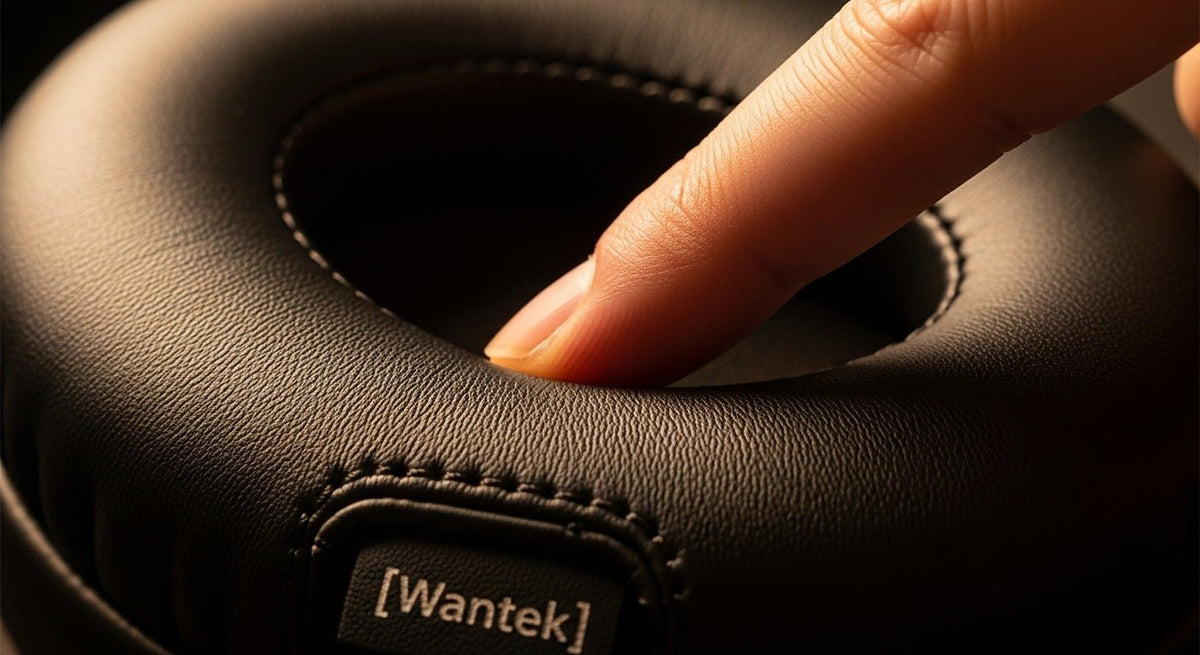
Cushions flatten and coverings can wear with use. Check whether replacement pads are sold for the exact model, how they attach, and whether the headband cushion is serviceable. Good sound today is less valuable if worn parts cannot be replaced later.
Cables, plugs, and microphone parts
For wired models, strain relief at the plug and ear-cup entry matters. A detachable cable can simplify repairs, but only if the connector and a compatible replacement are available. Call headsets add other wear points, such as a boom-microphone cover or inline control. Confirm which parts the manufacturer actually supports.
Wireless batteries and charging ports
Rechargeable batteries gradually lose capacity. Long runtime on day one does not establish battery longevity. Check whether the battery can be serviced, whether the headphones work through a wired audio connection when the battery is depleted, and whether the charging port is protected during storage. Do not assume a charging cable supplies wired audio: some USB ports are for charging only.
Wired vs. wireless: Which design is easier to keep?
| Design | Long-term advantage | Check before buying |
|---|---|---|
| Wired over-ear headphones | No built-in Bluetooth battery to age | Cable attachment, plug strain relief, replacement pads |
| Wireless over-ear headphones | Convenient daily use; some have extended playback ratings | Battery service, charging port, hinges, replacement pads, any wired fallback |
| Wireless work headsets | Purpose-built mic and call controls | Replacement ear cushions, microphone covers, boom and charging accessories |
| True wireless earbuds | Compact and portable | Small built-in batteries, case condition, supported replacement parts and protection rating |
There is no universal winner. A well-supported wireless model may outlast a poorly assembled wired model. Check the actual repair policy and available parts rather than assuming an entire category is durable.
Two Wantek examples: battery endurance and serviceable wear parts
Wantek T3: a listening-first option with long advertised runtime
The Wantek T3 ANC over-ear Bluetooth headphones list Bluetooth 5.3, active noise cancellation, transparency mode, an inline microphone, and up to 60 hours of battery life. That is a manufacturer-listed maximum, not an independently measured runtime or a promise of multi-year battery health. Check the relevant listening settings when comparing this number with other models.

Wantek WK882BT: a work-call headset with listed replacement wear parts
The Wantek WK882BT Bluetooth work headset has a dual-ear design, boom microphone, one-key mute, passive noise cancellation, and a listed battery life of up to 45 hours. Its product specifications also identify ear cushions and microphone covers as replacement items. Confirm the availability of the correct parts for your variant before purchase.

The T3 and WK882BT serve different jobs. T3 is the closer match for ANC music listening; WK882BT is built around work calls with a boom microphone. Their battery ratings alone cannot establish which has a longer service life.
How to make headphones last longer
- Carry them safely. Use a protective case or a separate padded compartment so hinges and ear cups do not take the weight of other items.
- Keep contact areas clean. Wipe cushions and surfaces gently with a suitable dry or lightly damp cloth, following the model's care instructions. Let surfaces dry before storing.
- Reduce cable strain. Disconnect by holding the plug, not pulling the cord, and avoid tight bends at connectors.
- Store away from excessive heat and moisture. Do not treat an unspecified water-resistance rating as waterproofing.
- Use compatible charging equipment. Follow the manufacturer's charging guidance and avoid stressing the charging connector.
- Check replacements early. Identify available pads, covers, cables, and repair channels before those items are urgently needed.
For a wireless pair, battery tests also need careful interpretation. RTINGS' battery testing method distinguishes continuous headphone playback from the additional case charges available to true wireless earbuds. Compare like with like rather than mixing these measurements.
Compare headphones for your daily routine
Choose the connection, microphone style, listening features, and replacement-part support you actually need.
Frequently asked questions
Do headphones with a long battery life last more years?
Not necessarily. Hours per charge measure playback endurance, not hinge strength, battery aging, or spare-part support. Evaluate the physical construction and service options separately.
Are wired headphones more durable than wireless headphones?
Wired designs avoid an internal wireless battery, but cables and connectors can fail. Durability depends on the exact model's construction, treatment, and availability of replacement parts.
What should I replace before buying new headphones?
Check ear pads, microphone covers, and removable cables first if the model supports replacements. For battery or electrical faults, use the manufacturer's documented service process rather than assuming home replacement is possible.

