
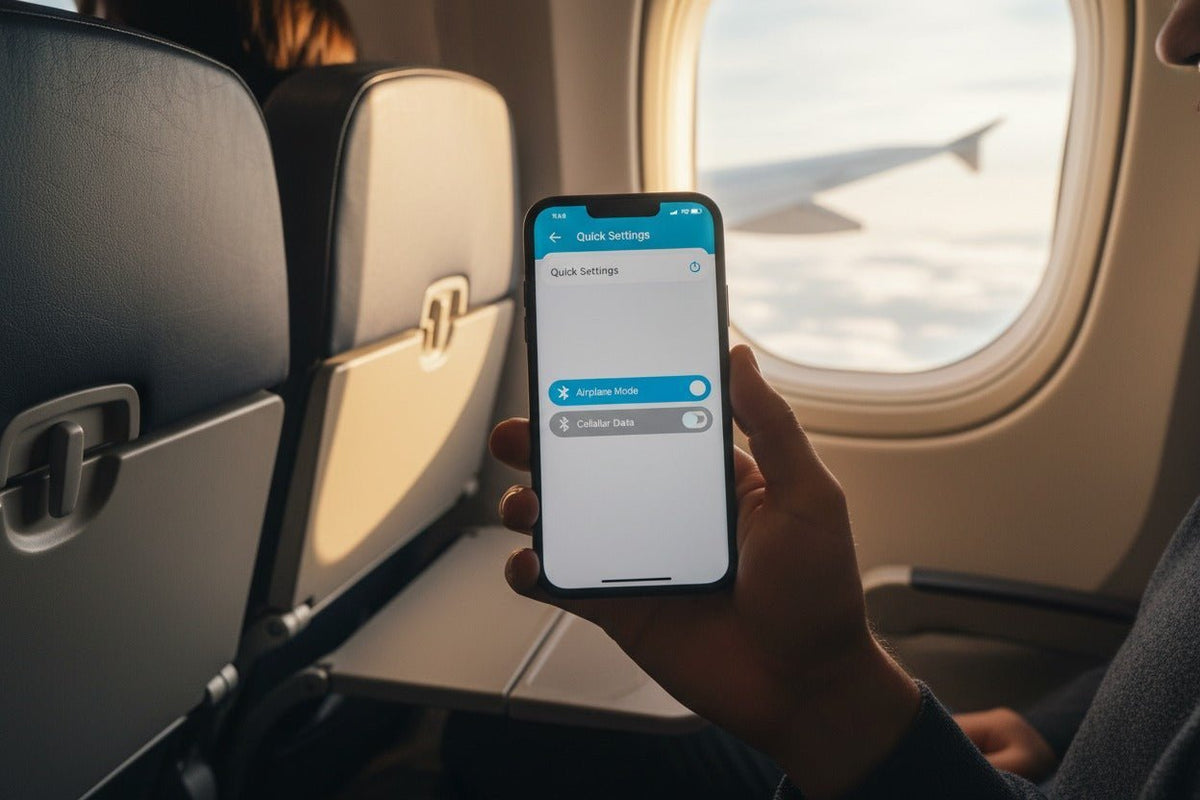
Oui, le Bluetooth est généralement autorisé sur les vols commerciaux, mais c’est la compagnie aérienne qui décide quels appareils électroniques portables peuvent être utilisés à bord de ses avions et à quel moment. Aux États-Unis, gardez votre téléphone ou tablette en mode Avion ou désactivez toute connexion cellulaire, utilisez le Bluetooth uniquement lorsque la compagnie aérienne l'autorise et suivez les instructions de l'équipage s'il impose une règle plus restrictive.
Réponse rapide :
- Les accessoires Bluetooth sont généralement autorisés après qu'une compagnie aérienne a déterminé que leur utilisation ne causera aucune interférence avec l'avion.
- Les directives de la FAA favorisent une utilisation étendue des appareils électroniques portables lors de plusieurs phases de vol, mais elles n'instaurent pas une règle universelle sur le Bluetooth pour chaque compagnie et chaque avion.
- L'utilisation des téléphones cellulaires pendant le vol reste interdite en vertu des règles actuelles de la FCC.
- Le mode Avion et le Bluetooth sont des commandes distinctes sur de nombreux appareils ; le Bluetooth peut donc souvent rester activé ou être réactivé alors que le service cellulaire demeure coupé.
Peut-on utiliser le Bluetooth dans un avion aux États-Unis ?

En règle générale, oui. La distinction importante est que la compagnie aérienne ou l'exploitant de l'avion détermine concrètement quels appareils électroniques portables peuvent être utilisés sans interférer avec les systèmes de navigation ou de communication de l'appareil. Conformément à la norme 14 CFR § 121.306, un transporteur aérien peut autoriser les appareils qu'il a jugés non susceptibles de provoquer de telles interférences. La circulaire d'information active de la FAA Advisory Circular 91.21-1D explique ce même cadre opérationnel pour les appareils électroniques portables.
La FAA soutient également depuis longtemps l'utilisation étendue des appareils électroniques portables approuvés par les passagers. Dans son annonce de 2013 sur l'utilisation des appareils électroniques portables (PED) de porte à porte, l'agence a spécifiquement noté que les passagers pouvaient se connecter à des accessoires Bluetooth une fois que la compagnie aérienne avait terminé l'évaluation nécessaire et adopté une politique approuvée. C'est pourquoi la règle la plus précise n'est pas « le Bluetooth est toujours autorisé », mais plutôt « le Bluetooth est généralement autorisé lorsque votre compagnie aérienne l'autorise sur cet avion. »
| Autorité | Ce que couvre la règle | Ce que cela signifie pour le Bluetooth |
|---|---|---|
| FAA / exploitant de l'avion | Utilisation des appareils électroniques portables et risque d'interférence avec l'avion. | L'exploitant détermine quels PED peuvent être utilisés et dans quelles conditions. |
| Conseils de la FAA aux passagers | Mode Avion ou désactivation de la connexion cellulaire sur les téléphones et autres PED. | Gardez le service cellulaire désactivé et suivez la politique de la compagnie aérienne pour le Bluetooth et le Wi-Fi. |
| FCC | Fonctionnement des téléphones cellulaires en vol. | L'utilisation des téléphones cellulaires est interdite lorsque l'avion est en vol. |
| Équipage de cabine | Procédures en temps réel à bord et instructions de sécurité. | Si l'équipage vous demande de déconnecter, d'éteindre, de retirer ou de ranger un appareil, suivez cette instruction. |
La page actuelle sur la sécurité des passagers de la FAA indique que les téléphones portables et les appareils électroniques portables doivent être utilisés en mode Avion ou avec la connexion cellulaire désactivée. Elle précise également que l'utilisation du Wi-Fi à bord dépend à la fois de l'équipement de l'avion et de l'autorisation de la compagnie aérienne. Voir les conseils de sécurité aérienne de la FAA.
Le mode Avion ne signifie pas que le Bluetooth doit rester désactivé
Le mode Avion sert principalement à désactiver la transmission cellulaire et d'autres ondes selon la configuration de l'appareil. Le comportement du Bluetooth peut varier en fonction de l'appareil et de la version du système d'exploitation. Par exemple, les conseils actuels d'Apple pour l'iPhone indiquent que le mode Avion désactive le cellulaire et le Wi-Fi tout en laissant le Bluetooth disponible ; Apple précise également que le Wi-Fi et le Bluetooth peuvent être utilisés en mode Avion si la compagnie aérienne les autorise.
La séquence pratique est donc simple : activez le mode Avion, confirmez que le service cellulaire est désactivé, puis utilisez le Bluetooth uniquement si votre compagnie aérienne l'autorise. Si votre appareil désactive le Bluetooth lorsque le mode Avion est activé, vous pouvez généralement le réactiver séparément.
Pour le comportement actuel de l'iPhone, voir la page d'assistance du mode Avion d'Apple.
Peut-on utiliser le Bluetooth pendant le décollage et l'atterrissage ?
Il n'existe aucune règle américaine unique stipulant que chaque accessoire Bluetooth doit être éteint en dessous de 10 000 pieds. La politique de la FAA permet aux compagnies aériennes d'étendre l'utilisation des PED approuvés à plusieurs phases de vol après évaluation de leurs avions et de leurs procédures. Cela signifie qu'un transporteur peut autoriser un petit accessoire Bluetooth tout au long du vol, tandis qu'un autre peut imposer une procédure plus restrictive pour un avion ou une phase de vol spécifique.
La règle la plus sûre à suivre est celle de la compagnie aérienne pour ce vol. Soyez attentif aux consignes de sécurité et aux annonces en cabine, et soyez prêt à mettre en pause votre audio, retirer vos écouteurs, ranger un appareil plus volumineux ou éteindre un équipement si on vous le demande.
Qu'en est-il des écouteurs, claviers, souris Bluetooth et autres accessoires ?

Le même cadre opérationnel pour les PED s'applique. Les écouteurs et oreillettes Bluetooth sont la question la plus fréquente, mais la règle ne se limite pas à l'audio. Les directives de la FAA sur l'utilisation élargie des PED incluent spécifiquement les accessoires Bluetooth tels que les claviers et les souris. Les facteurs clés sont l'autorisation de l'appareil par la compagnie aérienne et le respect des restrictions d'utilisation annoncées pour ce vol.
Ne supposez pas que l'autorisation d'utiliser un accessoire Bluetooth signifie également l'autorisation d'utiliser le service cellulaire. Ce sont des problèmes distincts. La règle de la FCC dans la norme 47 CFR § 22.925 interdit l'utilisation des téléphones cellulaires en vol lorsque l'avion n'est pas au sol.
Les écouteurs Bluetooth peuvent-ils se connecter à l'écran du dossier du siège ?
Parfois, mais l'autorisation Bluetooth et la compatibilité avec l'écran du siège sont deux questions différentes. Un avion peut autoriser les accessoires Bluetooth même si son système de divertissement en vol ne dispose d'aucune sortie audio Bluetooth.
- Si le système de l'écran du siège prend en charge l'audio Bluetooth : utilisez les commandes d'appairage sur l'écran et suivez les instructions de la compagnie aérienne.
- Si l'écran du siège n'a qu'une sortie casque filaire : utilisez un câble audio compatible ou, si la compagnie aérienne l'autorise, un petit émetteur audio Bluetooth.
- Si vous écoutez depuis votre propre téléphone ou tablette : appariez vos écouteurs directement avec cet appareil ; aucune connexion Bluetooth avec l'écran du siège n'est requise.
Si vous avez besoin de l'option filaire vers sans fil, notre guide d'installation d'un émetteur Bluetooth explique comment un émetteur se connecte à une source audio de 3,5 mm et s'appaire avec des écouteurs Bluetooth.
Qu'est-ce qui change sur les vols internationaux ?
Ne supposez pas que chaque pays ou compagnie aérienne applique des procédures identiques. En Europe, l'AESA autorise les compagnies aériennes à permettre l'utilisation d'appareils électroniques portables tout au long d'un vol après une évaluation de sécurité, mais elle stipule également que chaque compagnie aérienne décide si et quand cette utilisation est autorisée. C'est globalement similaire au principe américain selon lequel la politique approuvée de l'exploitant prévaut.
Pour les opérations européennes, consultez les directives de l'AESA sur les appareils électroniques portables connectés. Sur tout itinéraire international, vérifiez la politique actuelle du transporteur exploitant plutôt que de supposer qu'une règle d'une autre compagnie aérienne s'applique.
Une liste de contrôle simple pour le Bluetooth en vol

Vérifiez la politique de la compagnie aérienne exploitante concernant les appareils.
Recherchez ses instructions actuelles sur les appareils électroniques portables, le mode Avion, le Wi-Fi et le Bluetooth, surtout si votre itinéraire inclut plusieurs transporteurs.
Activez le mode Avion avant que l'équipage ne le demande.
Confirmez que le service cellulaire est désactivé. Laissez ensuite le Bluetooth activé ou réactivez-le uniquement comme autorisé par la compagnie aérienne.
Appariez d'abord avec votre propre appareil.
Le contenu multimédia téléchargé sur votre téléphone ou tablette est la solution la plus simple car elle ne dépend pas du matériel de divertissement de l'avion.
Considérez l'audio de l'écran du siège comme une question de compatibilité distincte.
Utilisez le Bluetooth natif de l'écran s'il est disponible ; sinon, utilisez une connexion filaire ou un émetteur autorisé par la compagnie aérienne.
Suivez immédiatement les instructions de l'équipage.
Les procédures des compagnies aériennes peuvent varier selon l'avion et la situation ; les instructions données lors de votre vol déterminent donc ce que vous devez faire en cabine.
Note sur la batterie : si vous apportez une batterie externe séparée ou une batterie au lithium de rechange, les directives PackSafe de la FAA exigent que ces batteries restent dans votre bagage à main plutôt que dans votre bagage en soute. Voir les directives PackSafe de la FAA pour les appareils électroniques portables et les batteries.
Foire aux questions
Peut-on utiliser des écouteurs Bluetooth dans un avion ?
En règle générale, oui. Mettez l'appareil source en mode Avion ou désactivez le service cellulaire, puis utilisez le Bluetooth uniquement si la compagnie aérienne l'autorise. La politique relative aux PED et les instructions de l'équipage contrôlent les conditions d'utilisation.
Le Bluetooth fonctionne-t-il en mode Avion ?
Souvent, oui. De nombreux appareils permettent au Bluetooth de rester activé ou d'être réactivé pendant que le service cellulaire demeure désactivé. Le comportement exact dépend de l'appareil et du système d'exploitation ; vérifiez donc le réglage Bluetooth après avoir activé le mode Avion.
Puis-je utiliser le Bluetooth pendant le décollage et l'atterrissage ?
Possiblement. La politique de la FAA permet aux compagnies aériennes d'approuver l'utilisation des PED sur plusieurs phases après évaluation de leurs avions, mais les conditions autorisées peuvent varier. Suivez la politique actuelle de la compagnie aérienne et les instructions de l'équipage pour votre vol spécifique.
Puis-je laisser le service cellulaire activé si j'utilise uniquement le Bluetooth ?
Non. Le Bluetooth et le service cellulaire sont distincts. Les directives de la FAA pour les passagers préconisent le mode Avion ou la désactivation de la connexion cellulaire, et les règles de la FCC interdisent l'utilisation des téléphones cellulaires en vol.
Ai-je besoin d'un émetteur Bluetooth pour le divertissement en avion ?
Uniquement si le système de l'écran du siège ne dispose pas d'audio Bluetooth et que vous souhaitez une connexion sans fil. Si l'écran dispose du Bluetooth natif, appariez directement ; sinon, un câble compatible peut être plus simple.

