
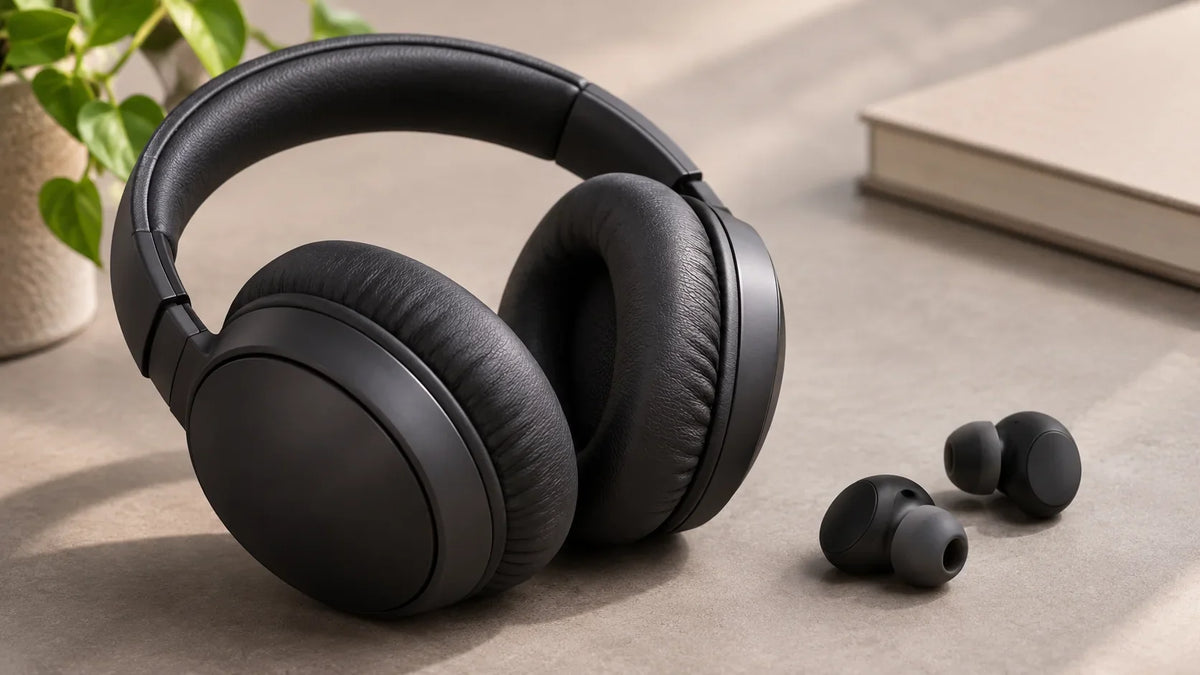
Passive noise cancellation, also called passive noise isolation, reduces outside sound through the physical fit and construction of headphones or earbuds. Ear cushions, closed earcups, and well-fitting ear tips form a barrier between the surroundings and your ears. No microphones, anti-noise signal, or battery power is needed for the isolation itself.
“Cancellation” is common product language, but isolation is the more precise term: a physical seal reduces sound rather than electronically cancelling it. How much noise gets through depends on the headphones, the sound, and how they fit your ears.
How Does Passive Noise Cancellation Work?
Outside sound reaches your ears through air and through gaps around your headphones. An in-ear tip that seals the ear canal or an over-ear cup that fits closely around your ear makes that path harder for sound to travel. Cup construction and padding also affect how much sound gets through.
Passive isolation works even with the electronics switched off. That does not mean every wireless headphone can play music with a dead battery; wired playback depends on the particular model.
For a practical explanation of the physical barrier, see Bose's guide to noise blocking and noise cancelling.
What Kinds of Noise Does Passive Isolation Reduce?
A good seal can make nearby speech, keyboard clicks, and other mid- to higher-frequency sounds less prominent. It can also reduce some lower-frequency noise, but the amount varies greatly by design and fit. Do not expect any ordinary earbud or headset to make a busy room silent.
Steady, low-frequency sounds such as aircraft-engine or air-conditioning hum are often where electronic ANC adds the most noticeable benefit. RTINGS' explanation of ANC and passive isolation describes why the two methods complement each other.
If you need to hear traffic, conversations, or warnings, strong isolation can be a drawback rather than a benefit. Choose an appropriate listening setup for the surroundings instead of assuming more blocking is always better.
Passive Noise Cancellation vs. ANC vs. Mic Noise Reduction
| Method | Whose audio changes? | How it works |
|---|---|---|
| Passive isolation | Less outside sound reaches your ears | Ear-tip or earcup seal, without anti-noise electronics |
| Active noise cancellation (ANC) | Some outside sound reaching your ears is reduced | Microphones and powered anti-noise processing |
| Mic noise reduction | Less background sound reaches your caller | Processes the microphone's outgoing audio |
Passive noise isolation: Less sound reaches you
The material and seal of the earcup or ear tip reduce environmental sound entering your ears. It does not require active processing, although an electronic headset may still need power to deliver audio.
Active noise cancellation (ANC): Electronics reduce some sound reaching you
ANC microphones measure surrounding noise, and the headphones produce an opposing sound signal to reduce part of it. ANC is not guaranteed to remove voices or sudden sounds; performance also depends on a good fit. For the signal-processing details, read our guide to how active noise cancellation works.
Noise-reducing microphone: Less background sound reaches your caller
Microphone processing acts on the audio sent to the other person during a call. It does not, by itself, quiet the room for the headset wearer. A headset can have microphone noise reduction without providing ANC for listening.
Which Headphone Designs Provide Passive Isolation?

Sealed in-ear earbuds
Ear tips that fit the canal can provide substantial isolation in a compact design. Size, material, and insertion depth matter. If one tip is loose, outside noise may enter more easily on that side.
Closed-back over-ear headphones
Padded earcups surround the ears and can reduce sound without putting tips inside the ear canal. Glasses, hair, worn pads, or a shallow cup may interrupt the seal. The label “over-ear” alone cannot tell you how much noise is blocked.
On-ear, open-back, and open-ear designs
On-ear cushions may block some noise but vary with contact pressure. Open-back headphones and deliberately open-ear earbuds leave more sound paths open, so they are generally poor choices when isolation is the priority. For a comparison of designs and fit, see our earbuds-versus-headphones isolation guide.
How to Improve Passive Noise Isolation
- Check the fit before changing settings. With sealed earbuds, try the supplied tip sizes and listen for obvious left-right differences. With over-ear headphones, adjust the headband so the pads sit evenly.
- Find air gaps. Glasses, hair, earrings, and uneven padding can break an earcup seal. Repositioning the cups may help.
- Inspect worn parts. Flattened ear pads or damaged ear tips may isolate less effectively. Replace them only with compatible parts.
- Compare under similar conditions. Keep the same environment and a safe listening volume when judging a change in fit. A louder music track is not evidence of better isolation.
Comfort matters: forcing a tight seal or excessive clamping pressure is not a good long-term solution.
When Should You Choose Passive Isolation or ANC?
Office or study: A comfortable passive seal can soften nearby conversation and keyboard noise. If low-frequency HVAC hum is the main distraction, compare models with ANC as well.
Travel: Ear tips or closed earcups provide a baseline barrier, while ANC can add relief from continuous cabin or engine rumble. Check both fit and ANC performance rather than buying on an ANC label alone.
Calls: Decide separately whether you want less noise in your own ears or less noise transmitted through your microphone. The two requirements call for different features.
High-noise work or concerts: Consumer headphones marketed as noise cancelling are not automatically hearing protection. For hazardous noise, use hearing protectors with appropriate, verified protection ratings.
Compare Headphones by Fit and Noise Control
Ready to compare specific designs? Review how current over-ear models approach isolation and ANC before choosing a pair.
Frequently Asked Questions
Does passive noise cancellation need batteries?
No. Physical isolation works without power. Audio playback is a separate question: some wireless headphones need battery power even though their cushions still block some sound.
Is passive noise cancellation better than ANC?
Neither wins for every noise or every fit. Passive isolation is particularly useful for sounds a seal can block; ANC often adds more reduction for steady low-frequency rumble. Many headphones combine both.
Does a noise-cancelling microphone mean the headset has ANC?
No. Microphone noise reduction helps the person hearing your call. ANC reduces some external sound reaching you. Check the product's listening and microphone features separately.
Do passive noise-isolating headphones protect hearing?
Not automatically. A consumer isolation claim is not a verified hearing-protection rating. Use appropriately rated protective equipment where exposure levels require it.

